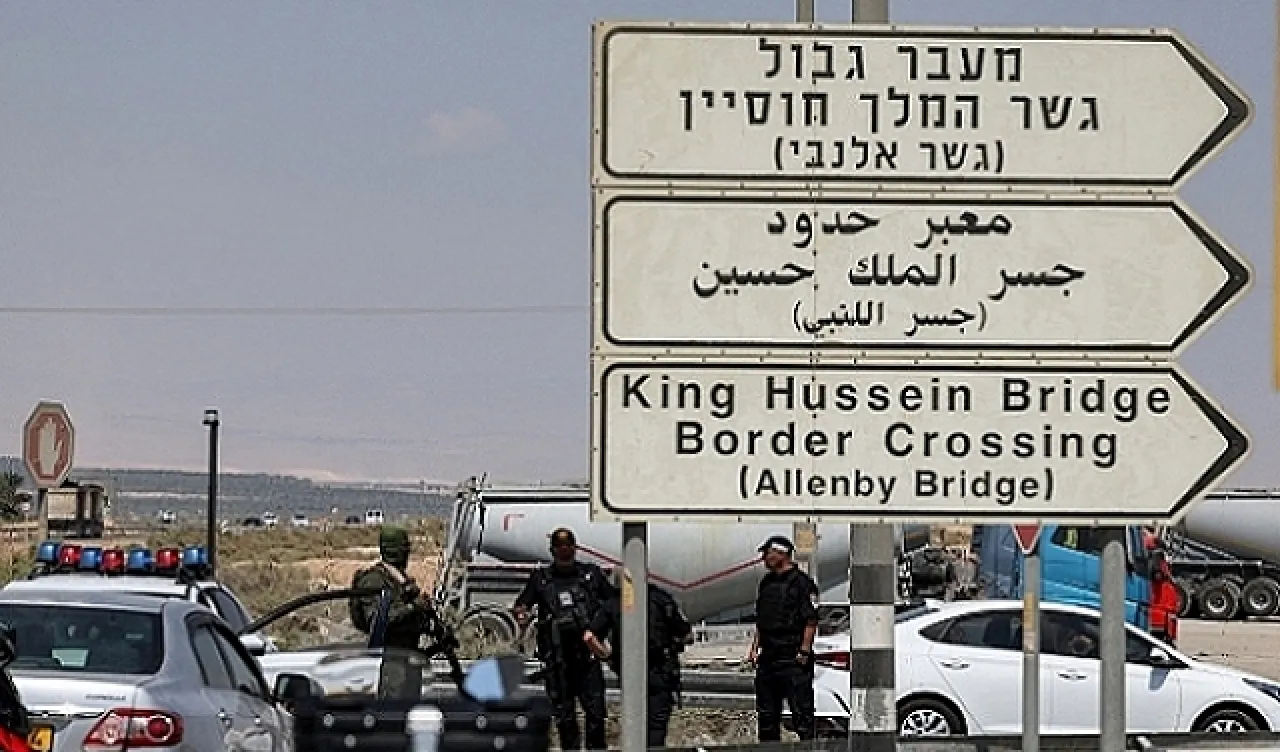
Khaberni - Nassar Nassar, Secretary of the Coordination Council for Private Sector Institutions and President of the General Union of Palestinian Industries, revealed that a lawsuit was filed on 12/02/2026 before the Israeli Central Court against the Airports Authority and Israeli Civil Administration, protesting against the deliberate and continuous reduction in the operating hours of the Allenby Bridge.
Nassar confirmed that this lawsuit is not related to a transient administrative procedure, but rather concerns a fundamental right associated with human dignity and freedom of movement, noting that the restrictions imposed on the crossing directly affect the lives of millions of travelers annually, along with the national economy and the movement of Palestinian exports.
He explained that the Allenby crossing is the only international land crossing for the residents of the West Bank for travel abroad through Jordan, and it depends on more than three million citizens, in addition to hundreds of thousands of Jerusalemites, in the absence of any real alternative or other outlet.
He noted that the past two years have witnessed an unprecedented reduction in working hours at the crossing, leading to daily severe congestion, long waiting queues, and travelers staying overnight under harsh conditions, in addition to additional financial burdens borne by the citizens. He considered that this situation has become permanent, violating the right of movement guaranteed by local laws and international agreements.
Nassar pointed out that there have been several official initiatives to demand the increase in working hours according to a clear timetable and to operate the crossing in a manner commensurate with its size and role, but the responses were general and vague, without practical commitment or a specific timeline, with pretexts of security and operational considerations and a shortage of security personnel.
He confirmed that the legal basis for the lawsuit relies on the commitment of the Israeli Airports Authority, as a public body, to provide an effective and appropriate service to the public, in addition to what the interim agreements of 1995 stipulated, which mandated much broader operating hours than what is currently practiced. He emphasized that budgetary or operational pretexts should not permanently justify violating the fundamental rights of millions of citizens.
He indicated that the harm is not limited to travelers but extends to the commercial crossing, where the movement of Palestinian exports destined for dozens of countries has declined, threatening the development of national industry and weakening the efficiency of supply chains.
Nassar demanded the court issue a judicial order to restore the increase in working hours of the crossing to match the volume of movement, preferably operating it 24 hours a day, or at least to the minimum level that was previously practiced.
He concluded by affirming that this action stems from national and economic responsibility, not in the context of confrontation, stressing that the Allenby crossing serves as a lifeline for both citizens and the private sector alike, and that the legal course will continue until the crossing is operated around the clock before the next summer season, along with pursuing other political and international pathways, ensuring the dignity of the traveler and his actual right to movement, and the free flow of Palestinian exports.