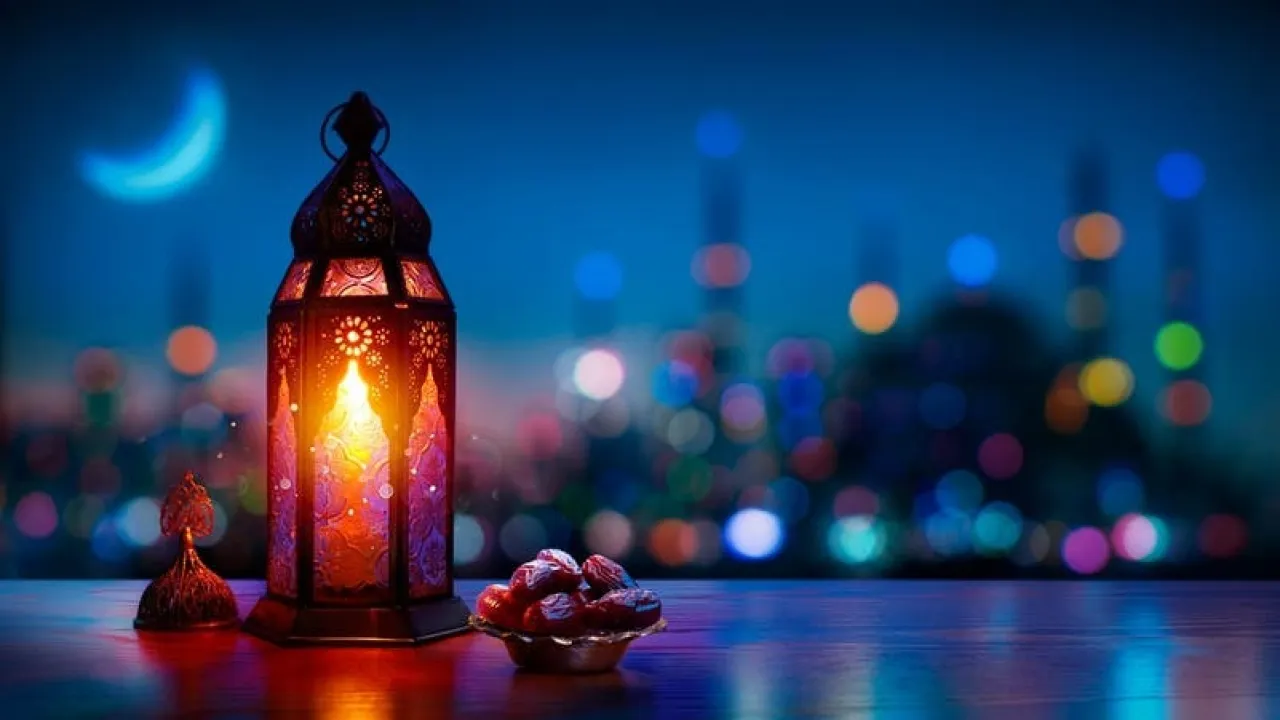
Khaberni - As the holy month of Ramadan approaches annually, the features of streets and homes in various Egyptian provinces change, heralding the arrival of a month eagerly anticipated by millions. The alleys are adorned with bright lanterns, colorful decorations are hung between balconies, and markets bustle with preparations for the sacred month, in a scene that repeats annually but never loses its luster or warmth.
Egypt features a unique Ramadan atmosphere, woven through centuries of inherited customs and traditions that blend spirituality with popular joy. Ramadan in Egypt is not merely an act of worship, but a comprehensive societal state characterized by mutual support, mercy tables, the iftar cannon, and family gatherings that give the month a special character distinguishing it from other months of the year, making it an occasion everyone eagerly awaits.
Why is the Ramadan atmosphere in Egypt special?
The archaeologist Sameh el-Zahar, specializing in Islamic archaeology, stated in an exclusive interview with "Al Arabiya.net" and "Al Hadath.net," that the special Ramadan atmosphere in Egypt is linked to Egyptians' deep understanding of Ramadan over more than 1000 years.
He stressed that Egyptians have not treated the holy month merely as a religious duty or an act of worship, but have endowed it with a civilizational dimension and a unique identity that formed its distinct features.
El-Zahar explained that across their long history, Egyptians went beyond the original simple and clear meaning of fasting, transforming Ramadan into a celebratory month that merges spirituality with joy, considering it a month of forgiveness and mercy.
He added that introducing elements of joy into the month, such as lighting lanterns, decorating streets, and distributing sweets, was not a trivial matter but reflects a uniquely Egyptian understanding of the essence of Islam, which came to lead people from darkness to light, thus light was symbolically present in the lanterns and celebrations.
He noted that one of the most prominent features of this understanding is the embedding of the concept of social solidarity, pointing out that the phenomenon of "mercy tables" originated early in Egypt and evolved through the ages since the Islamic conquest to the modern era, becoming an important model of community solidarity.
He reaffirmed that these tables were not just food provided to the fasting but a social and humanitarian message involving both Muslims and non-Muslims, in a scene that reflects the cohesive nature of Egyptian society. El-Zahar highlighted that Ramadan in Egypt transformed from merely a religious symbol to an occasion with a broad social, cultural, and historical background, maintaining its identity for over ten centuries.
He cited the history of street lighting during Ramadan nights starting from the Fatimid state, when Cairo was lit up in celebration of the holy month, a tradition that solidified the customs of lighting and lanterns, which later became one of the most important symbols of Ramadan in Egypt.
He also noted that many simple symbols associated with the month, like traditional sweets, trace their origins back to elements used in everyday life during the medieval period, and over time acquired special Ramadan significance.
El-Zahar concluded his statements by asserting that the Ramadan presence in Egypt differs from anywhere else in the Islamic world because it combines the religious dimension with historical and heritage extensions, making Ramadan in Egypt a comprehensive cultural experience, handed down through generations and preserving its uniqueness despite changing times.
Meanwhile, Dr. Mohamed Ibrahim, professor of Islamic history at "Beni Suef University," said that Ramadan in Egypt possesses a unique historical specificity dating back many long centuries, explaining that Egyptians have successfully crafted a unique Ramadan experience that blends popular religiosity with civilizational continuity.
In his interview with "Al Arabiya.net" and "Al Hadath.net," he added that celebrating Ramadan in Egypt was not a product of modern times but was deeply embedded since the arrival of Islam in the country, developing significantly during the Fatimid, Mamluk, and Ottoman epochs, wherein the holy month was associated with official and popular manifestations reflecting its significance in the Egyptian psyche.
He explained that the Fatimid state played a prominent role in giving Ramadan a festive character by lighting up streets, organizing welcoming parades for the month, and focusing on feeding the poor, contributing to the establishment of traditions that have persisted to this day, such as lanterns and mercy tables.
Dr. Mohamed Ibrahim noted that throughout history, Egyptians did not separate worship from social life; thus, Ramadan was also a season for knowledge and remembrance, alongside being an occasion for compassion and family bonding, and community solidarity across different segments of society.
He confirmed that the continuation of these phenomena into modern times reflects the strength of Egyptian cultural identity and its ability to preserve its Ramadan heritage despite changes in regimes and eras, pointing out that Ramadan in Egypt has become not just a religious occasion but a civilizational event that expresses the unique character of Egyptian society and its extended history.