Khaberni - Zambia is witnessing a radical transformation after it was the first country in Africa to default on its debts during the COVID outbreak five years ago, with the major powers competing for its huge copper reserves.
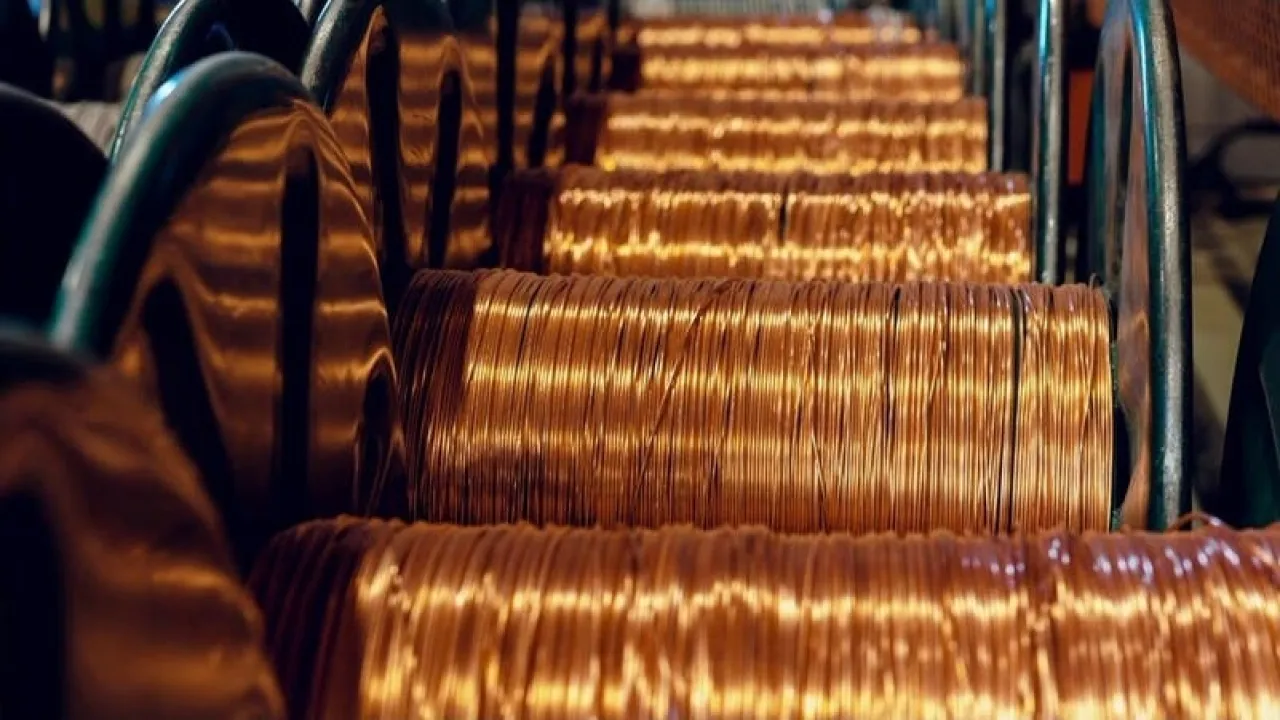
The increasing demand from artificial intelligence, clean energy, and defense sectors has led to a rush on this essential metal for power networks, data centers, and electric vehicles.
The race for copper reflects the geopolitical competition among major industrial powers such as China, the United States, Canada, Europe, India, and some Gulf countries, as they seek to secure supplies, according to "AFP".
President Hakainde Hichilema told participants at a mining conference in Africa held earlier this week: "Investors have come back to us". He referred to an inflow of more than $12 billion into the sector since 2022.
Zambia is politically stable and is the second-largest producer of copper in Africa after the Democratic Republic of the Congo, which is conflict-ridden, and the eighth largest globally, according to the US Geological Survey. The metal, used in solar panels and wind turbines, contributes about 15% to Zambia’s GDP and more than 70% of its export revenues.
Last year's production exceeded 890,000 tons, at a time when the government aims to triple it within a decade. The mining sector is a driver for growth, which the International Monetary Fund expects to reach 5.2% in 2025 and 5.8% this year, putting Zambia among the fastest-growing economies on the continent.
Hichilema said that "the seeds have started to sprout and the crop is coming", referring to a national geological survey plan to identify untapped deposits.
However, the rapid expansion of the sector, which causes severe pollution, has raised warnings about its risks to the population, and concerns about extracting and exporting copper directly without refining it locally.
New Chapter
Daniel Litvin, founder of "Resource Resolutions" supporting sustainable development, said that Zambia should be aware of the possibility of "repeating history", in reference to the race by major powers during the colonial era for Africa’s resources.
Chinese companies have dominated the mining sector in Zambia for years, owning major stakes in key mines and smelters, giving Beijing an advantage as one of the earliest beneficiaries. The Canadian company "First Quantum Minerals" also plays a pivotal role, being the largest taxpayer among companies operating in the country.
The presence of investors from India and the Gulf is increasing, while the United States is making a clear return after having withdrawn from the market decades ago. This month, Washington launched a $12 billion initiative between the public and private sectors called "Project Vault" to secure vital minerals and reduce dependence on China. In September, the US Trade and Development Agency announced a $1.4 million grant to "Metalix Africa" to expand its operations in Zambia.
Mike Cop, advisor to the US Energy Secretary, said at the mining conference: "We are at the beginning of what will become an important new chapter in the way the free world obtains and trades vital minerals".
American customs duties imposed last year have driven copper prices to record levels, prompting companies to rush to purchase semi-finished and refined stockpiles.
Environmental Cost
Debroz Muchena from "Open Society Foundation" said "the risk lies in the competition among major powers turning into a race to secure supplies on terms that serve the markets and not the people in the producing countries". Despite its mineral wealth, more than 70% of Zambia's 21 million population suffers from poverty, according to the World Bank.
Muchena said, "the world is beginning to turn to copper in Zambia. But Zambia has been living with copper and its consequences for a century," referring to the environmental damage resulting from mining.
In February 2025, an explosion of a waste dam at a mine owned by China near Kitwe, about 285 kilometers north of Lusaka, spilled millions of liters of acidic waste. Toxic substances leaked into one of the tributaries of the Kafue River, the longest river in Zambia and a major source of drinking water. Farmers filed a lawsuit seeking compensation of 80 billion dollars.
Muchena said that "identifying how this boom differs from its predecessors depends on whether governance, rights, and community development are at its core, rather than merely being an endeavor to secure supply chains" to the major countries.