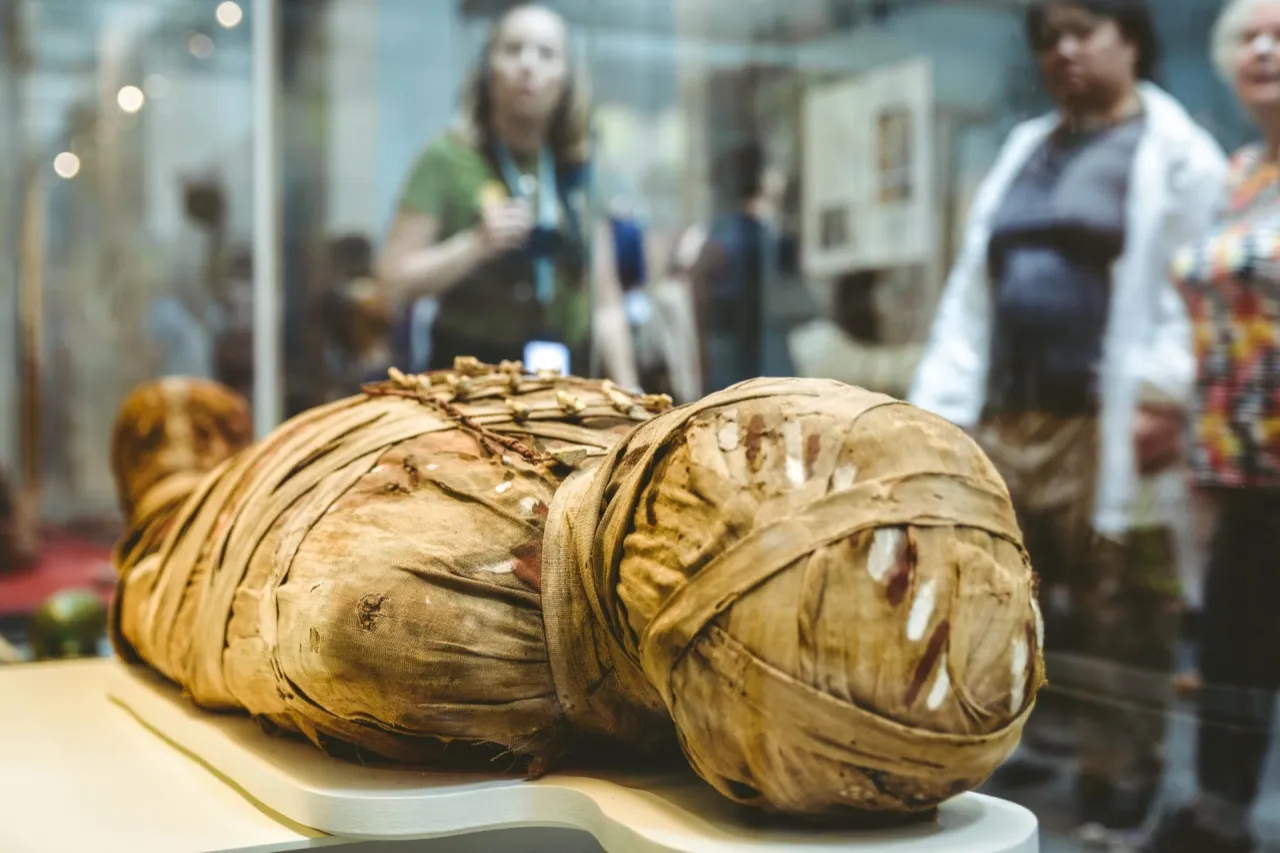
Khaberni - Researchers have succeeded in solving a mystery that has long intrigued scientists around the world, concerning the unique scent that characterizes ancient Egyptian mummies, through a modern scientific technique that allowed the analysis of the emitted vapors without causing any harm to them.
Archaeologists usually rely on direct methods to analyze mummies, which involve taking parts of the wrappings and dissolving them in order to study the molecular composition of the embalming materials. However, these methods are inherently destructive and may sometimes result in the breakdown of molecules, not to mention that repeated sampling may threaten the integrity of the mummy itself.
In contrast, a team of organic geochemistry scientists adopted a different approach, based on capturing the volatile organic compounds from the air surrounding the mummy, according to "Archaeological Science" magazine.
These compounds are known as molecules that easily evaporate and spread in the air, and they are responsible for the scents that humans can detect.
The researchers pointed out that scent holds a special place in ancient Egyptian culture, as it played an important role in rituals and myths associated with the afterlife.
The use of spices and aromatic substances in mummification was not only aimed at adding a pleasant scent, but also played a role in masking odors associated with body decomposition, in addition to their protective role against pests and microorganisms.
Scientists had described the scents of several mummies that were previously examined as tending towards "woody", "spicy", and "sweet" characters, yet the new research team sought to go beyond that, by linking these sensory impressions to specific chemical components.
The study relied on analyzing dozens of samples taken from mummies preserved in European and British museums, including remains of resins, wrappings, and human tissues. The samples were placed in special chambers to collect the gases emitted from them, before being subjected to advanced techniques that enabled the identification of the types of materials used in the embalming.
The results showed that fats, oils, beeswax, plant resins, and bitumen were among the most prominent components, with clear differences between different time periods. While the old recipes relied on simpler compositions, they became more complex later with the addition of more expensive and diverse materials.
The researchers believe that analyzing volatile organic compounds provides a quick and non-destructive means to study mummies, and could in the future contribute to determining their chronological sequence and understanding embalming techniques more accurately, without compromising the integrity of these rare archaeological treasures.