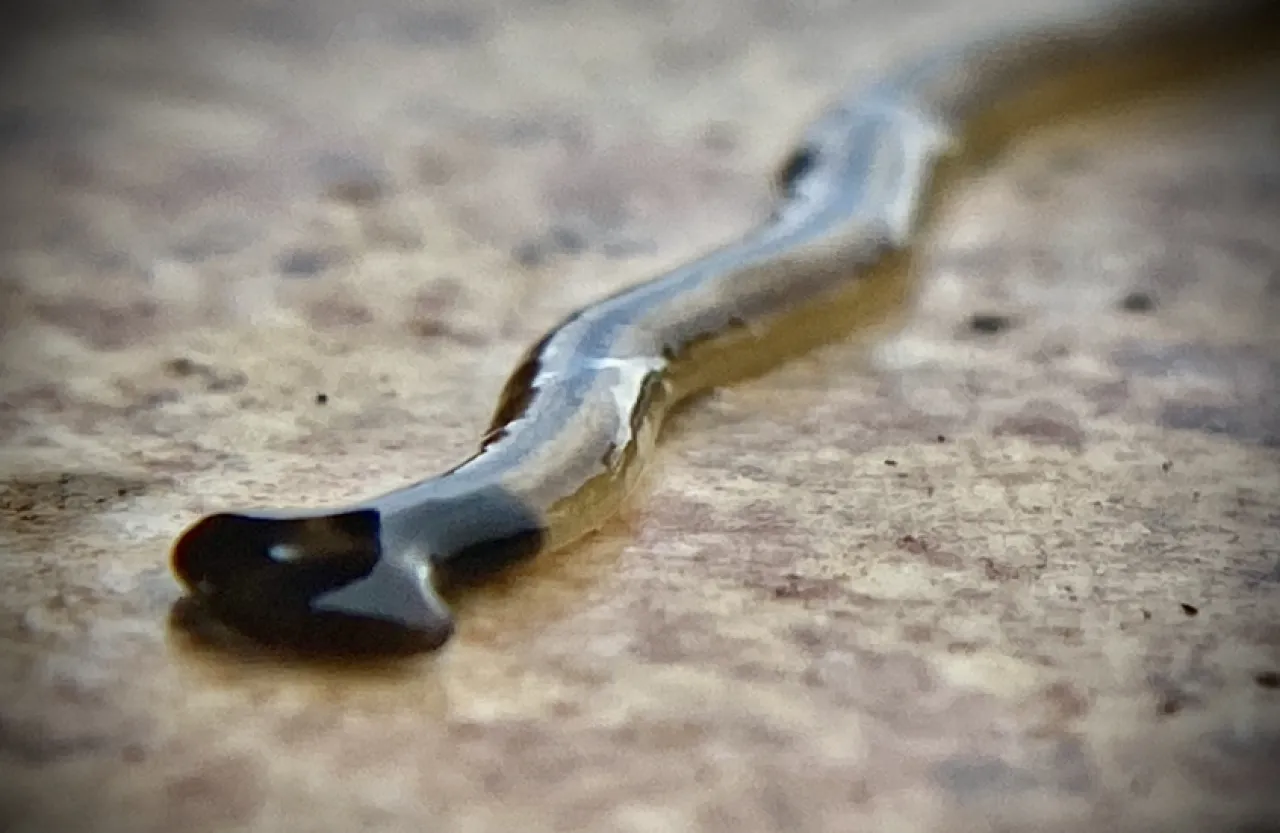
Khaberni - Researchers from the French National Museum of Natural History have uncovered evidence that suggests some types of flatworms are spreading in Europe by attaching to pets without their owners noticing.
The researchers explained that these worms can be up to 20 centimeters long and secrete a highly viscous mucus that helps them stick to fur. Images published by the team showed worms collected from cats and dogs, with strands of hair still attached to them.
Although these worms do not pose a direct threat to dogs and cats, experts have warned of their environmental impact, as they can damage local insects and negatively affect the soil, raising concerns about their impact on ecosystems.
It was commonly believed that the spread of these creatures primarily occurred through plant transfer, but the new study points to an additional mechanism of transmission.
The researchers questioned: "How do these slow-moving creatures manage to colonize neighboring gardens?". To answer this question, the team analyzed reports collected over more than 12 years through community science initiatives in France.
The results showed that one type likely behind this phenomenon is Caenoplana variegata, known as the yellow-striped flatworm, originally from Australia. This worm is distinguished by a bright yellow stripe along its back, flanked by two narrow brown stripes.
The researchers pointed out that its highly viscous mucus, along with its diet based on preying on arthropods, and its ability to reproduce without a partner, are all factors that enhance its ability to spread and invade.
Although the study focused on France, the researchers suggest that the same mechanism could apply to the United Kingdom and other European countries, and perhaps to other continents where this worm is found.
Professor Jean-Lou Justine, from the French National Museum of Natural History in Paris, concluded by saying: "Considering the vast distances that pets travel annually, this means of transmission may significantly contribute to the global spread of some invasive flatworm species."