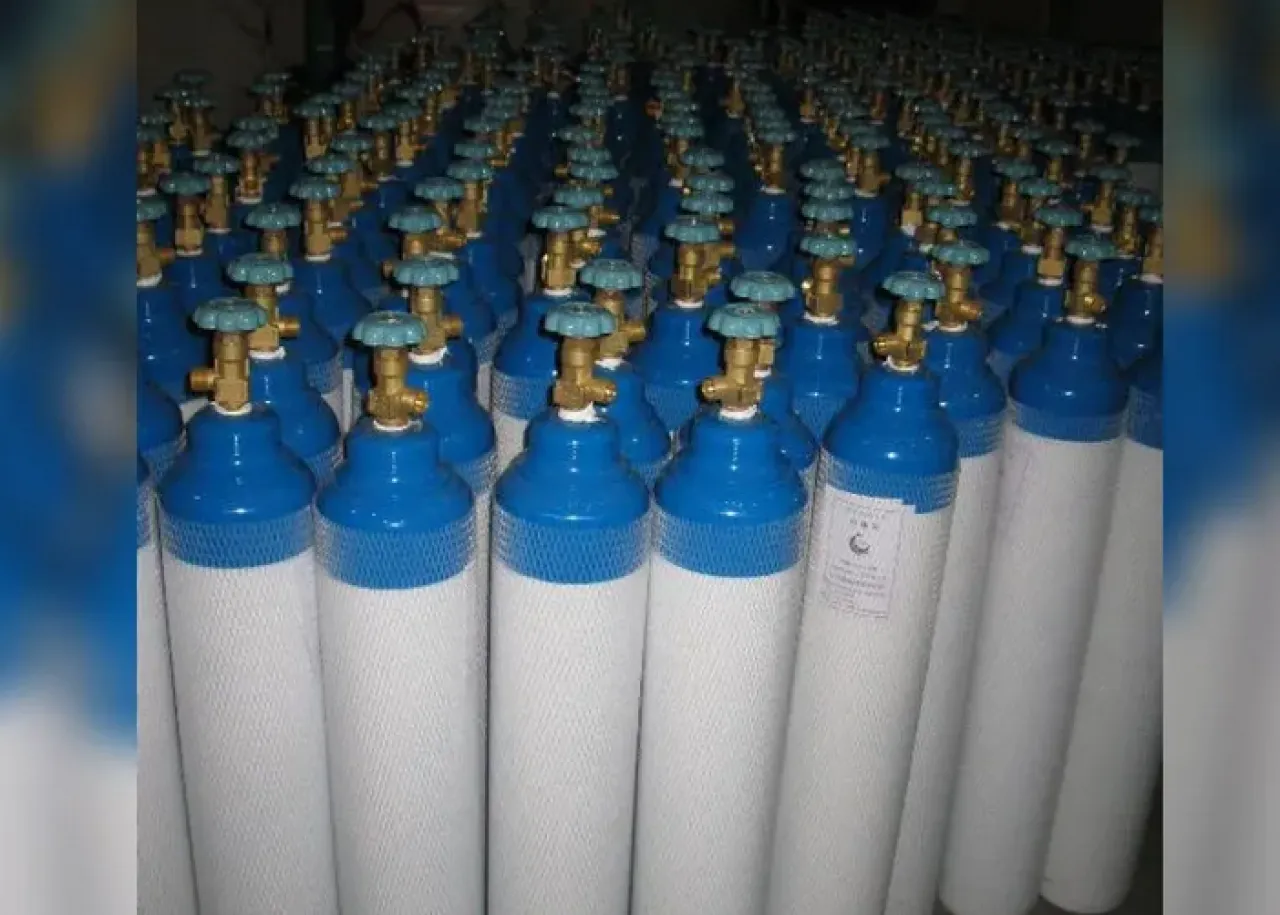
Khaberni - Energy sector experts confirmed that Jordan's approach to extracting helium gas positions it on the map of countries globally producing rare gases, offering a new high-value resource and enhancing sector exports, according to Al-Ghad newspaper.
The Ministry of Energy and Mineral Resources has recently signed a memorandum of understanding with Hotspur Helium, a British company, to commence exploration and prospecting for "helium gas" in the Dead Sea area for two years.
Under the memorandum signed, Hotspur Helium is committed to conducting geophysical surveys and advanced field studies, including preparing geological maps of gas deposits and evaluating the economic feasibility of the expected quantities, in addition to transferring expertise and training national staff on techniques for exploring rare gases.
It is noted that helium gas is used in several fields and industries, including a wide range of high-tech applications, starting from advanced medical uses, through semiconductor and semiconductor industries, to sensitive electronic devices, especially medical devices such as MRI machines.
This agreement was signed after the Cabinet, in November last year, approved a memorandum of understanding between the ministry and the British company to explore helium gas in the Dead Sea area, as part of the government's direction to utilize the natural resources available, at a time when the price of helium gas is multiple times the price of natural gas, according to what the ministry said after signing the agreement.
Minister of Energy and Mineral Resources, Dr. Saleh Kharabsheh, stated after the agreement that "the element of helium was not previously included in Jordanian laws and legislation and has been recently added as one of the strategic elements to be utilized after the exploration phase ends and approval by a special law as an executive agreement or a concession, and that feasibility of exploiting geothermal energy with the company will be discussed, particularly in light of the presence of many hot springs in the Dead Sea area."
Behjat Al-Adwan, Director of Petroleum and Oil Shale at the Ministry of Energy and Mineral Resources, said, "Jordan has promising opportunities in this field, especially in areas near the Dead Sea, as preliminary studies conducted by one of the interested investment companies indicate the possibility of helium being a separate source from the gas."
Al-Adwan explained that the interest in helium gas is a relatively new direction globally, as it has begun to gain increasing attention as a promising investment opportunity due to its rarity and high market value, as it sometimes accompanies natural gas in quantities ranging from 2% to 4%, while its market value reaches multiple times the price of natural gas due to the scarcity of its sources globally.
Al-Adwan added "investing companies bear the full cost of exploration operations and studies at their own expense without any financial burdens on the government, as the investor is committed to implementing the agreed-upon work program against a performance bond, and in case of not reaching investable quantities, he can withdraw while leaving all studies, data, and samples for the benefit of the state without any financial obligation."
According to Al-Adwan, the results of the studies are expected to become clear over the next two years, and if the results prove economically viable, the transition to signing executive agreements and production sharing will proceed.
He pointed out that the experiences of other countries such as Qatar show that helium proportions may be small compared to massive gas production, yet large gas quantities make helium extraction an economically viable activity, which the ministry hopes to achieve with the continuation of positive results from drilling in the field.
Al-Adwan noted that the global demand for helium is continuously increasing, especially as it enters into advanced industries such as artificial intelligence applications, space industries, and high-tech industries in Europe and other countries, noting that the advantage of helium also lies in its easy transportation and storage compared to natural gas, which requires a massive infrastructure for transportation, as helium can be transported in smaller quantities and at lower costs through specialized tanks, making the high price compensate for the limited global quantities and granting it increasing economic and strategic value.
Energy expert Hashim Akl said that "this agreement expands the investment prospects in the energy and minerals sector through main themes, particularly enhancing the attraction of foreign investments and opening doors to international partnerships, where the agreement with the company serves as a model for external cooperation."
According to Akl, the agreement aligns with Jordan's economic modernization vision, which focuses on high-value sectors and represents a gateway to more investments in mining and energy, relying on Jordan's unique regional position and supportive institutional environment. The agreement also helps diversify energy and minerals sources towards strategic high-value-added elements, as helium is considered a rare gas, its price exceeding that of natural gas, and it's used in advanced industries such as artificial intelligence, semiconductors, medical devices (like MRI imaging), and space technology, opening new export markets, especially with the increasing global demand, and placing Jordan on the map of countries producing rare gases, thereby enhancing economic revenues and reducing environmental pollution compared to traditional fuels.
Akl also indicated that the agreement contributes to providing direct and indirect economic opportunities, including creating specialized jobs in geology and engineering for Jordanian youth, and supporting the national economy by effectively exploiting natural resources.
He added that the agreement allows exploring the feasibility of exploiting geothermal energy in the area, thereby expanding the investment scope to additional renewable energy sources.
Furthermore, Omar Abu Eid, Director of Energy and Environment Programs at the European Union, said, "Helium gas represents an additional opportunity that Jordan can benefit from within the efforts to diversify energy and minerals resources, especially since this element is not abundantly found in the world, granting it high strategic and economic importance."
He added that integrating helium in the kingdom's exploration programs opens the door to expanding the concepts of natural resource exploration, especially since it is often found in natural gas basins, pointing out the importance of the agreements worked on in the Dead Sea area as a promising step in this direction. Abu Eid explained that helium is used in a wide range of high-tech applications, from advanced medical uses, through semiconductor industries, to sensitive electronic devices, especially medical devices such as MRI machines, in addition to its use in advanced industrial processes relying on plasma technologies, making this gas a fundamental element in many high-value-added industries around the world.
Abu Eid noted that Jordan's entry into the field of exploring and producing helium in the future will enhance its regional position in the mining sector and exploration of natural resources, as well as support paths of technological, medical, and industrial transformation, in addition to its indirect connection to green transformation processes in many economic sectors, granting the kingdom the opportunity to develop a new resource map contributing to attracting investments and diversifying income sources.
Abu Eid affirmed that the success of exploration operations and reaching commercial production of helium will place Jordan in an advanced position among countries working to develop and invest in this type of rare resources, which boosts the kingdom's chances of playing a larger role in the global supply chains for tech and medical industries, and adds a new dimension to its efforts in developing the natural resources sector and investing in it sustainably.