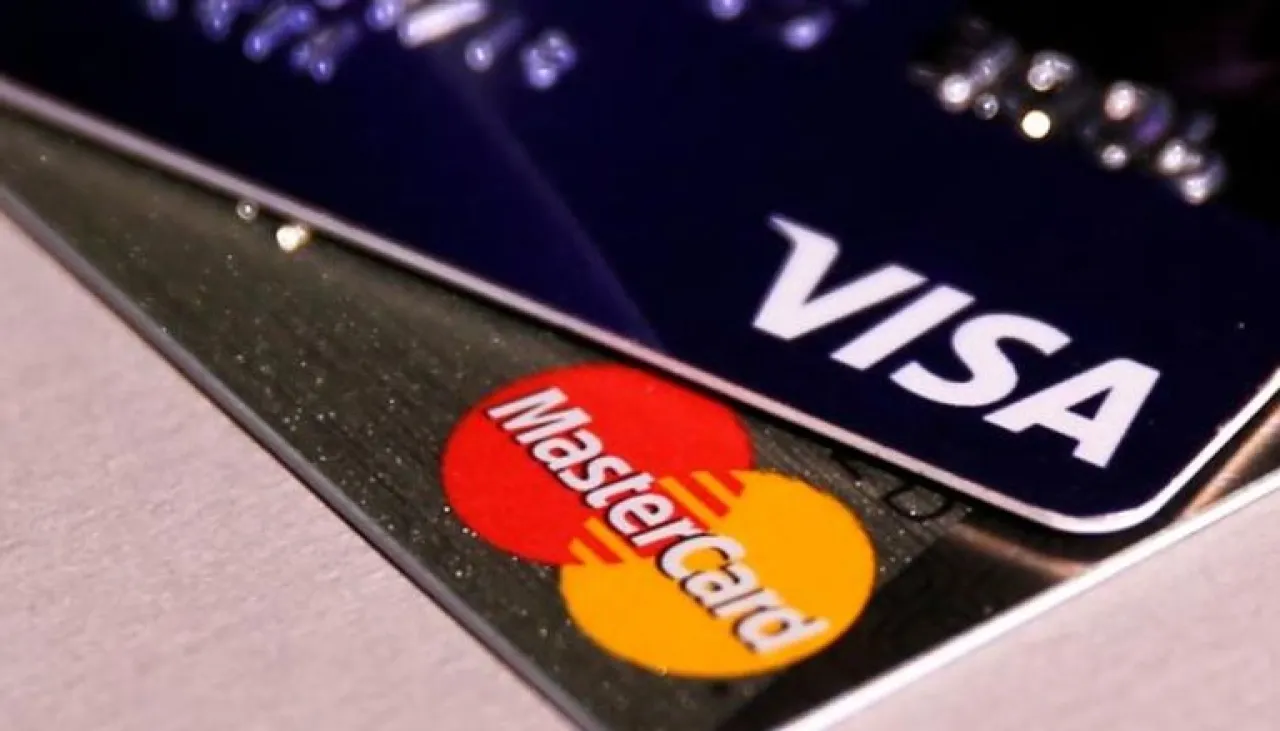
Khaberni - The head of a banking alliance confirmed that Europe urgently needs to reduce its reliance on American credit card companies such as Visa and Mastercard, while officials warned of the possibility of exploiting their dominance in the market as a weapon if transatlantic relations deteriorate.
Martina Weimert, CEO of the European Payments Initiative (EPI), comprising 16 banks and financial service companies from Europe, said: "We rely heavily on international payment solutions".
In her statements to the Financial Times, she added: "Yes, we have good national assets like local payment card systems, but we lack any cross-border solutions."
She continued: "If we say that independence is critical, and we all know it's about timing, then we need urgent action."
Visa and Mastercard accounted for nearly two-thirds of card transactions in the eurozone in 2022, according to the European Central Bank, while 13 member states lack a national alternative to these American service providers. Even in countries with local systems, their usage is declining.
As cash use declines, European officials are increasingly worried about the potential exploitation of the influence of American payment companies as a weapon in the event of serious tensions in relations.
This is one of the many vital areas where officials fear an excessive dependence on American companies, as a cybersecurity official in Belgium recently warned that Europe "lost the Internet" due to the dominance of American tech giants.
In a recent speech, Mario Draghi, the former president of the European Central Bank, warned: "Deep integration has created dependencies that can be exploited when not all parties are allies. Interconnectivity, which was previously seen as a source of mutual restraint, has become a source of influence and control."
The European Payments Initiative (EPI), which includes BNP Paribas and Deutsche Bank among its members, launched the service called Wero, a European alternative to Apple Pay, in 2024.
This digital payment service currently claims to have 48.5 million users in Belgium, France, and Germany, with plans to expand to include online and in-store payments by 2027.
Weimert said that banks and merchants are largely aware of the necessity to create a cross-border European payment network, but the "geopolitical context" has now made it a "fundamental topic that cannot be ignored."
The European Central Bank announced that previous private sector initiatives, including an earlier plan by the European Payments Initiative to launch a competing card system, "demonstrated the difficulty of expansion," as a spokesperson for the bank pointed to "difficulty in getting stakeholders to agree on common standards."
The European Central Bank is promoting the digital euro, a public initiative aimed at enabling digital payments throughout the eurozone, to enhance the monetary sovereignty of the bloc.
Piero Cipollone, a member of the executive board of the European Central Bank responsible for the project, emphasized its importance last week.
He said: "As European citizens, we want to avoid a scenario in which Europe is excessively dependent on payment systems that are not under our control."
The project sparks division among European politicians, and some lending bodies have pressured against it, claiming it would undermine private sector efforts. The vote in the European Parliament later this year is likely to be crucial.
According to the currency site "Coin Geek," merchants in the eurozone will have to accept the digital euro in stores and online by 2029, the year the European Central Bank plans to begin issuing the token.
The underlying infrastructure will be open for private sector initiatives to build upon.
Auror Laluc, chair of the Economic Committee in the European Parliament and a supporter of the project, told the Financial Times that the digital euro could "provide the basis, which once unified, could build a European equivalent to Visa or Mastercard."
However, Weimert warned that if geopolitical tensions worsen, the launch of the digital euro might be too late.
She added: "The digital euro's problem is that it will be launched in about two years, possibly after the end of U.S. President Donald Trump's term, so I believe the time of need for it may have just passed."