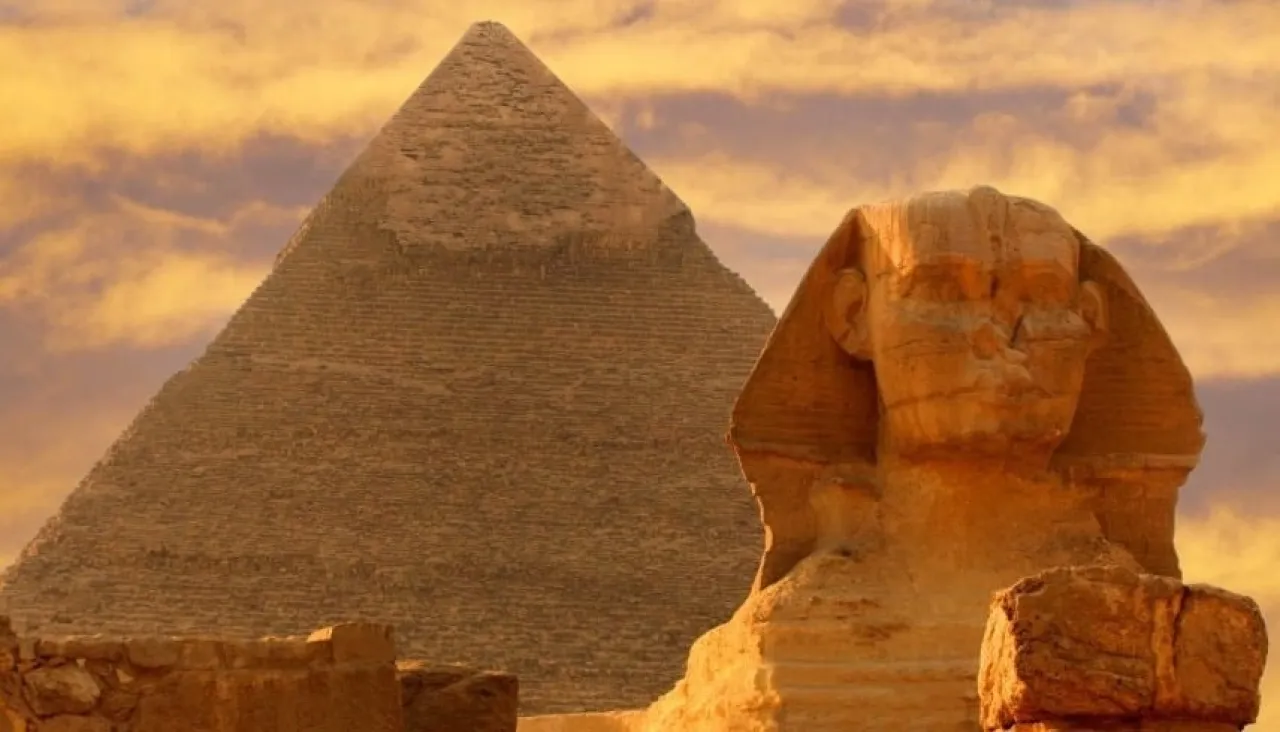
Khaberni - An independent researcher has sparked widespread controversy after proposing a new theory about the "Axis of the Universe", which claims the existence of an advanced global civilization dating back between 38,000 and 40,000 years, alleging that this civilization left similar symbols and structures at various archaeological sites, including Egypt, Turkey, and South America.
Researcher Matthew Lacroix said that recent discoveries in Egypt led him to link recurring symbols, such as giant T-shaped figures, and both stepped and inverted pyramids, among geographically distant archaeological sites, considering that this similarity could not be coincidental.
According to statements made by Lacroix to the "Daily Mail", the Sphinx and the Giza Plateau contain architectural elements similar to those found in sites like Tiwanaku and Puma Punku in Bolivia, in addition to sites near Lake Van in eastern Turkey, which he describes as the initial launch point for this alleged civilization.
He referred to a stone inscription known as "Kefkalezis inscription" in Turkey, which he said bears the same symbols found in Giza, and is considered a primary evidence – according to his theory – of a single global architectural pattern.
Lacroix claims that this civilization possessed advanced astronomical knowledge, which led him to date the construction of the pyramids and the Sphinx to about 38,000 years ago, dismissing currently accepted dates.
Conversely, archaeologists reject these claims, affirming that the Lake Van sites date back to the Urartian era only a few thousand years ago, and there are no scientific evidence or peer-reviewed research that proves the existence of a pre-Ice Age global civilization or supports the dating suggested by the researcher.
Experts emphasize that similarities in geometric shapes do not constitute evidence of global cultural contact, stressing that the history of the pyramids and the Sphinx is still supported by clear archaeological evidence belonging to the ancient Egyptian civilization.