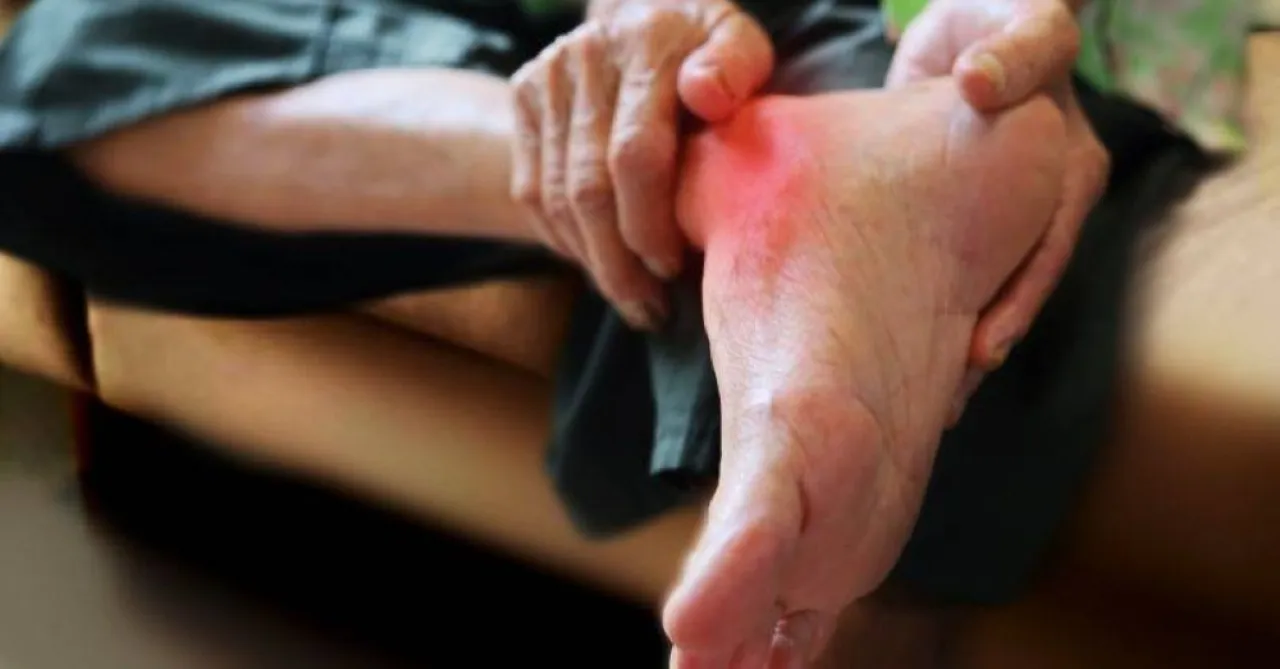
Khaberni - Out of every 125 million people, only one contracts the disease known as «CIPA», and in broader estimates for the general lack of pain perception, the rate reaches one case per million people.
CIPA stands for "Congenital Insensitivity to Pain with Anhidrosis", a very rare and serious genetic disorder that affects the nervous system from birth. It is characterized by a loss of pain and heat sensation, such that the affected individual does not feel injuries or burns, or even bone fractures, and their body cannot cool itself through sweating, leading to frequent and severe fever attacks. Some sufferers may also bite their tongues, lips, or fingers involuntarily due to the loss of sensation.
It is one of the rarest genetic diseases, with an estimated 300 to 500 documented cases worldwide, and is more prevalent in genetically isolated or closely related communities.
The Gift of Pain
We all suffer from severe pain; because of it, we quickly resort to painkillers, but behind this annoying feeling, a truth often escapes our notice; pain is a phenomenal blessing. It is the language through which the body speaks to alert us to a problem somewhere, prompting us to rush to the doctor or take painkillers. Yet, there are those who live without this language at all.
They are rare individuals suffering from diseases that render their bodies silent to wounds, fractures, and burns, so they do not receive the pain signals that typically alert us, and among these individuals are those born with this genetic neural disorder (CIPA), and others who lose sensation later due to diseases like leprosy, diabetes, multiple sclerosis, or spinal cord injuries.
Introduction to the Phenomenon
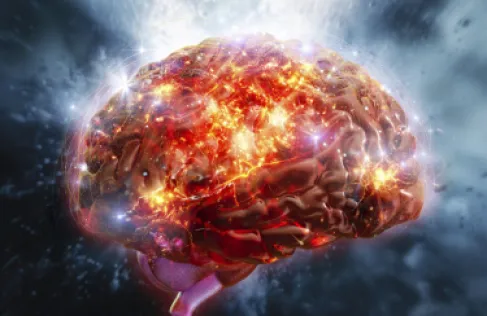
Dr. Mohammed Talal al-Rifa'i (Head of the Department of Pediatric Neurology) says that pain is not merely an annoying sensation, but a finely tuned system that operates in remarkable coordination between nerves and brain. It all starts when an injury, burn, or intense pressure occurs on a body part, stimulating small nerve endings called «pain receptors», which send electrical signals through nerves to the spinal cord and then to the brain where it is interpreted as "pain".
These signals not only alert us to danger but also guide us accurately to its location. If this system is disabled for any reason, the signals disappear completely, and the body appears calm outwardly, while it suffers internally.
Types of Pain
Pain can be physical due to an obvious injury or inflammation, or neurological due to a malfunction in the signals between nerves and brain. It could be acute, lasting less than 3 to 6 months and disappearing when the cause resolves, or chronic continuing even after the wound heals.
But the picture is not complete without the psychological side. The brain centers responsible for physical pain are also active during sadness or loss, hence phrases like «my heart aches» or «a situation wounded me».
Here the overlap between body and mind appears; depression and anxiety are able to amplify physical pain, while psychological trauma leaves a real impact on the nerves and muscles.
He adds that those afflicted with "CIPA" can still feel emotions despite the absence of physical sensation.
Nightmares of Pain Absence
Dr. Rifa'i points out complications from CIPA:
- Biting of the tongue and lips
- Ulcers
- Limb injuries
- Corneal issues due to lack of sensation
He advises the use of protective glasses, daily body inspections, and sometimes teeth extraction to protect the tongue and lip.
Real-life Experience
Noura tells the story of her daughter (Jumana) who was born with CIPA, saying «in her first few months, I noticed strange behaviors. By the age of 6 months, she started biting her fingers until they bled. I realized she suffered from the same disease her uncle did».
She continues «Because she felt no pain at all, I extracted her small teeth to prevent her from hurting herself, and I made her wear head and knee guards to prevent injuries from falls».
She adds «She was constantly returning to the hospital. Neurologists conducted brain and nerve mappings every 6 months and prescribed her Depakine, a treatment that controls nerve attacks and activity spikes in the brain».
About psychological support, she says «She underwent monthly sessions teaching her how to protect herself. She had a tendency to pull out her hair, so the doctors advised me to buy her a doll with long hair to teach her how to style it instead of pulling. They always warned her about heights, hot objects, and sharp items, and showed her simple educational clips».
She concludes «As she grew older, her condition became more difficult, and she died in my arms at the age of 11».
Is Pain Useful?
«Pain is a blessing.. and its loss a serious misfortune that could lead to premature death», says Dr. Rifa'i, adding that «disease detection is usually early; a child who doesn't cry when pricked by a needle, or doesn't feel pain during circumcision, all these are indicators that necessitate examination».
Dr. Bashir (a consultant in health psychology) mentions that «the absence of pain perception affects not only the safety of the body but also has a profound impact on the psychological and human experience of the sufferer. Pain isn't just a physical sensation but a biological warning system, a common language for empathy and learning from experience».
He points out that «those who lack pain perception face difficulty recognizing danger and understanding the suffering of others, not due to a lack of human empathy but because of the absence of this basic sensory experience which most people rely on to build this understanding».
He believes that physical and emotional pain share closely linked neural pathways in the brain, explaining the close relationship between pain and emotions. He emphasizes that children who do not feel pain need double the psychological and behavioral support to compensate for the absence of this natural signal, through constant guidance, awareness, and understanding of danger through cognition rather than sensation.
He concludes that «cases like CIPA teach us a deep human lesson; despite its severity, pain is not an enemy of life but one of its most important protective tools and a bridge to understanding oneself and others».
CIPA
A shorthand for Congenital Insensitivity to Pain with Anhidrosis.
A very rare and serious genetic disorder that affects the nervous system from birth.
Characteristics include loss of pain and heat sensations, lack of sweating, self-injuries, and joint and bone issues.
Pain is a natural warning system, and its absence could lead to undiagnosed illnesses and potentially to death.