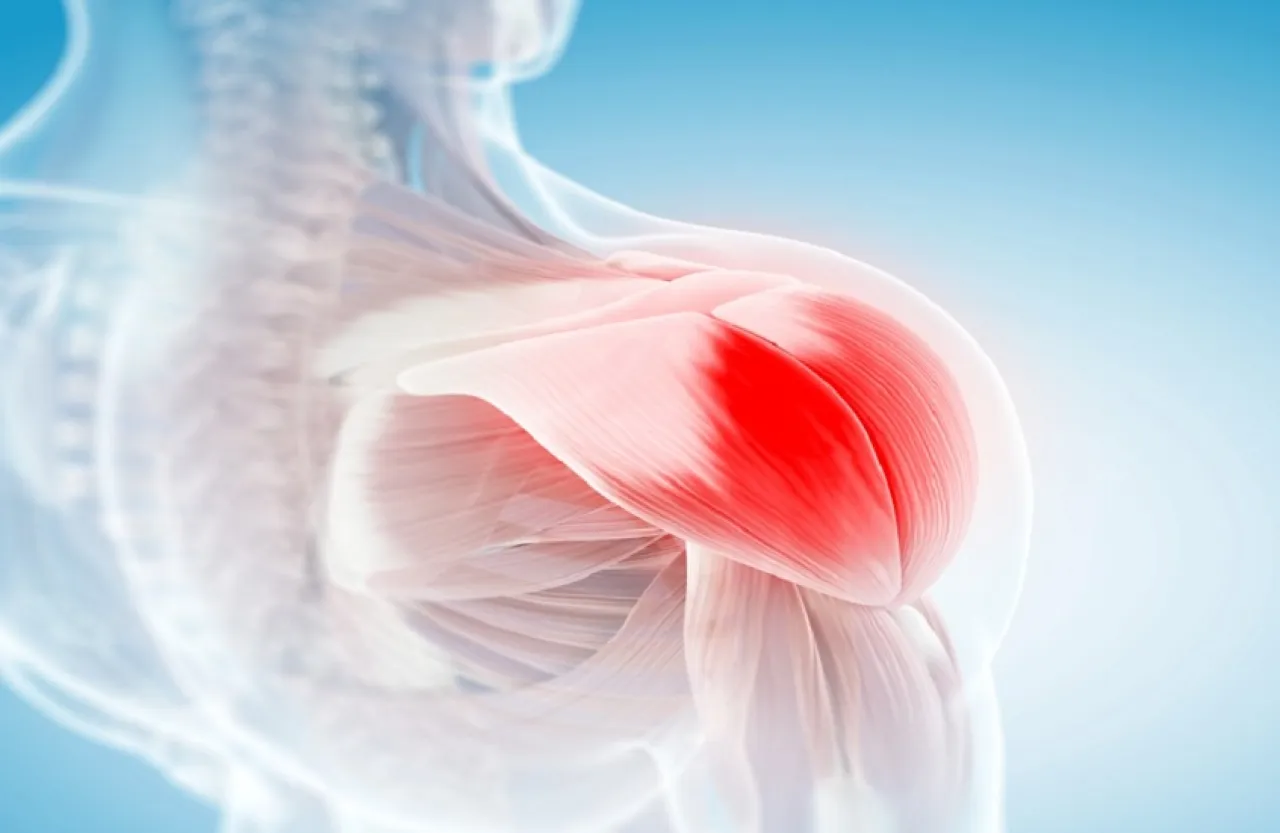
Khaberni - Millions of people around the world suffer from mysterious muscle pain when taking statin drugs to lower cholesterol, which prompts many to stop taking these potentially life-saving medications.
Studies indicate that about 10% of statin users suffer from this muscular syndrome.
Researchers from Columbia and Rochester Universities in the United States have discovered the cause of these symptoms, such as pain and fatigue, explaining that they result from the leakage of calcium ions into muscle cells, leading to tissue damage and potentially life-threatening complications.
Statins work by inhibiting an enzyme necessary for cholesterol synthesis in the liver, thereby lowering harmful (LDL) cholesterol levels in the blood.
However, these drugs not only affect cholesterol but also interact with a protein called "ryanodine receptor 1" (RyR1), which is a channel found in the sarcoplasmic reticulum that surrounds muscle fibers. RyR1 acts as a guard that opens or closes the necessary calcium gate for normal muscle contraction.
Using mice as models, researchers observed how statins bind to RyR1 through a cryo-electron microscopy (cryo-EM) technique, which allows for creating accurate three-dimensional images of biological molecules. They found that some statins, like "simvastatin," may keep these channels open, allowing calcium to leak into the muscles, either directly to destroy tissues or to stimulate muscle-breaking enzymes.
As a result, statin users suffer from chronic pain, weakness, sensitivity, and muscle cramps. The risk of symptoms increases in individuals with mutations in RyR1, which can lead to malignant hyperthermia outbreaks or diaphragm weakness, affecting lung function and the respiratory system.
In rare but serious cases, this muscular leak can lead to rhabdomyolysis, a syndrome where muscles break down and their components enter the blood, causing kidney failure. It can also lead to autoimmune myositis, where the immune system attacks muscle tissue and causes its destruction.
Andrew Marks, a cardiologist at Vagelos College of Physicians and Surgeons at Columbia University, says, "I have patients who were prescribed statins, but they refused to take them because of the side effects. It's the most common reason for patients to stop these medications, and it's a real problem that requires a solution."
The researchers point to two promising options to solve the problem: the first is redesigning statins so they do not bind to the RyR1 receptor while retaining their ability to lower cholesterol. The second option is using the drug Rycal on statin-intolerant mice, which has been able to close the leaky RyR1 calcium channels and prevent muscle weakness caused by "simvastatin."
The study was published in the Journal of Clinical Investigation.