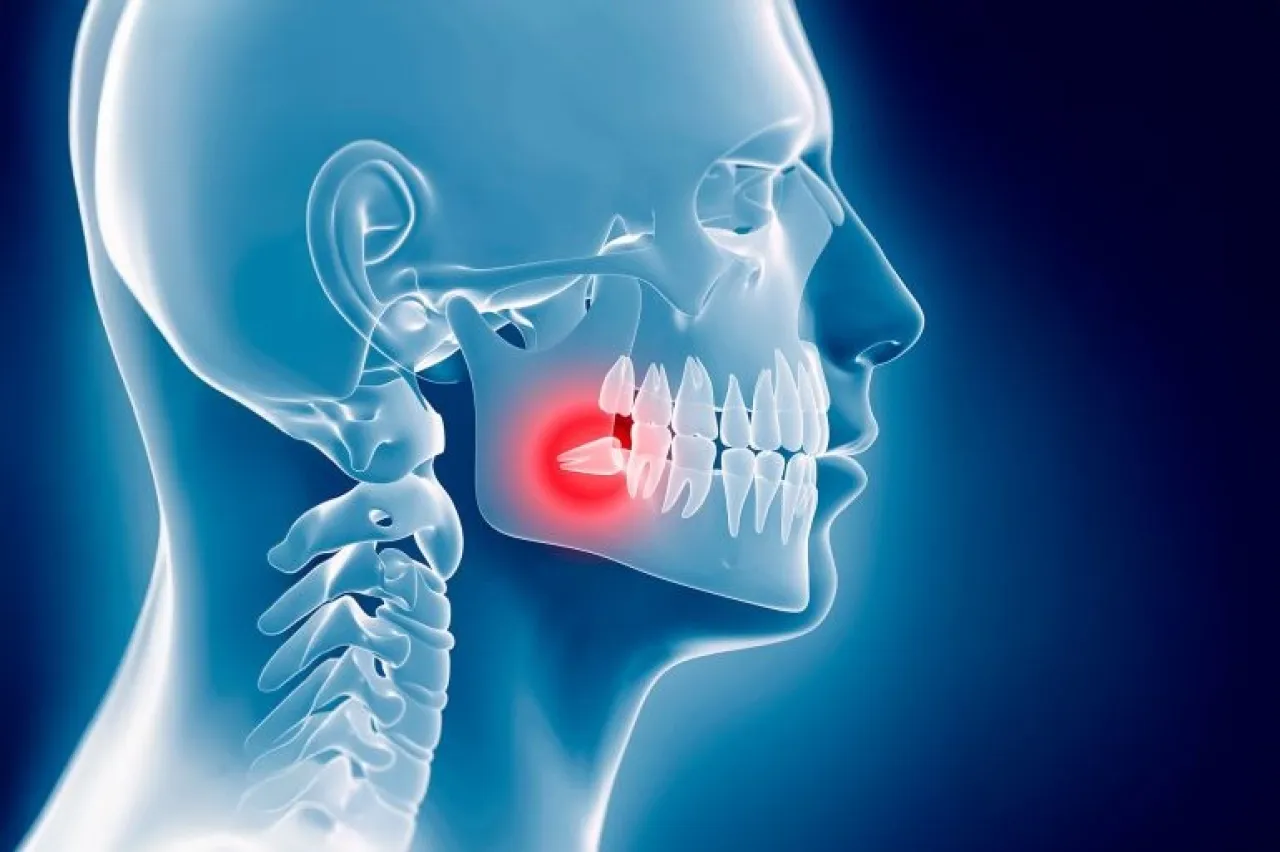
Khaberni - Many people may be forced to remove a wisdom tooth due to severe pain or unbearable inflammation; however, adhering to simple post-surgery measures can contribute to speeding up recovery and avoiding complications, according to dentists.
The wisdom tooth is the third permanent molar that emerges at a later age, coinciding with an individual reaching maturity, hence the name.
Although these molars are not used in the chewing process, they can lead to a host of issues. In such cases, surgery to remove the tooth may be beneficial in some circumstances and risky in others.
German oral surgeon Martin Ullner says that wisdom teeth typically appear during adulthood, between the ages of 18 and 25, but not everyone develops wisdom teeth. Some individuals might have four wisdom teeth, while others might not have any at all.
In some cases, if the wisdom teeth do not have enough space in the jaw, they may grow at an angle or become impacted within the bone, which can cause severe pain, inflammation, or difficulties in chewing, necessitating their removal.
When is the Surgery Complicated?
Ullner notes that the complexity of the extraction depends on the tooth's position; if it has emerged normally within the mouth, it can be easily removed without complex surgical intervention.
However, if it is impacted within the jaw bone, known as an impacted tooth, the procedure might require opening the gum and sometimes removing part of the bone to access it.
Expected Symptoms After Extraction
Common symptoms after wisdom tooth surgery include swelling at the extraction site and surrounding facial area, in addition to pain, limited mouth opening, and minor bleeding.
These symptoms are more common in the lower jaw compared to the upper jaw.
Recovery Duration
According to Ullner, the full recovery phase typically takes about a week. Pain and swelling peak during the first three days after the operation, then gradually the symptoms begin to decrease, and jaw stiffness eases.
Appropriate Pain Relievers
Professor Christoph Benz, a member of the Dental Association of Bavaria, warns against taking certain pain relievers after wisdom tooth extraction, pointing out that aspirin is not appropriate as it may negatively affect blood clotting.
In contrast, both paracetamol and ibuprofen are effective options for pain relief.
Cooling and Oral Care
Localized cooling helps reduce swelling, to be done after the anesthesia wears off, wrapping ice packs in a cloth to avoid skin damage. Cooling should be intermittent, ten minutes on followed by ten minutes off.
It is recommended to use a soft toothbrush in the early days and to continue using mouthwash after meals to keep the wound clean and prevent inflammation.
Food and Exercise
After the anesthesia wears off, one can eat soft foods such as soup and mashed potatoes, avoiding fizzy drinks and caffeine. Chamomile tea is preferred for its role in wound healing, while it is advised to stay away from dairy products for the first three days as a precaution.
Doctors warn against exercising immediately after surgery, preferring at least two days of rest to avoid increasing pain or bleeding.
When Should You Consult a Doctor?
Although the wound usually heals without issues, consulting a doctor becomes necessary if the pain persists for more than three days, worsens, or if symptoms such as difficulty swallowing, lower jaw and neck pain, or a general feeling of illness accompanied by fever appear, which may indicate an infection.