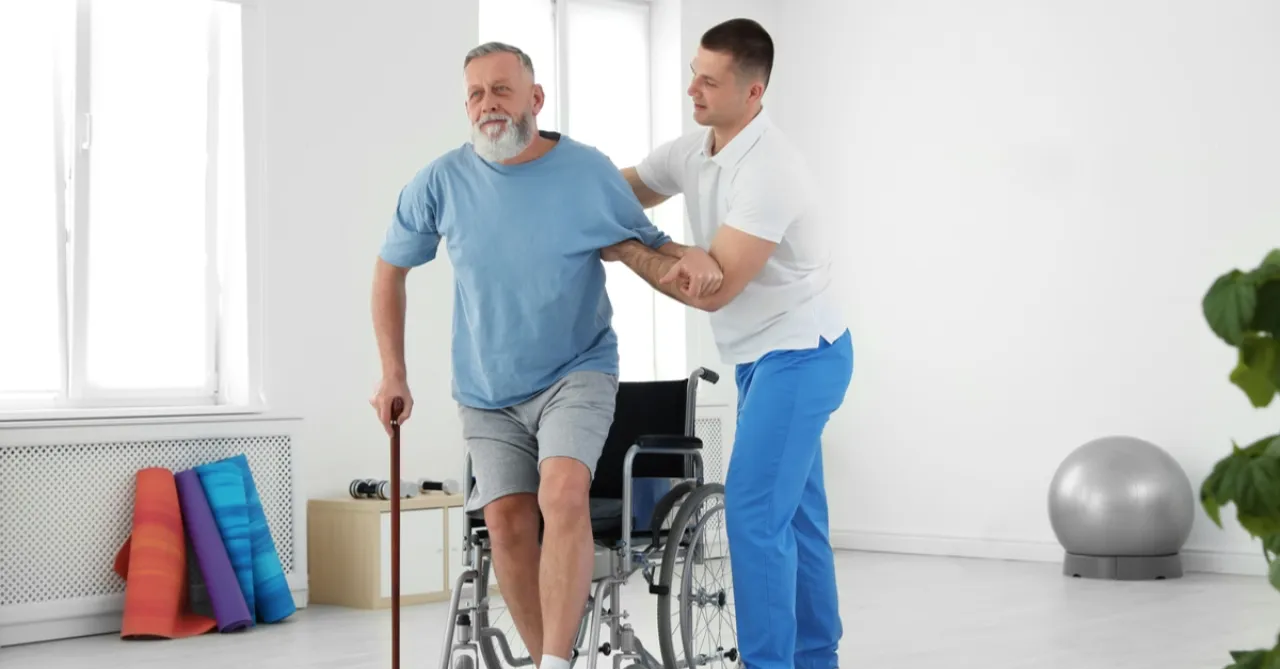
Khaberni - Many stroke survivors face long-term issues with arm movement, and the effects are not usually limited to the directly affected arm, but also extend to the other arm, which is presumed to be healthy.
In many cases, the efficiency of both arms declines, making the completion of everyday tasks a continuous challenge.
Forced reliance on one arm
People who have severe disability in one arm are forced to rely almost completely on the other arm for daily activities, such as eating, dressing, and performing household chores.
However, when this arm is slow or uncomfortable to use, even simple tasks become exhausting, and this may lead some to avoid these tasks as much as possible.
A recent study published in the JAMA Neurology journal suggests that training the less affected arm in people with chronic stroke can lead to a significant improvement in daily hand functions, and in some cases, this approach may be more effective than focusing solely on the more damaged arm.
Why is the “healthy” arm affected?
Recent research has shown that both halves of the brain are involved in controlling the movements of the arms, although their roles may differ. As a result, damage to one half of the brain can affect the movement on both sides.
While the arm opposite to the brain injury may suffer from clear weakness in strength and voluntary control, the other arm may also experience slowness in movement, weak coordination, and strength, which is observed in many stroke survivors.
Strengthening what remains instead of waiting for full recovery
Researchers believe that sustainable improvement may be due to a simple positive feedback loop, as the better the performance of the less affected arm, the more it is used in daily life, thereby building upon the gains made over time.
Although traditional rehabilitation focuses on the more damaged arm, many patients do not fully regain its function and are forced to rely on the other arm. In these cases, improving the performance of the less damaged arm can make a significant difference in independence and quality of life, even years after a stroke.