It is not new for a human to look at the glass from the angle of deficiency, and there is no fault in that principle, for criticism is a right, questioning is a necessity, and concern for the future is a sign of awareness, not of rebellion. But what is truly worrying is not the question, but the insistence that the answer be singular, that only the empty be the scene, and that the full be canceled as if it never existed, or as if it does not deserve mention.
Over time, we have accustomed ourselves to measure a country by what it has not achieved only, not by what it has accomplished under harsh conditions, and to judge the national experience by ideal standards, then we turn a blind eye to the surrounding reality, to a crumpling region, and to countries that were once wealthier and more stable than ours, which are now searching for the meaning of a nation before its services, while this country, despite all its limitations and pressures, stands firm, cohesive, knowing where to place its foot, where to raise its voice, and where to remain silent when silence is wisdom not weakness.
We are not required to glorify the reality, nor to sanctify the performance, nor to turn criticism into a crime, but we are demanded justice, and justice is not achieved by constantly focusing on the empty, as if the full is just a minor detail, or an inevitable result that no one deserves credit for. The state that remains in times of collapse does not remain by accident, and the state that maintains its minimum stability does not do so by luck, but by tough daily decisions that everyone pays for, without it being satisfactory for everyone.
The constant focus on the empty has created a general culture that sees every achievement as a conspiracy, every incomplete step as evidence of complete failure, and every stumble as a reason to demolish the whole picture, until public discourse has become captive to a single tone, which does not recognize gradation, does not accept partial solutions, and does not see reform as a long process, but instead waits for a single leap, and if it does not come, disappointment is proclaimed, and accusations of betrayal soar, transforming criticism from a tool of adjustment to a tool of exhaustion.
When we look honestly at the full glass, we do not do so to overlook the deficiencies, but to understand the context. Jordan, with its limited resources, its challenging political geography, refugee pressure, and the cost of stability that is not written into the budgets, has managed to maintain its institutions, its security, and a reasonable degree of social cohesion, and to open the door to criticism without shutting the state’s door, and this, in today's world, is not a minor detail.
The most dangerous thing about the culture of focusing only on the empty is that it produces a collective feeling of helplessness, convinces people that nothing is worth defending, and that everything existing is inherently false. When society reaches this conviction, reform is no longer the goal, but demolition becomes an acceptable, and perhaps desirable, option, without anyone asking: and what next?
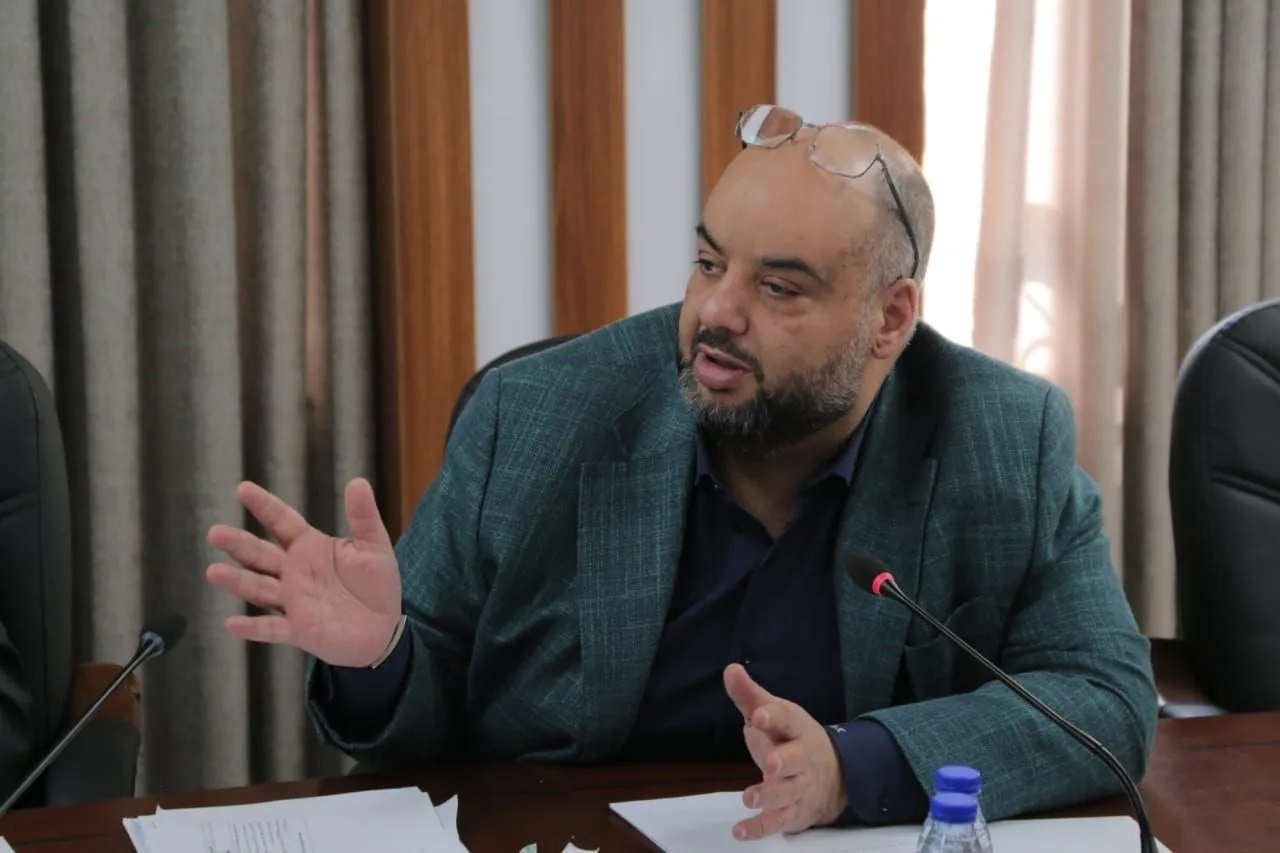
From my position as a deputy, I say that our responsibility is not limited to conveying anger, but to organizing it, not to magnifying the frustration, but to transforming it into answerable questions. The state is not built on shouting alone, nor is it rectified by constant skepticism, nor does it stay upright by blind applause. The balance between criticism and justice is not an intellectual luxury, but a condition of survival.
We are not required to say that the glass is completely full, for that is untrue, but we are required to acknowledge what is in it, to understand why it is not yet full, and to discuss how it can be filled, instead of breaking it every time because we are not satisfied with its shape. A broken glass cannot be filled, and a country that is indiscriminately chastised tires its people more than it corrects its mistakes.
Looking at what is full does not mean satisfaction, but rather possessing a groundwork we stand on as we demand, evaluate, and amend. Standing in emptiness produces nothing but more emptiness, builds no trust, and opens no horizons.
This is not a call to overlook, nor a justification of shortcomings, but a call to reorient our viewpoint, because if we persist in seeing our homeland as entirely empty, tomorrow we will find nothing in it to disagree upon at all, and there will be no glass, neither empty nor full.