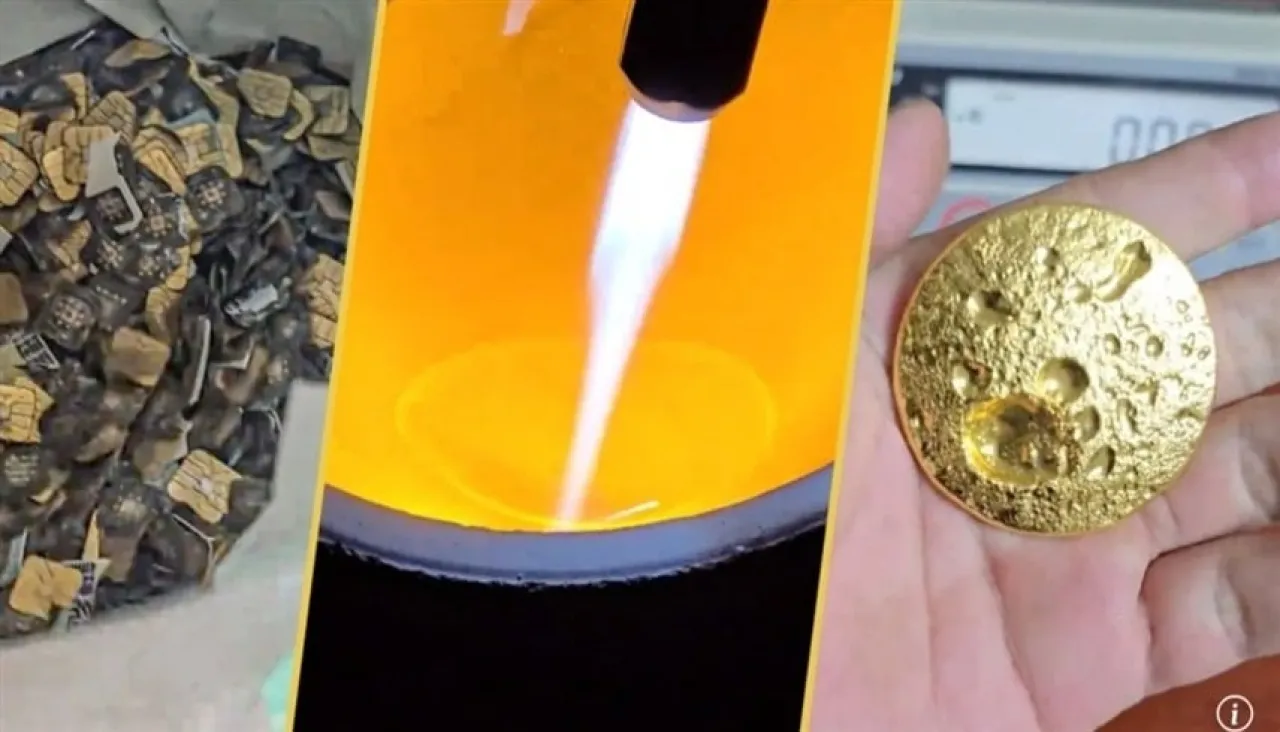
Khaberni - A video of a Chinese man demonstrating the process of extracting gold from SIM cards has swept social media, garnering millions of views and triggering an unprecedented surge in the purchase of used cards amidst official warnings of legal and health risks.
Xiao, who works in the field of refining precious metal scrap in Guangdong, southeast China, released a video where he pours used SIM cards into barrels filled with chemicals to begin a series of reactions including corrosion, replacement, and heating, before finally obtaining gold.
After filtering and heating the material, he successfully extracted 191 grams of gold, valued at about 200,000 yuan (about 29,000 US dollars).
Xiao explained that he used about two tons of electronic scrap to extract this amount of gold, noting that the raw material consisted not only of SIM cards but also a mix of waste from electronic chips used in the telecommunications industry.
He added that the main parts of SIM cards are coated with gold to ensure stability and corrosion resistance, according to "South China".
Chinese media reported that a single SIM card typically contains less than 0.001 grams of gold, noting that other waste, such as bank card chips and contact components in telecommunications devices, can also be recycled to extract precious metals.
On social media platforms, users dubbed Xiao "the Alchemist," in reference to his skill in turning electronic waste into gold.
One follower commented, "I've thrown away a lot of electronic chip waste, and now I regret all this lost gold," while another noted that "Xiao is professional, as alchemy requires a high level of chemical knowledge."
The spread of the video led to a surge in sales of used SIM cards on China’s e-commerce platforms.
However, Xiao emphasized that his video was not intended to promote "alchemy," affirming that he practices his trade legally and with an official license to refine specific electronic wastes. He said, "I'm just sharing my skills," warning amateurs against trying to replicate the experiment due to the serious risks involved, which could be illegal.
A report by a Chinese media outlet quoted an expert in the sector saying that the most common method for extracting gold on an individual scale involves using aqua regia, a highly corrosive mixture of concentrated acids, explaining that the process is very sensitive in terms of temperature, time, and acidity control, and that any small mistake could lead to the emission of toxic gases or violent corrosion reactions.
In China, the refining and trading of gold are strictly regulated, as refining precious metal scrap requires obtaining official licenses, and old SIM cards are classified as hazardous waste, with individuals attempting these operations facing fines of up to 500,000 yuan (about 72,000 dollars), alongside prison sentences for causing environmental pollution.
In related news, media reports reminded of a 2021 verdict issued in Jiangxi province, southeast China, where seven people were sentenced to imprisonment for up to three and a half years and were obligated to pay total fines of 930,000 yuan (about 134,000 dollars), after being convicted of illegally refining lead from old batteries.
Furthermore, a lawyer warned that selling "alchemy" kits online involves dealing with dangerous chemicals, making both sellers and buyers susceptible to legal accountability.