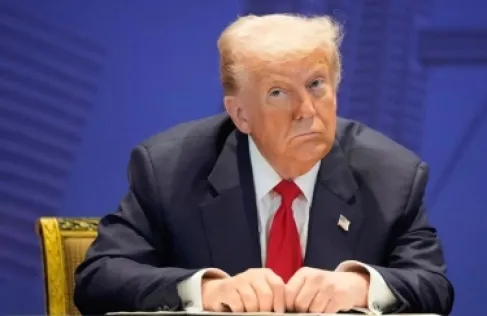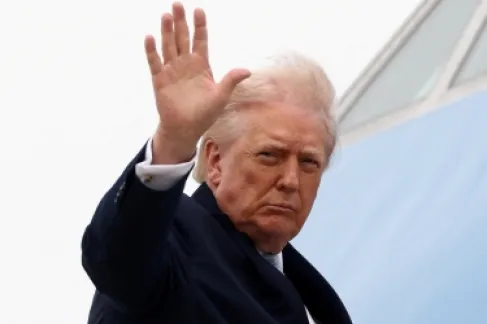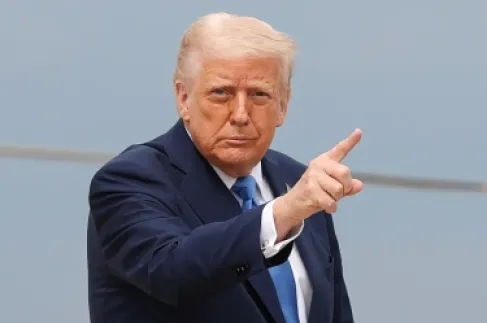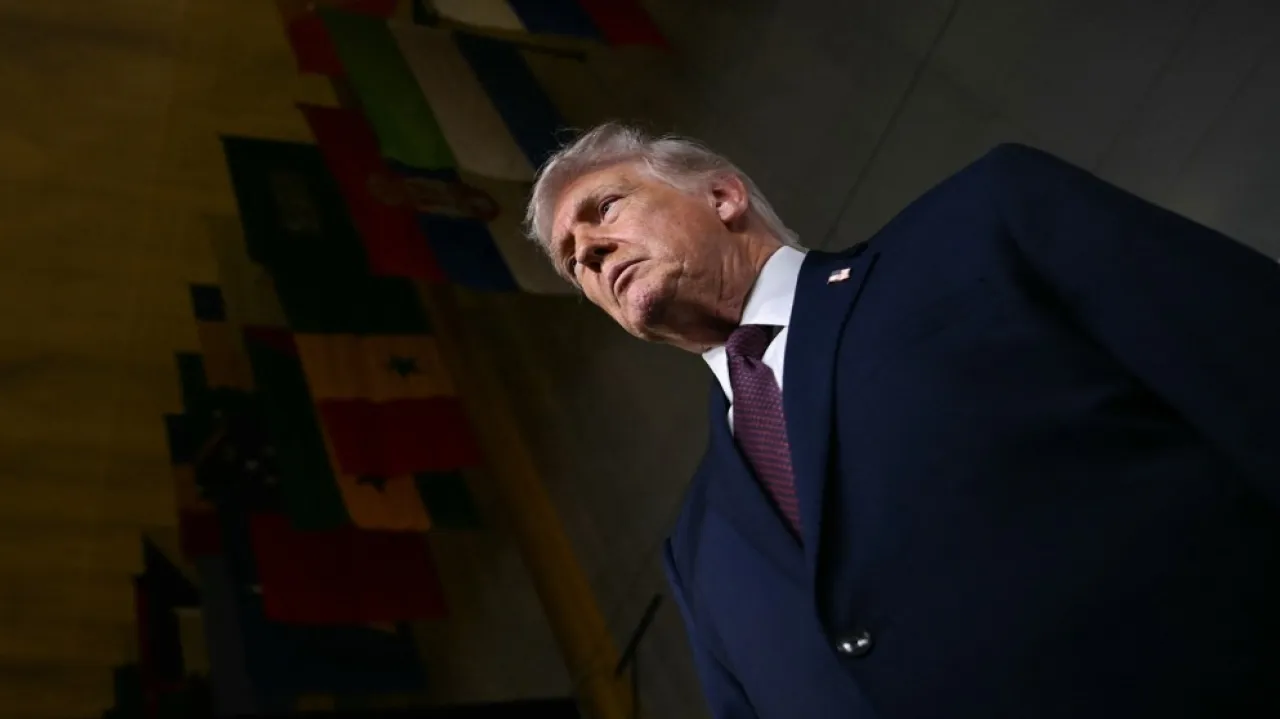
Khaberni - On Tuesday at the White House, the American President Donald Trump will meet his Colombian counterpart, Gustavo Petro, after months of exchanging insults through the media and social networks.
This meeting comes a few weeks after Trump's threats to Petro about a possible American military intervention in Colombia, similar to what happened in Venezuela when Washington overthrew President Nicolas Maduro, arrested him, and transferred him to the United States to be tried on drug trafficking-related charges.
Trump described Petro as a "sick man who likes to make and sell cocaine to the United States" and stated that the prospect of an American intervention in Colombia, similar to what happened in Venezuela, "looks good to me."
Over the months, the presidents have been exchanging insults, especially through their social media accounts.
However, their tone changed after a telephone call was arranged between the two on January 7th.
Trump told reporters in the Oval Office on the eve of their meeting, "He has been very nice over the past month or two."
He added, "He was critical before that, but somehow, after the attack on Venezuela, he became very nice. I look forward to seeing him."
The ban on Petro's entry visa to the United States will be lifted during the visit, which comes after months of American sanctions, funding cuts, and threats to strike targets in Colombia.
Colombia made a peace gesture before the meeting by agreeing on Friday to accept flights organized by the United States to deport undocumented migrants.
The meeting itself is a sign of improving relations, but there is significant tension in Bogotá about what might happen.
Diplomats exchange jokes about the possibility of Petro being severely reprimanded in the Oval Office, similar to what happened to Ukrainian President Volodymyr Zelenskyy in February 2025.
Political analyst Felipe Botero from Universidad de los Andes said, "Both Trump and Petro are volatile. The meeting could easily go off track."
Talking about drugs
The two men are vastly different. The Colombian president is a fierce leftist and former guerrilla who tends to be verbose, while Trump does not like sharing the limelight with anyone.
Yet, they are also profoundly ideologically opposed.
Petro has long been a defender of Maduro, who shares the same ideologies, and remained so even while the United States was pressuring Caracas in the period leading up to the attack on Venezuela. Trump has described him as "racist" and "authoritarian."
Meanwhile, Trump declared that the attack on Venezuela is just the beginning of the United States reasserting its two-century-long demand for dominance over its backyard which includes Colombia.
Tuesday's meeting will also focus on the drug issue. Colombia is the world’s largest producer of cocaine, and the United States is its biggest consumer.
Trump said on Monday, "We're going to talk about drugs, because huge amounts of drugs are coming out of his country."
For decades, Colombia has been Washington's closest partner in Latin America, with billions of dollars flowing to Bogotá to bolster the military and intelligence services in the country to combat drugs.
But under Petro, coca production and cocaine exports have significantly increased.
Critics blame his cessation of drug eradication programs and his policy of negotiating with a variety of drug trafficking gangs and armed groups that still control vast areas of the country.
This visit comes ahead of Colombia's presidential elections scheduled in May, with left-wing candidate Ivan Cepeda leading the polls to succeed Petro. Cepeda has recently accused the United States of trying to "influence" the elections.
Before the meeting, Petro took steps to appease Washington, announcing the resumption of deportation flights to Colombia, which was the original reason for the disagreement between Petro and Trump.
Colombia will also resume the aerial spraying to eradicate coca crops, a practice that has been halted since 2015 and which Petro strongly opposed when he was a member of the Senate.