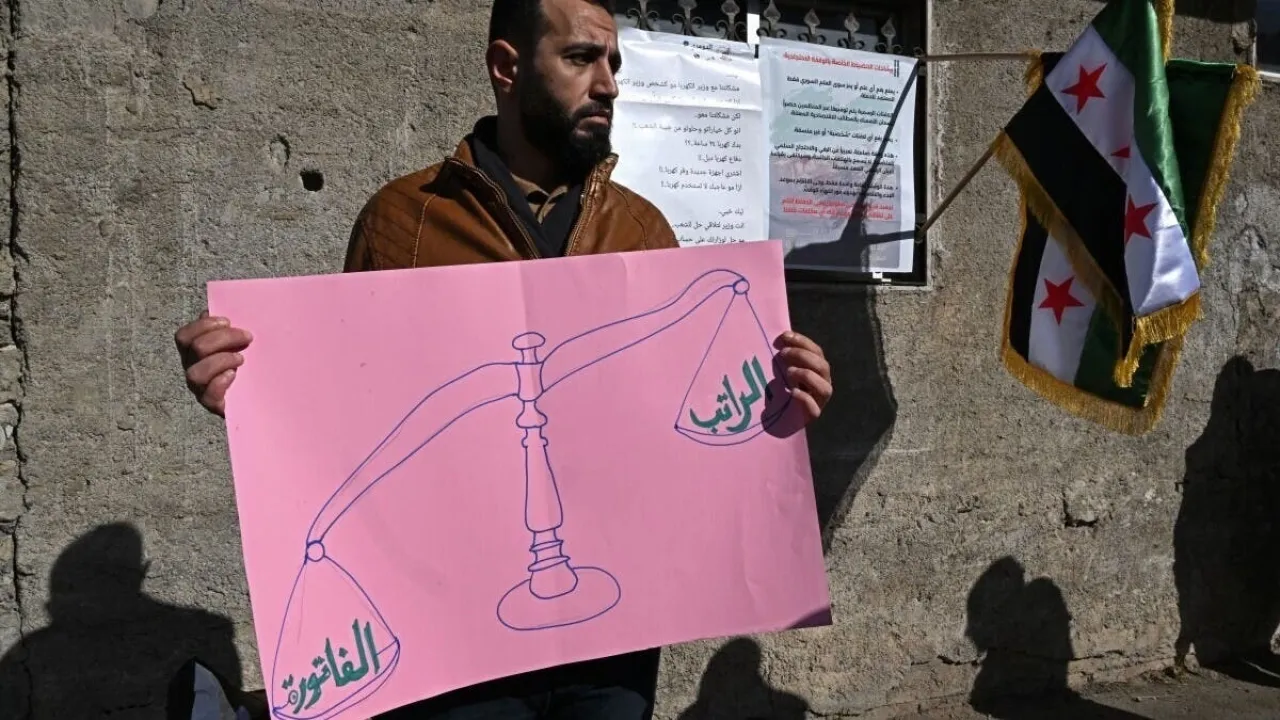
Khaberni - While the economic and living conditions in Syria remain difficult, dozens of Syrians gathered yesterday in front of the Ministry of Energy in Damascus to protest against the electricity price hike.
A number of citizens expressed their refusal to pay the electricity tariffs after the price increase, raising slogans "I'm not paying for electricity"
The value of a salary where retired agricultural engineer Hani Masalkhi in front of a government administrative center in Damascus, complained about the exorbitant electricity bill that equals his entire salary, wondering how he could secure his other needs, as reported by "France-Presse"
Masalkhi (70 years old) sadly said "My bill used to range between 15,000 to 20,000" Syrian pounds, which is less than two dollars, while it now "exceeds 800,000", which is about 72 dollars. The man, who receives a pension of seventy dollars, asked "What does a citizen do?.. All this while he hasn't eaten or drank yet and hasn't bought bread, gas, and fuel" to secure his daily sustenance and heating during the harsh winter.
In turn, retired Ministry of Awqaf employee Mohammed Daher said angrily, "My bill used to range between 10,000 and 15,000 pounds, and I used to economize and ration the consumption in my house. And today I am surprised that my bill has exceeded 350,000 pounds... Where do I get this amount from?"
"Electricity is a right for every citizen" and Daher and other protesters around him carried a banner that read "Electricity is a right for every citizen...we will not pay, we will not pay".
The man, whose income amounts to about sixty American dollars, added "We get electricity for two hours in the Tadamon neighborhood" on the outskirts of Damascus, then "we get a bill of 300,000 pounds?"
Meanwhile, feminist activist and retired employee Sawsan Zakzak (65 years old) believed that "electric service should be a right and it should be guaranteed and its prices should be proportionate to the salaries of citizens."
However, economic expert Mohammed Ahmed explained that "the main problem is not the tariff increase, but the erosion of the purchasing power of income, especially since some employees receive less than 100 dollars a month".
He also added that the increase in tariffs in the long term "aims especially to prevent the collapse of the electricity sector".
A new tariff and the Syrian authorities had started implementing a new electricity tariff that was approved three months ago and increased by a very large percentage over the previous tariff.
While it was explained that this increase comes "within the framework of an electricity sector reform project aimed at achieving sustainability and improving service" after harsh rationing that marked the long years of conflict the country has experienced since 2011, during which this vital sector was damaged.
However, the low wages and poverty in the country seemed to start casting their shadow. As most residents in Syria have been living below the poverty line for years, the minimum wage is 75 dollars, and many low-income people and retirees are unable to afford the new costs.
It is mentioned that since coming to power after more than 13 years of devastating conflict that ended with the fall of Bashar al-Assad's regime in December 2024, the new authorities have repeatedly pledged to increase the hours of electricity supply, and signed contracts and memoranda of understanding to import gas from Turkey and Qatar to increase production and attract investments from the Gulf countries especially to repair the dilapidated infrastructure. This has reflected an improvement in the supply hours, now nearing six hours daily in Damascus, after previously not exceeding two hours. However, it is still much lower in the suburbs of the capital and remote areas.
But despite these efforts to advance the economy which was exhausted by the war, Syrians have not yet seen a significant improvement in their daily lives, with the continued deterioration of their living conditions and the poor quality of services and public facilities.