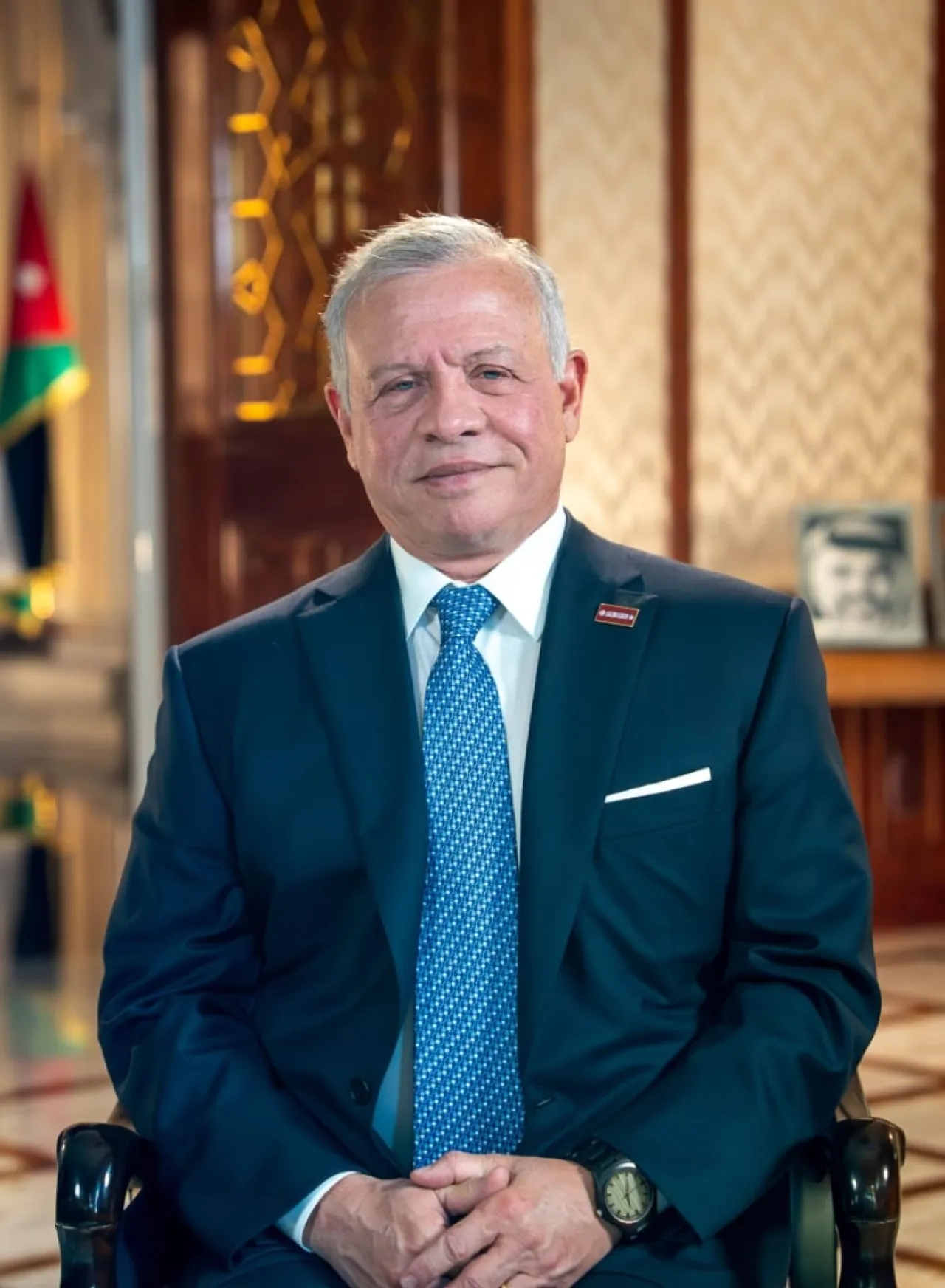
The sixty-fourth year of His Majesty King Abdullah II ibn Al-Hussein's life is not just a number added to his biography, nor a mere celebratory milestone completed with a passing speech, but a moment of deep reflection on a leadership experience that was formed on the fire of geography and had its consciousness honed in the statecraft school, not in the luxury of slogans. We celebrate not a temporal age but the accumulation of a rare political and human awareness, and a leader who recognized early that ruling is not a privilege, but a daily test of patience, choice, and bearing the cost of decisions.
From the very first moment, His Majesty the King chose to be a son of the state rather than only a scion of the throne; to rule with institutional logic, and to lead Jordan considering it an ethical idea before being a political entity. Therefore, his presence was not based on spectacle but on managing the delicate balances between an interior aspiring for reform, an exterior crowded with crises, and between immutable constants and the flexibility imposed by the passage of time.
In a world violently changing, where states decay from within before being threatened from outside, Jordan under the leadership of His Majesty maintained a rare equation where the state is stable without being rigid, open without losing its identity, steadfast in sovereignty, and prudent in politics. This was not the product of coincidence, but the outcome of a strategic mind that understands stability is not a slogan, but a complex process requiring patience, honesty, and often unpopular decisions.
His Majesty the King did not present reform as a leap into the void, but rather as a historical, accumulative path where trust is built before laws are passed, and the state is safeguarded before being tested. He knew that societies are not run by emotions and that people cannot be deceived by slogans for long, thus he chose the path of reform to be difficult but real, slow but solid, and protected by the state rather than threatening it.
In foreign policy, Jordan during his reign was not a state on the margins of history, but a state of stance where the voice might not be loud, but it does not retreat—a stance that knows how to say "No" when "Yes" would mean compromising dignity, and knows how to extend a hand when just peace is possible. Jordan, under his leadership, remained a space of reason in a region burdened with emotions, and a reference of balance when many lost their compass.
Palestine, for His Majesty the King, is not a circumstantial issue or a bargaining chip, but the essence of an ethical and historical stance that does not accept compromise. The Hashemite custodianship of the Islamic and Christian holy sites in Jerusalem has never been merely symbolic but is a responsibility borne with historical consciousness, defended by Jordanian policy, law, and diplomacy during the most difficult and costly moments, handling Jerusalem as a test of the nation's conscience, not merely an item in a statement.
Domestically, the Arab Army and security services remain at the heart of the national equation, not just as tools of power but as a doctrine of belonging where the army is called not for show, but for protection, and security exercises its role not to wield power but to guard stability. His Majesty's relationship with these institutions was built not on distance, but on mutual trust, and on a firm belief that the homeland is only protected by men who believe in it before they execute its orders.
Perhaps what distinguishes His Majesty the King's experience more than anything else, is his quiet human presence; a leader who listens before he speaks and understands that the pain of the people is not a subject for speeches, but a responsibility of governance. He addressed the Jordanians not from the heights of power, but from a position of partnership in concern and hope, knowing that trust cannot be imposed, but must be built, and respect for people cannot be bought, but earned.
On his sixty-fourth birthday, we stand before a leadership experience that was not summarized in one achievement or one speech, but in a complete path of difficult balance, calculated decisions, and deep belief that this homeland deserves to be managed with a cool mind and a live heart.
Every year, His Majesty King Abdullah II ibn Al-Hussein, who does not measure time by the number of years, but by the depth of impact, by the stability of the state, and its ability to remain standing while many states have bent.