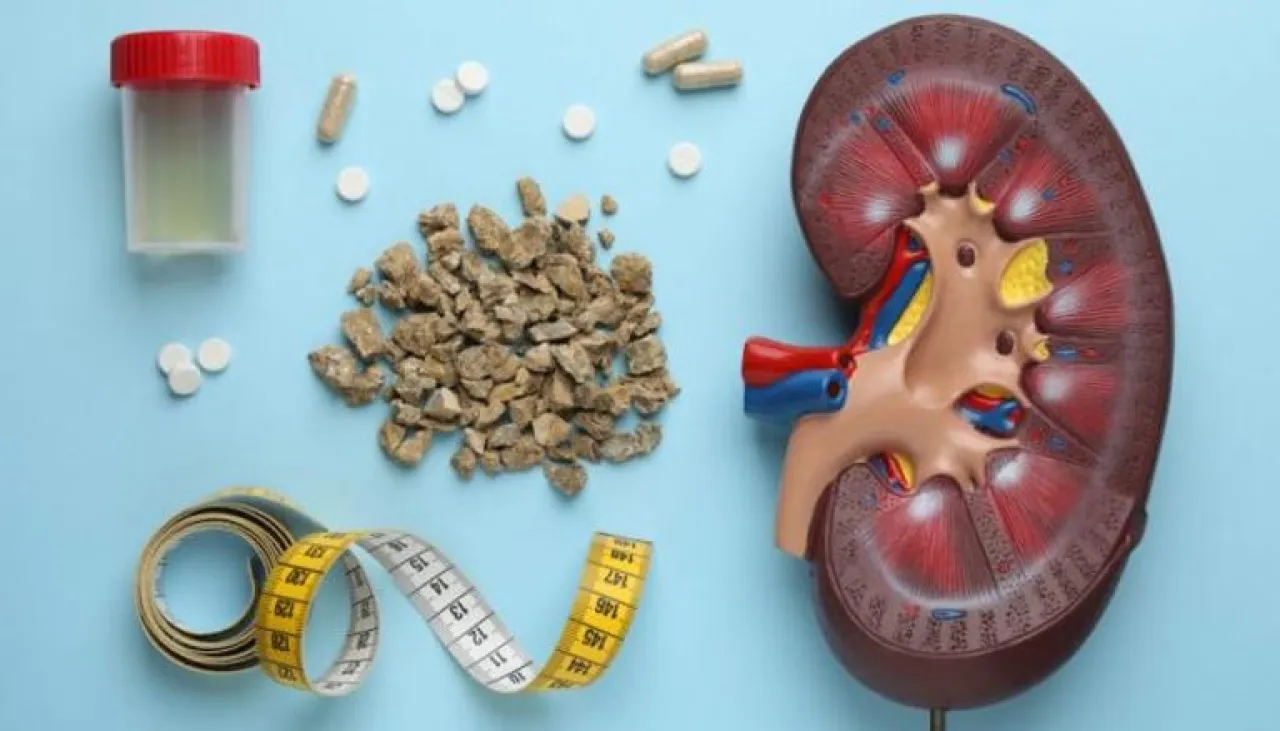
Khaberni - A research team led by the University of California has discovered a potential role for bacteria in the formation of kidney stones.
This significant breakthrough came after the discovery of living bacteria within the most common types of kidney stones, which points to a previously unknown component in the stone formation process.
The study's results are scheduled to be published in the journal "Proceedings of the Academy of Science", pointing to a new potential therapeutic target that could be used in prevention and treatment for millions of people suffering from this painful condition.
Kimura Scotland, an assistant professor of urology at the David Geffen School of Medicine at the University of California and a supervising researcher of the study, said the findings "challenge the long-standing assumption that kidney stones form solely through chemical and physical processes", explaining that the study shows that "bacteria can live inside the stones and may play an active role in their formation".
She added that this discovery opens the door to new therapeutic strategies targeting the microbial environment within kidney stones, rather than merely dealing with their chemical components.
Kidney stones are formed from small crystalline clumps, and the incidence rates have increased globally in recent years, with about one in every 11 individuals expected to suffer from them during their lifetime. Risk factors include family history, metabolic syndrome, and low fluid intake.
Stones begin to form when crystals grow in the urine to a size that cannot be eliminated through normal urine flow. Although there are multiple types of kidney stones, calcium oxalate stones are the most common, accounting for about 80% of cases, and it was previously believed that they did not contain bacteria.
However, using electron microscopy and fluorescence microscopy techniques, researchers observed live bacteria and biofilms integrated within the crystals themselves, in a discovery described by the team as unexpected.
Scotland explained that these findings could explain the prevalence of calcium oxalate stones and might help understand the relationship between recurrent urinary tract infections and the recurrence of kidney stones.
She added that the study suggests that bacteria might also be involved in other types of kidney stones, although the current research focused only on calcium-based stones.
The researchers emphasized the need for further studies to understand the precise interaction between bacteria and calcium stones, and to determine why some patients are particularly prone to recurrent episodes.
Scotland said, "We are currently working on identifying the traits that enable some types of bacteria to promote the formation of these stones, and why some patients are more susceptible to recurrent episodes."