Khaberni - The Cabinet decided in its session held on Sunday, chaired by Prime Minister Jafar Hassan, to approve the justifying reasons for the Professional Work Regulation Bill for 2026, and referred it to the Legislation and Opinion Bureau to proceed with the necessary approval procedures.
The bill concerns the regulation of the professional and technical labor market and those working in it, by requiring the attainment of a practice license within 3 axes: granting a professional license to graduates of vocational training institutions in general, including graduates of the Vocational Training Corporation, the National Employment and Training Company, the Advanced Vocational Training College, and any private companies involved in vocational training, where these institutions' graduates are granted a professional license before joining the labor market.
The second axis included in the bill concerns licensing service providers and companies and institutions that offer professional and technical training services, where it is mandatory to obtain a license from the Ministry of Labor, while the third axis involves the accreditation of training programs and trainers who deliver these programs in various institutions that must be accredited by the ministry for acceptance.
Under the bill, the Ministry of Labor will license providers of professional and technical training, supervise and regulate their operations, evaluate and monitor their performance, in addition to overseeing the implementation of professional and technical training programs, regulating professional test procedures, and managing professional practice licenses to create a stimulating work environment in the professional and technical fields.
The bill will also establish standards and conditions for licensing providers of professional and technical training in both the public and private sectors, register their qualifications and accredited entities, and classify professional trainers, alongside creating a single window through which coordination with relevant entities is managed to ensure licensing conditions and the requirements necessary for passing professional practice tests are met.
The bill aims to regulate the professional labor market by enhancing control and inspection of all professional establishments to ensure their compliance with the law and regulations issued under it.
In a related context, the Cabinet approved the justifying reasons for the Accreditation and Quality Assurance Authority Bill of 2026; and referred it to the Legislation and Opinion Bureau to proceed with the necessary approval procedures.
The bill complements the Professional Work Regulation Bill, which deals with granting licenses to providers of professional training services and the practice of the profession for graduates of its programs and the accreditation of trainers, while the Accreditation and Quality Assurance Authority Bill concerns accreditation and quality control of these programs and their alignment with labor market requirements.
The bill is an important step in the path of developing the education and training system and aligning education outputs with labor market needs; in line with the economic modernization vision and the public sector modernization roadmap, by enhancing the role of the Accreditation and Quality Assurance Authority to contribute to improving the quality of education at all levels, improving the efficiency of educational outputs, and enhancing the competitiveness of graduates locally, regionally, and internationally.
The bill aims to unify the reference for accreditation and quality assurance procedures; policy integration, enhance the efficiency of the control and evaluation system, in addition to improving the performance of educational and training institutions, and enhancing their ability to adhere to national and international standards, which positively reflects on the quality of education, the ranking of Jordanian universities in global classifications, and increasing the competitiveness of graduates in the local and international labor market.
The bill also expands the scope of the authority's work to include accrediting and ensuring the quality of general education institutions of all forms, including public and private schools and kindergartens, in addition to higher education institutions and professional and technical education and training institutions, within a unified national reference that enhances role integration and standardizes accreditation and quality assurance procedures, in addition to organizing education and training pathways, enhancing the transferability between them, and increasing the reliability of the institutions at the local and international levels.
The bill grants the authority the powers to recognize non-Jordanian educational institutions, including schools and universities, equate the degrees and institutions issued by them, and certify documents and certificates and institutions inside and outside the kingdom, thereby enhancing the trust in Jordanian institutions and supporting their international recognition, through the application of quality standards that match the best global practices.
In an effort to improve services provided to citizens, the Cabinet approved a decision by the Water Authority Board to allow the drilling, rehabilitation, and operation of new existing scattered wells in partnership with the private sector, according to the build-operate-transfer (BOT) system, with the goal of providing additional water sources alongside existing sources, and enhancing water supply.
According to the decision, implementation will be through two packages, the first includes 25 wells with a production capacity of up to 28,000 cubic meters per day (equivalent to 10 million cubic meters annually) and the second package includes 26 wells with a production capacity of up to 22,000 cubic meters per day (equivalent to 8 million cubic meters annually).
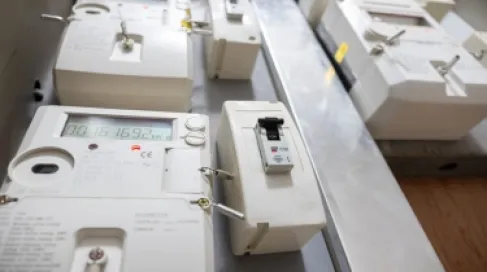
Under the decision, the bidder (the lowest price) will drill these wells, equip, and operate them entirely at his expense, connect them to the water supply network, comply with quality standards according to the specifications in the agreement and the Jordanian Drinking Water Standard No. (286/2015), install meters to calculate water quantities, and maintain their production for a period of five years including the implementation period, starting from the date of the commencement order, after which ownership of these wells will revert to the Water Authority.
In the context of international cooperation, the Cabinet approved a memorandum of understanding between the Ministry of Transport, the Ministry of Transport and Infrastructure of the Republic of Turkey, and the Ministry of Transport of the Syrian Arab Republic; for cooperation in the field of transport.
The memorandum aims to enhance cooperation and joint connectivity between the three countries, increase the efficiency and sustainability of transport operations across their territories, and develop transport infrastructure between them; positively reflecting on the movement of goods and people, in addition to exchanging expertise and encouraging and coordinating investments in infrastructure.
This cooperation includes, in addition to land and air transport, all possible future modes of transport, including railways and multimodal logistics services.
The agreement aims to standardize standards and regulatory alignment, enhance digital transformation and intelligent transport systems, build capacity and exchange knowledge, govern transport corridors and coordinate regarding them, in addition to involving the private sector and enhancing investment attraction.
A joint ministerial committee comprising transport ministers and other relevant ministers from the three countries will be formed; to act as a high-level coordination entity to provide strategic guidance, enhance dialogue, and supervise the implementation of the memorandum's provisions.
Furthermore, the Council approved a bilateral cooperation agreement between the Ministry of Youth and the Ministry of Youth and Sports of the Republic of Bulgaria; aimed at exchanging programs, expertise, and activities related to the youth sector.