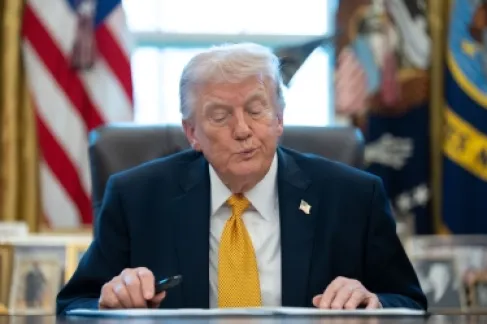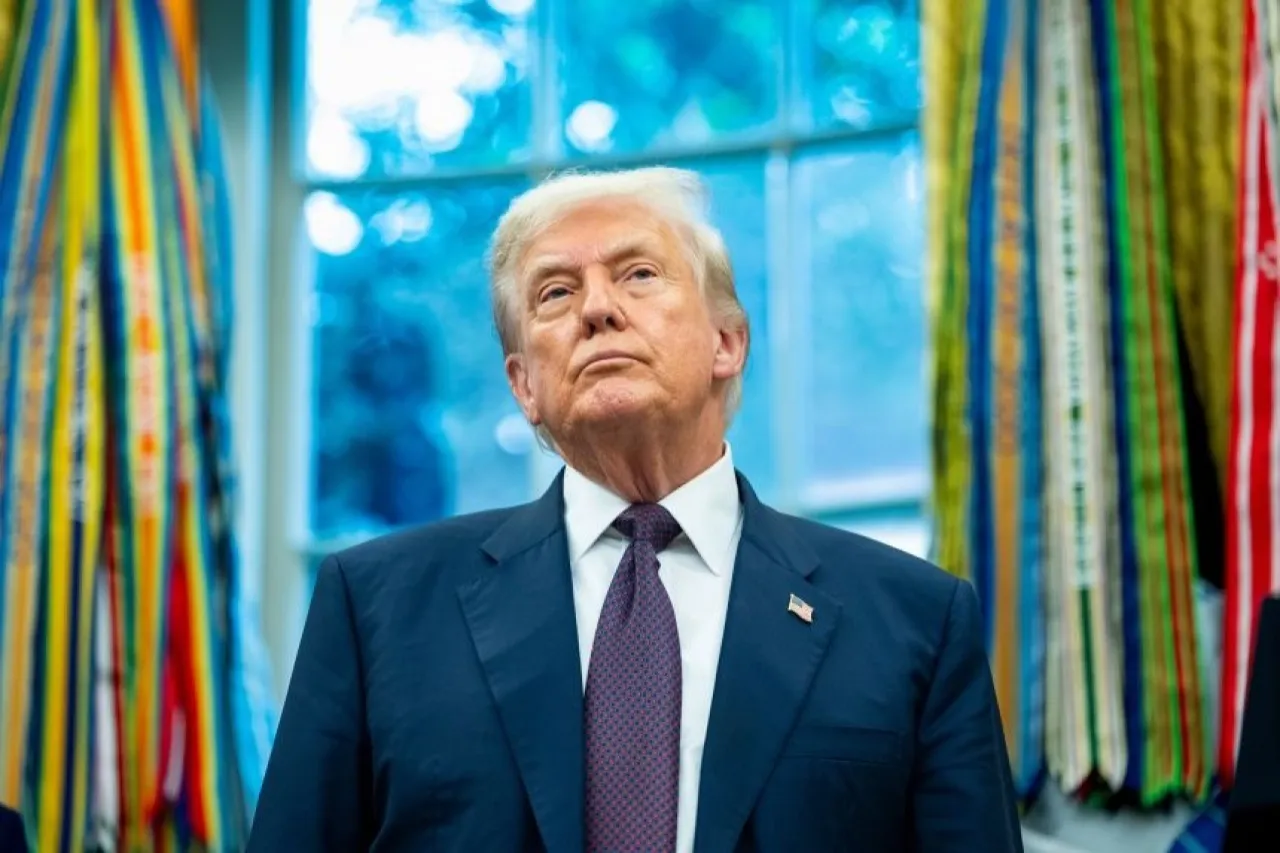
Khaberni - Politico reported on Friday that US President Donald Trump's publication of private conversations between him and European leaders has angered the leaders of the old continent and threatens to spark a trust crisis between Washington and its close allies.
In recent days, Trump published screenshots of a message he received from French President Emmanuel Macron, in which Macron proposed hosting a G7 meeting in Paris and inviting Russia to the meetings.
According to Trump's post on his platform, Macron stated that both parties completely agree on Russia, and "they could make significant achievements in containing Iran" while also expressing his understanding of the US position on Greenland.
Trump also posted a private message from NATO Secretary-General Mark Rutte, who referred to Trump as "the father" and praised his "amazing achievements," adding: "I can't wait to see you."
Politico mentioned that the US President's decision to take private conversations public has shocked the ruling political class in Brussels and beyond.
A senior diplomat told the site that leaking the private messages is "unacceptable," adding, "This is something that should not be done. It's extremely important; after this, no one will trust him. If you were a leader, you wouldn't tell him anything. This method of communication is crucial because it's fast and direct, and now everything will go through bureaucratic procedures."
The diplomat explained that these instant messages enable ministers and officials to coordinate solutions before making public statements, emphasizing that "without trust, it's impossible to work together."
Text messaging is an important communication tool among European leaders, who have also created a private chat group among themselves to discuss how to respond when Trump takes a provocative step.
Diplomats and officials fear that the erosion of personal trust among European leaders could have very serious consequences.
Following Trump's escalated attacks on European countries, leaders began considering ways to counter Trump.
European anger increased after the US President tried to "blackmail" them with threats of tariff imposition to force them to allow him to take over Greenland.
Trump's attacks did not stop there, as he canceled his support for UK Prime Minister Keir Starmer's decision to hand over the Chagos Islands to Mauritius, threatened France with tariffs on alcoholic beverages after ignoring President Emmanuel Macron's peace council initiative, and reprimanded the Norwegian Prime Minister for not granting him the Nobel Peace Prize.
Ultimately, European leaders concluded that Trump is "an unpredictable and unrestrained leader, to the extent that he can't even keep his word."
These repeated attacks have led Europeans to contemplate the future of their continent without the United States and without NATO.
Officials mentioned that European Commission President Ursula von der Leyen and her team must work on developing ways to move the continent towards more self-sufficiency, especially in the field of energy.
Europeans are also looking to build a vision for the future of European defense without relying on NATO, with some members proposing the creation of a European Security Council and an army of 100,000 soldiers.
However, Trump's rollback of some of his attacks and the nearing resolution of the Greenland crisis might cause European leaders to lose the momentum and focus they gained this week on the need for change, according to officials.