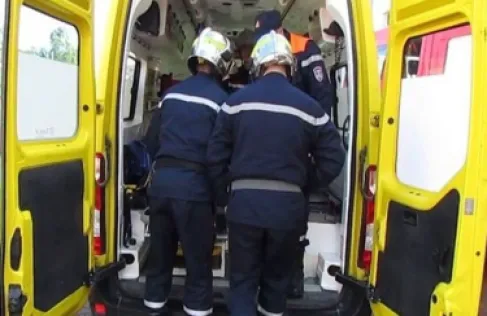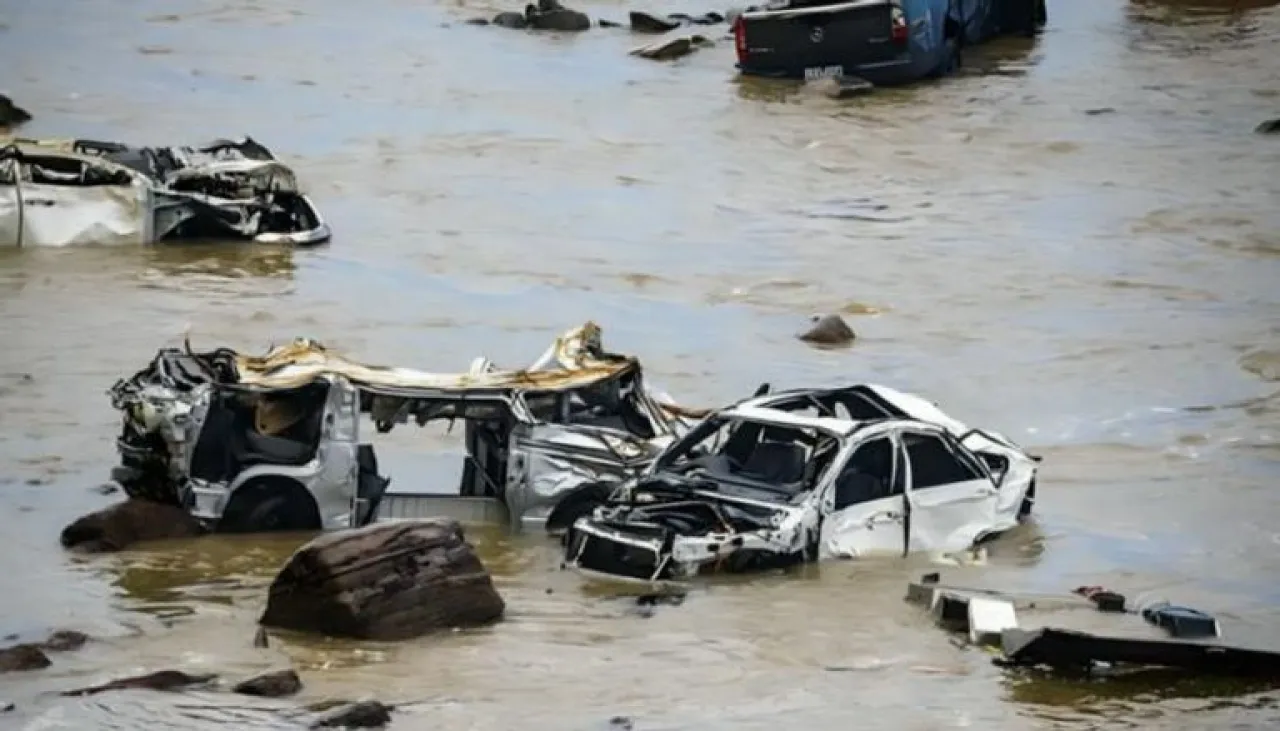
Khaberni - Recent images reveal the extent of destruction caused by the floods in Victoria, while New South Wales and Queensland continue to deal with the aftermath.
The floods currently affect the states of Victoria, Queensland, and New South Wales, amid estimates indicating that climate change is a major factor in the increasing severity and scope of their impacts.
These developments were published in a report prepared by Ashley Nickle, a news correspondent in Australia, in collaboration with Sam McKeith for Reuters and "The Conversation", published at 13:59 GMT, on January 18, 2026, and updated at 14:13 on the same day.
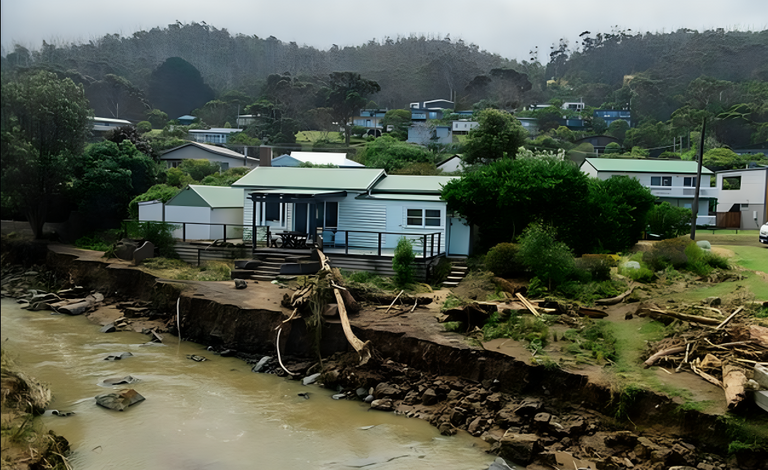
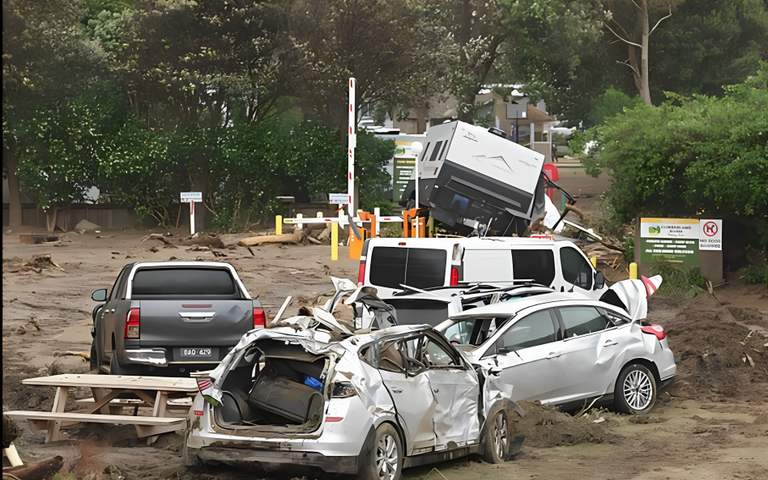
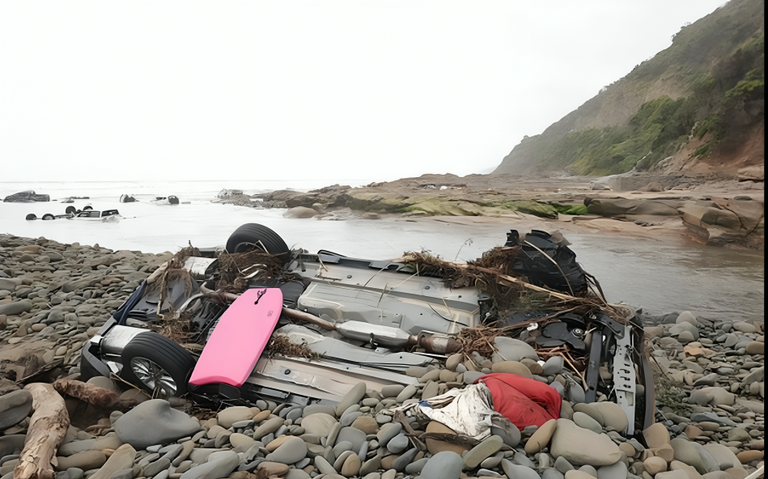
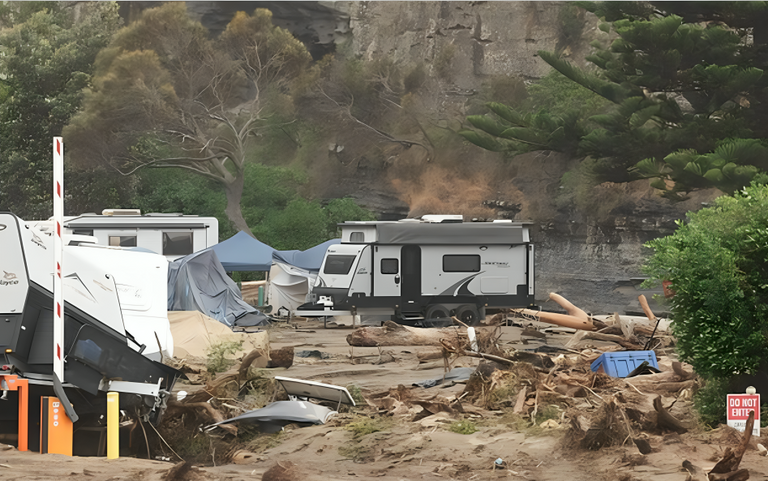
The images and stories coming from the Great Ocean Road area in Victoria overnight were described as "terrifying," amid scenes of flash floods sweeping the area.
Vacationers in the town of Wye River saw cars being swept into the sea, while water quickly flooded a caravan park, prompting some to seek charity shops to buy replacement clothing after losing their belongings.
A resident of nearby Separation Creek told the "ABC": "We escaped death by only about ten seconds; we ran for our lives."
One expert, who has been studying floods and their risks for decades, explained that the situation is shocking in one respect, partly due to the coincidence of extremely heavy rainfalls with many geographical factors that increase the risks of flash floods in the area.
He added that what happened was not surprising from another perspective, noting that floods classified as "once in a hundred years" occur somewhere annually, and with climate change, these phenomena are becoming more severe and frequent.
He highlighted clear signs of increasing intensity of thunderstorms by between 15 and 20 percent over the past thirty years, due to global warming.
The difficulty of dealing with this type of flood lies in its association with thunderstorms, which are difficult to predict precisely in terms of impact locations, despite the possibility of tracking their paths through radar.
In this case, the storm hit the Wye River basin, adding extra pressure on local residents and vacationers in the coastal area.
The area is characterized by small, steep drainage basins on the southern slopes of the Otway Ranges, a forest-covered mountainous region in Victoria, where these basins respond quickly to rainfall, not taking long to turn into runoff.
This presents a challenge to coastal areas in Victoria, due to the limited opportunities for providing effective flood warnings. In Wye River, the most severe part of the storm made up a very small percentage of the total expected rainfall area, increasing the difficulty of prediction.
In such basins, conditions can change from stable to extremely dangerous within minutes, with flash floods occurring very quickly.
It only took a few hours of heavy rain, most of it concentrated in the upper parts of the basin, making the danger not apparent to the vacationers before the waters rushed through the watercourses, and the flood arrived suddenly.
Clean-up operations are expected to continue for weeks, after the floods left debris of dozens of cars across the area, while other vehicles were swept out to sea before being tossed onto the rocks by the waves.
Experts believe that reducing risk depends on raising community awareness of the meanings of warnings and response mechanisms, warning against underestimating the alerts in high-risk areas.
They pointed out that campaigns to raise awareness of the risks of wildfires have helped improve residents' response, affirming that dealing with floods still requires a similar level of preparedness.
Campsites are usually located in flat areas near riversides, making them attractive destinations, but they become the most dangerous locations during floods.
One expert said, "If I were in a floodplain or near a river, and there was a warning of severe thunderstorms, I would wake up my children and head to higher ground immediately."
He added, "Even with professional experience, one can fall into the trap of feeling safe during holidays."
Specialists warned that climate change is increasing the variability of nature, predicting that floods in Victoria will become more intense, and the risks will double by the end of the century.
Professor Jason Evans from the University of New South Wales explained that rising atmospheric temperatures lead to increased water vapor, resulting in heavier rainfall during the same periods.
In the states of Queensland and New South Wales, several areas are experiencing a similar pattern, where authorities have lowered the flood warning in a suburb of Sydney after evacuating residents, while emergency teams have dealt with more than 1700 incidents since the onset of heavy rains.
A woman died on Saturday after a tree branch fell on her near the city of Wollongong, south of Sydney, while flood warnings remain in effect in parts of central Queensland.
The previous tropical storm "Koji" caused floodwaters to flow through several major river basins, resulting in the death of more than 68,700 livestock, with final counts expected to exceed 100,000.
The authorities urged residents in the affected areas to continually monitor the warnings and avoid approaching floodwaters.