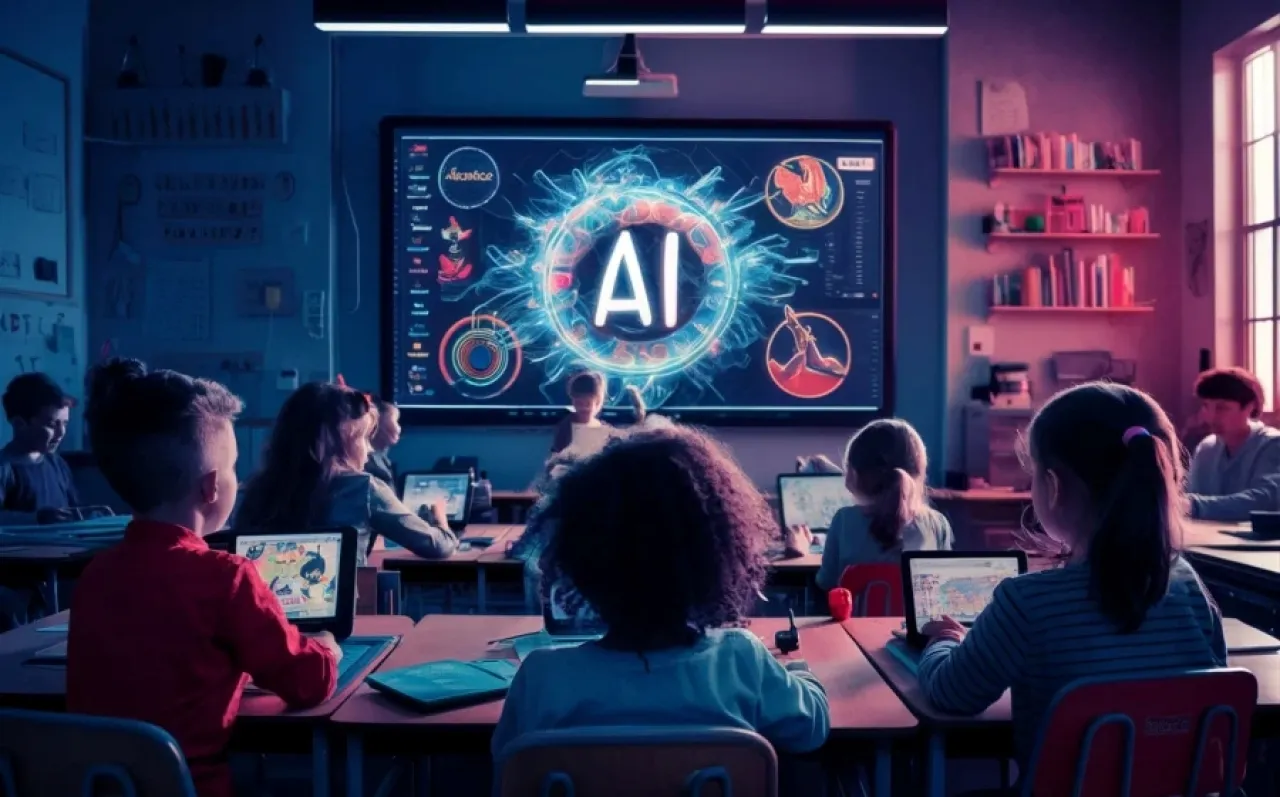
Khaberni - Despite the useful potential that artificial intelligence may offer in education, a new report warns that the current risks outweigh the benefits, urging caution and implementing strong controls before relying on this technology in classrooms.
The report indicates that generative artificial intelligence used in schools for children and teenagers may have negative effects on the cognitive and social development of students if used without restrictions or adequate supervision.
This warning comes at a time when the introduction of artificial intelligence technologies in education is accelerating around the world, amidst calls from educational experts for clear policies to limit any potential harmful impacts on the educational process and life skills of students.
Basis of the Report
The report is based on interviews and focus groups that included students, parents, teachers, and technology experts in more than 50 countries, in addition to reviewing hundreds of research studies.
All in an attempt to understand what might happen if artificial intelligence is employed in education before long-term data and extensive experience are available.
Potential Benefits
Despite the warnings, the report identifies some potential positive uses, saying teachers believe artificial intelligence tools can help students in language learning, especially those learning a second language, by adjusting text levels according to each student's skills.
Artificial intelligence also helps enhance writing skills when used as an assistant in planning and editing stages rather than writing complete content on behalf of the student.
In the same context, artificial intelligence reduces administrative burdens on teachers through automating tasks such as preparing lesson plans, grading assignments, translating materials, and sending messages to parents.
However, the report emphasizes that these benefits only appear when artificial intelligence is used as a complement to humans, not as a substitute for them.
Prominent Risks
One of the primary risks of artificial intelligence's impact on education is that students who rely heavily on artificial intelligence do not learn how to analyze information, construct arguments, or distinguish between truth and falsehood, which are essential skills for lifelong learning.
The report also warns that the digital divide may widen, as resource-rich schools might be able to purchase more advanced and accurate artificial intelligence models, while poorer schools may continue to use less effective free tools.
The report also confirms that excessive use of automated chat may weaken the development of social and emotional skills among students, especially if they begin to rely on robots for affirmations or emotional support instead of real human interaction.
Report Recommendations
The researchers recommend rethinking the very structure of education to encourage curiosity rather than just task completion based tasks, and to design artificial intelligence tools that encourage students to think critically rather than just endorsing whatever the user says.
The report also mentions the importance of enhancing the culture of artificial intelligence among students and teachers to ensure responsible use, and the importance of collaboration between tech companies and educators to develop suitable and safe solutions.
The report clarifies that governments must intervene to regulate the use of this technology to protect students' cognitive and emotional health.