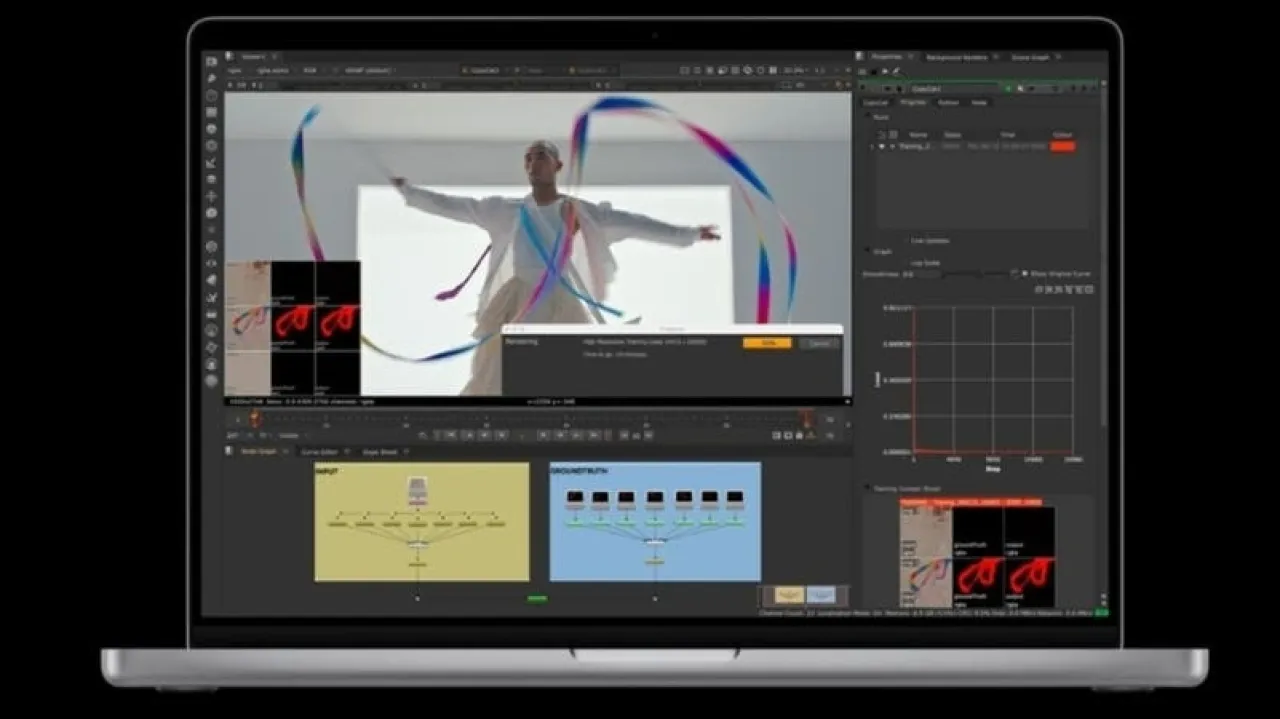
Khaberni - On Tuesday, Apple released the new generation of personal MacBook Pro and MacBook Air computers, which provided the company an opportunity to clarify the effects of recent increases in prices of memory, storage, and other computer components on its prices.
Apple's solution was moderate; the company raised the basic price for both MacBook Pro and MacBook Air. However, the significant price increase that everyone feared for upgrading random access memory did not happen.
Apple maintained the upgrade costs for random access memory for consumers as they were, according to a report by the technology news website "9to5Mac," reviewed by "Alarabiya Business".
The starting price of the new MacBook Air equipped with an "M5" processor is $1099, which is an increase of $100 compared to the previous version with an "M4" processor priced at $999.
One mitigating factor is that the initial storage capacity has now doubled to 512 gigabytes instead of 256 gigabytes as the standard measure. Based on the comparison on the basis of "the same specifications," this means that the price is essentially equal, but of course, the base price threshold for the new device has increased.
The same applies to the MacBook Pro, where the price of the 14-inch device equipped with an "M5 Pro" processor starts at $2,199, compared to $1,999 for its counterpart equipped with an "M4 Pro" processor.
But again, the user will receive 1 terabyte of storage instead of 512 gigabytes, partially offsetting the $200 price difference.
In both cases, buyers who wish to upgrade the random access memory will not face a significant shock in prices, or at least not more than they experienced with the "M4" generation, because Apple has maintained the upgrade cost as it is. Upgrading from 24 gigabytes to 48 gigabytes in the 14-inch version costs $400, which is the same price as in the previous generation.
Similarly, upgrading from 48 gigabytes to 64 gigabytes costs an additional $200, and moving to 128 gigabytes costs $1000. These options are only available with the highest CPU configuration. This is the same pricing as the "M4 Pro" series.
Perhaps this has been helped by the already extremely high prices of Apple's random access memory, to the extent that despite recent increases in component costs, Apple still has a sufficient profit margin to absorb these additional expenses.