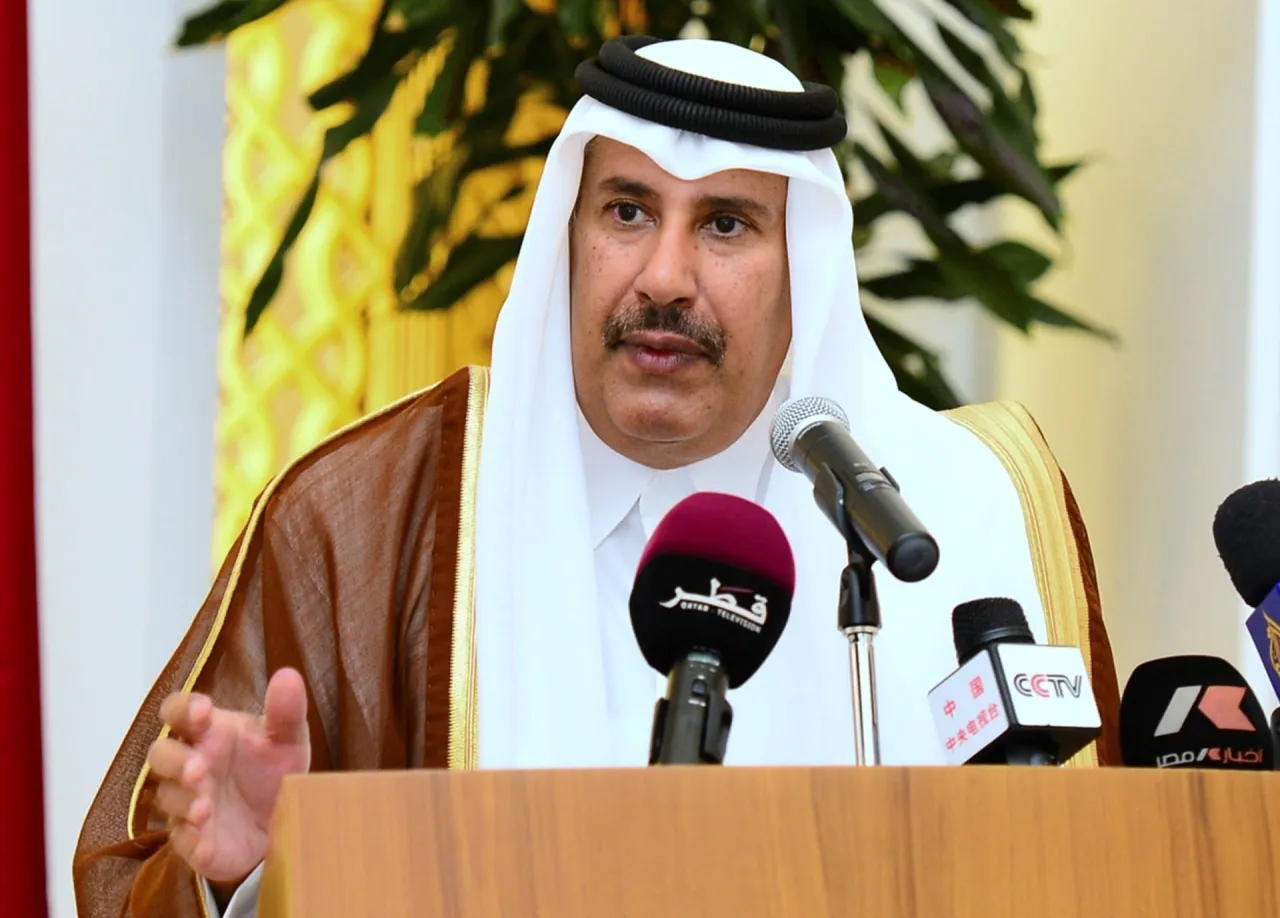
Khaberni - Former Qatari Prime Minister Sheikh Hamad bin Jassim described the joint strategic defense agreement between Saudi Arabia and Pakistan, which Turkey may join, as an important step for preserving the region and strengthening its status.
The former Qatari Prime Minister explained that the establishment of a "Saudi-Pakistani-Turkish-Egyptian" alliance has long been, and still is, "an urgent need for us all to preserve our interests and to enhance the strength of our countries in the face of fast-paced changes in the policies of Western alliance countries, especially the United States."
Bin Jassim expressed on his official account on the platform "X" his hope that the Gulf Cooperation Council countries would join this alliance without delay, confirming that their join is "an important interest for them as they are smaller states."
Recent reports indicate that Turkey is in advanced talks to join the agreement, which may lead to the formation of a new military alliance combining NATO's second-largest army, Turkey, with Pakistan and Saudi Arabia, potentially rebalancing power in the region.
He emphasized the importance that this alliance among these major countries should not be seen by any party as an antagonistic view towards Iran, which is also a major Muslim country, and the necessity for this alliance to be based on sound principles and foundations that ensure its sustainability and continuity, to remain an effective alliance that the world takes into account, in all circumstances and not just in critical times that the region and the world go through.
Bin Jassim stressed the importance of a firm conviction in all participating countries in this alliance that it is "an alliance that operates from a broad perspective, encompassing military, economic, and political aspects, and is built on solid foundations and strategic and practical policies and objectives for all member countries."
He clarified that these solid foundations prevent the repetition of the "Damascus Declaration" experience, which was hastily launched at the time of Iraq's invasion of Kuwait in 1990 without thorough and careful study that deeply scrutinizes all dimensions and issues.
He noted that some of the countries that declared their membership in that declaration in the nineties had immediate financial goals and were not strategic, emphasizing the necessity that the expectations of each country participating in the alliance should be discussed from both the security and military aspects and the economic aspects that must be built on solid foundations.
He called for the necessity of having guarantees to prevent interference in the internal affairs of the member states, and that all differences in viewpoints should be settled according to the alliance's charter and its strategic objectives, without any difference in viewpoints affecting the structure of the alliance or harming any of its member states.
He concluded by emphasizing the necessity that the alliance's perspective be "practical and continuous and not seasonal" for a limited period, to prove to the world that it is worthy of enduring, and therefore, as a first step, a well-studied and meticulously considered basic system for the alliance should be established, serving as a charter respected and adhered to by all signing states.
The comment of Sheikh Hamad bin Jassim bin Jaber Al Thani, former Prime Minister of Qatar 2007-2013, comes in the context of a joint strategic defense agreement signed by Saudi Arabia and Pakistan in September 2025 in Riyadh, which stipulates that an attack on one of the two states is considered an aggression against both, similar to Article 5 in the NATO Charter, and aims to enhance military and security cooperation between the two countries.