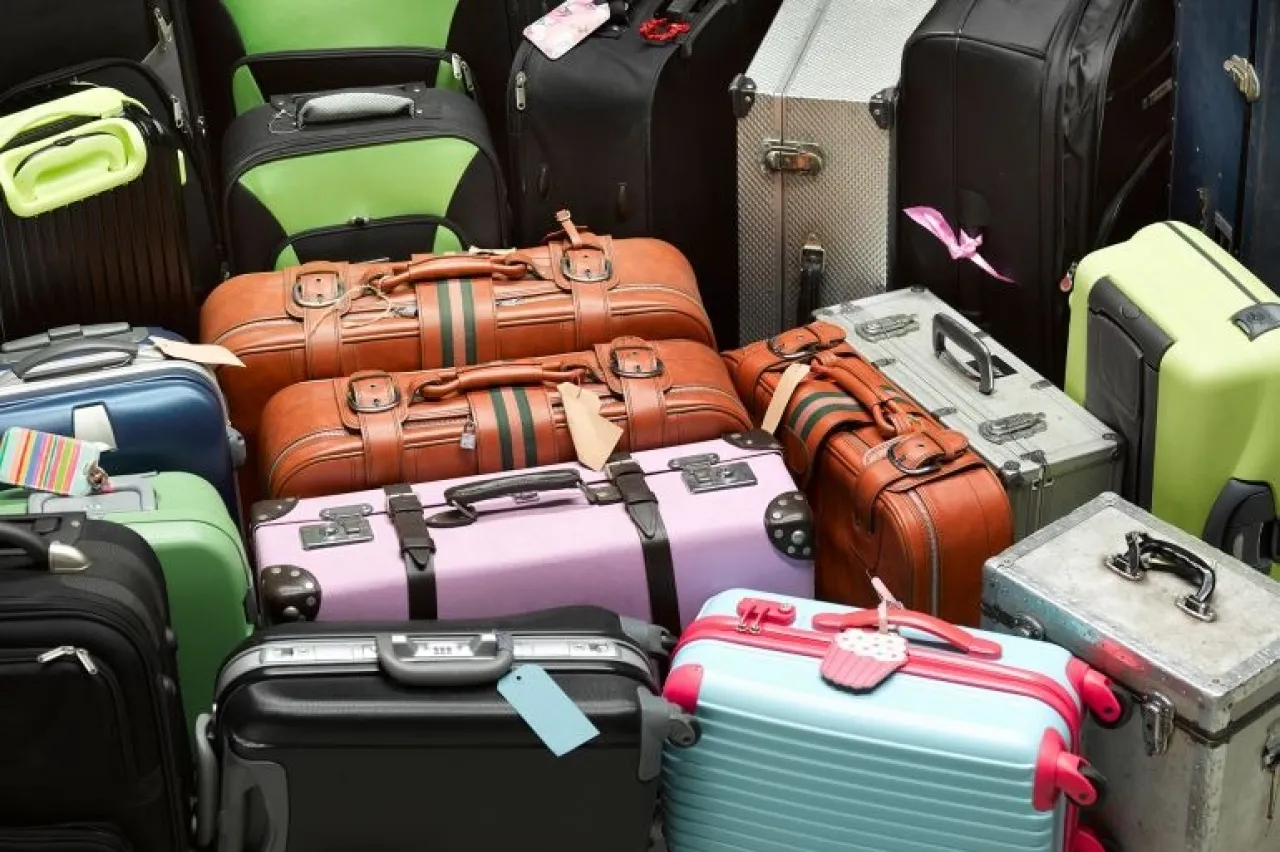
Many travelers feel anxious when waiting for their bags on the conveyor belt after a flight, fearing that they may have been delayed, lost, or damaged. Nonetheless, statistical reality shows that the number of bags that are actually lost, stolen, or damaged is very small compared to the volume of global travel.
According to the "SITA Baggage IT Insights" report for 2025, the rate of mishandled bags in 2024 was about 6.3 bags per 1,000 passengers worldwide, with an ongoing annual improvement in baggage handling rates compared to previous years.
In the United States, data from the Department of Transportation shows that American airlines handled about 5.5 mishandled bags for every 1,000 passengers during the same period.
Most bags are quickly recovered... but what about the rest?
Sony Hood, public relations manager at Unclaimed Baggage (the only American company that buys unclaimed luggage from airlines), says that 99.5% of bags return to their owners within a short period.
He adds to "Simple Flying" that the airline industry standard requires that a bag be considered "unclaimed" only if its owner has not been found after 90 days since it was reported missing.
Only less than 0.03% of bags remain unclaimed permanently, which equates to about 3 bags out of every 10,000 bags shipped.
Reasons for losing bags
There are several reasons a bag might not reach its owner, some related to human and operational errors, and others related to safety procedures:
• Transferring luggage between connecting flights is one of the biggest sources of lost bags, especially on international flights, where the chances of a bag being lost or delayed are much higher compared to direct flights.
• Errors in reading or breaking tags can cause the bag to be sent to the wrong destination.
• In some cases, bags are deliberately offloaded for reasons related to weight distribution in the aircraft's cargo hold for safety.
• As Ivan Oshan, an aviation lawyer, explains: "Often, some bags are intentionally removed due to weight and safety requirements, resulting in them being registered as lost."
Technological advancement and loss reduction
Recent reports indicate that technology plays an important role in reducing the rate of lost bags, with the global rate of lost luggage decreasing by about 63% compared to 2007 due to improvements in automation and baggage tracking systems.
Major airlines such as Air Canada, Delta, and United rely on tracking technologies that enable passengers to activate a baggage location tracking system directly through the app, which helps crews quickly locate lost baggage.
Traveler's rights and compensation
Knowing your rights as a traveler ensures better protection for your belongings:
• Travel insurance does not always cover all cases of lost bags as many policies include significant exclusions.
• The contract you agree to when checking in your bag gives airlines a broad right to determine their liability, making it complex to challenge legal estimates.
• Travelers are advised to keep receipts for high-value items and take pictures of the contents of their bag before handing it over.
What happens after 90 days?
When 90 days pass without finding the owner, the bag is classified as "Unclaimed Luggage."
Airlines consider the bag a loss and proceed with processing compensation claims for the traveler according to regional laws.
The companies involved in this matter purchase these unclaimed bags and transport them to their facilities, where the contents are sorted and categorized.
How are bags processed at the sorting facility?
At the lost luggage headquarters, each processor opens a bag and assesses its contents piece by piece.
Items are classified into 3 categories:
• Resale (items that meet store standards).
• Recycling.
• Donation to charities.
Electronic devices are tested and wiped of personal information, while clothes are washed before being put up for sale, and only a small percentage of items are discarded for reasons related to hygiene or safety.
Can a traveler protect their bag from getting lost at airports?
The traveler plays an important and active role in reducing the chances of losing their bag and increasing the chances of quick recovery if it is delayed. Key practical measures:
• Before traveling
• Place an identification tag inside the bag (name, phone, email) in addition to the external tag.
• Remove old flight tags to avoid routing errors.
• Photograph the contents of the bag and keep receipts for valuable items.
• Avoid short transit flights as much as possible, as they are more prone to delays.
• Choose a distinctive bag (color/mark) to reduce confusion.
• When checking in the bag
• Make sure the destination printed on the tag is correct before leaving the counter.
• Ask about compensation limits and declare high-value items if necessary.
Keep the bag check-in receipt and the Property Irregularity Report (PIR) number in case of a problem.
• During the trip and after arrival
• Use a tracking device (like AirTag or similar) to track the location of the bag.
• Head to the baggage office immediately if the bag does not arrive and do not leave the airport without filing an official complaint.
• Follow up on the complaint regularly and update contact information.
• Additional tips
• Keep essentials, medications, and valuable items in hand luggage.
• If possible, wrap the bag, as this reduces accidental opening and helps distinguish it.
You can't prevent losing your bag 100%, but these steps significantly reduce the risk and speed up recovery and compensation if a problem occurs.