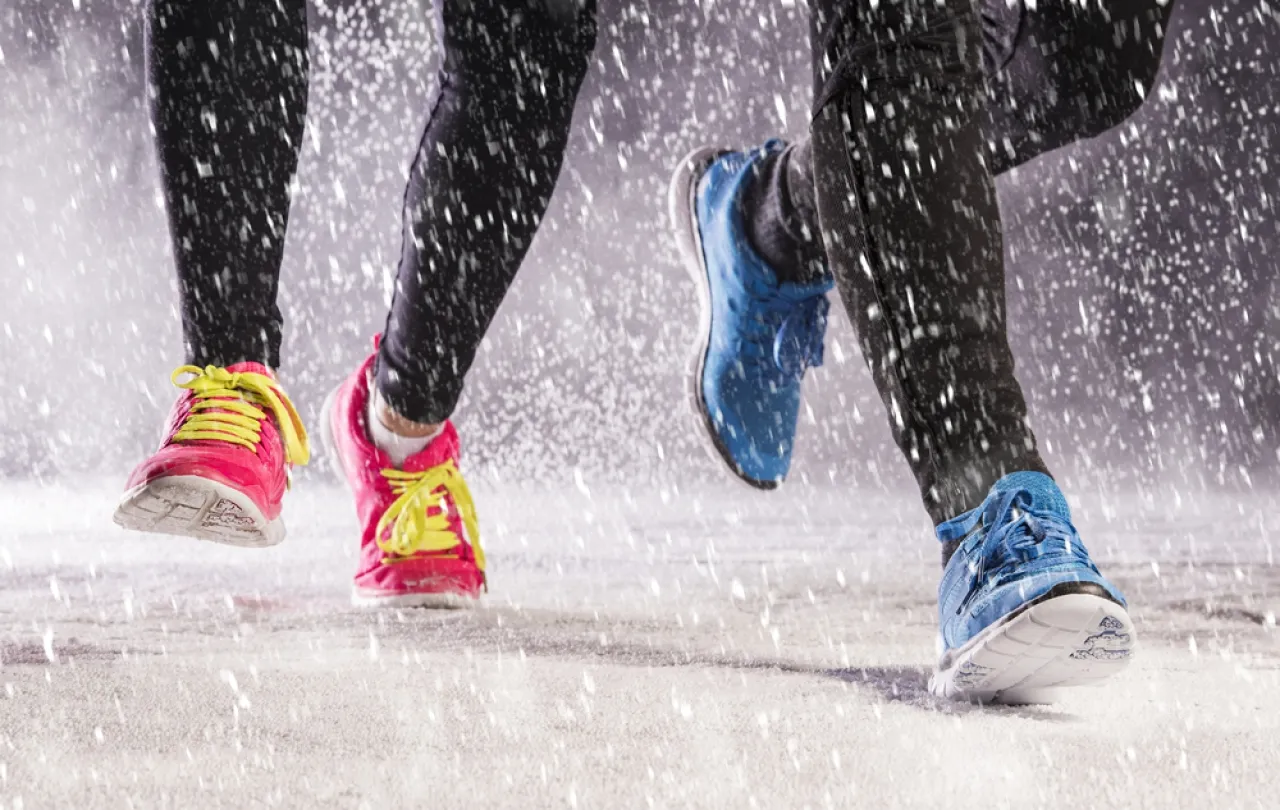
Khaberni - Practicing outdoor sports during the winter is a refreshing and invigorating experience, but it carries specific health risks, including slipping, falling, and muscle injuries.
Therefore, it is essential to follow preventive guidelines before, during, and after exercises to ensure safe and effective training.
Why does the cold increase the risk of injury?
Medical expertise, according to "Science Alert," indicates that lower muscle temperatures make them stiffer and less flexible, which increases the likelihood of damage and injury.
And with each degree Celsius decrease in muscle temperature, the force production decreases by approximately 4 to 6%, which is particularly important in dynamic activities like running.
Cold weather also causes narrowing of blood vessels in the limbs, reducing the amount of oxygenated blood reaching the muscles and slowing metabolic processes, which lengthens the recovery period after exercise and increases the risk of losing motor coordination and experiencing numbness in the hands and feet.
Even relatively moderate temperatures can cause damage to the microvessels when exposed to prolonged cold and humidity, which affects coordination and reaction speed.
Tips to reduce risks:
Proper warm-up
Cold muscles are more prone to strain, so it is advisable to warm up for 20 minutes before exercising, such as brisk walking, light jogging, or biking, along with dynamic movements to increase muscle temperature.
It is preferable to delay static stretching exercises until the muscles are warmed up.
Wearing appropriate layers of clothing
You should wear multiple layers including:
A base layer that absorbs moisture (wool or natural fibers)
An insulating middle layer
An outer layer that is wind resistant
It is also important to protect the extremities with gloves, thermal socks, hats, and to use slip-resistant footwear or walking sticks when necessary.
Proper hydration and nutrition
Despite the cold weather, the body needs the same amount of water as it does in hot weather to avoid dehydration.
Also, the body’s energy needs increase due to shivering and the effort exerted in cold conditions, so it is advised to consume carbohydrates before the exercise and proteins and carbohydrates afterwards to support performance and recovery.
Checking the weather conditions
Before exercising, you should know the temperatures, wind intensity, humidity, and ground condition. If the conditions are harsh, it is preferable to modify the exercise or move to an indoor location.
Gradually cooling down after exercise
To ensure blood returns to the heart normally, it is advisable to perform light aerobic exercises after the activity, such as brisk walking, then do static stretching exercises to reduce muscle stiffness and speed up recovery.
Changing wet clothes immediately
Wet clothes lose heat quickly, increasing the risk of hypothermia and frostbite. Therefore, it is advised to change into dry, warm layers immediately after exercising.
Monitoring signs of injury
Pay attention to continuous shivering, mental confusion, lethargy, or pale skin, as these may be signs of hypothermia or frostbite, and should be addressed immediately or consult a doctor.