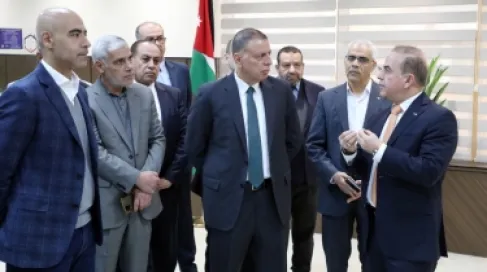
Khaberni - Representing His Majesty King Abdullah II, Interior Minister Mazen Al-Faraya, attended on Tuesday night at the Church of the Nativity in Bethlehem, the Midnight Mass for the glorious Christmas of the Christian denominations that follow the Eastern calendar.
The mass was also attended by Ramzi Khoury, representing Palestinian President Mahmoud Abbas, Ziad Hab Al-Reeh, the Palestinian Interior Minister, and His Beatitude Patriarch Theophilos III, Patriarch of Jerusalem and all Jordan and Palestine for the Greek Orthodox, along with a group of political and religious figures and diplomats from various countries around the world.
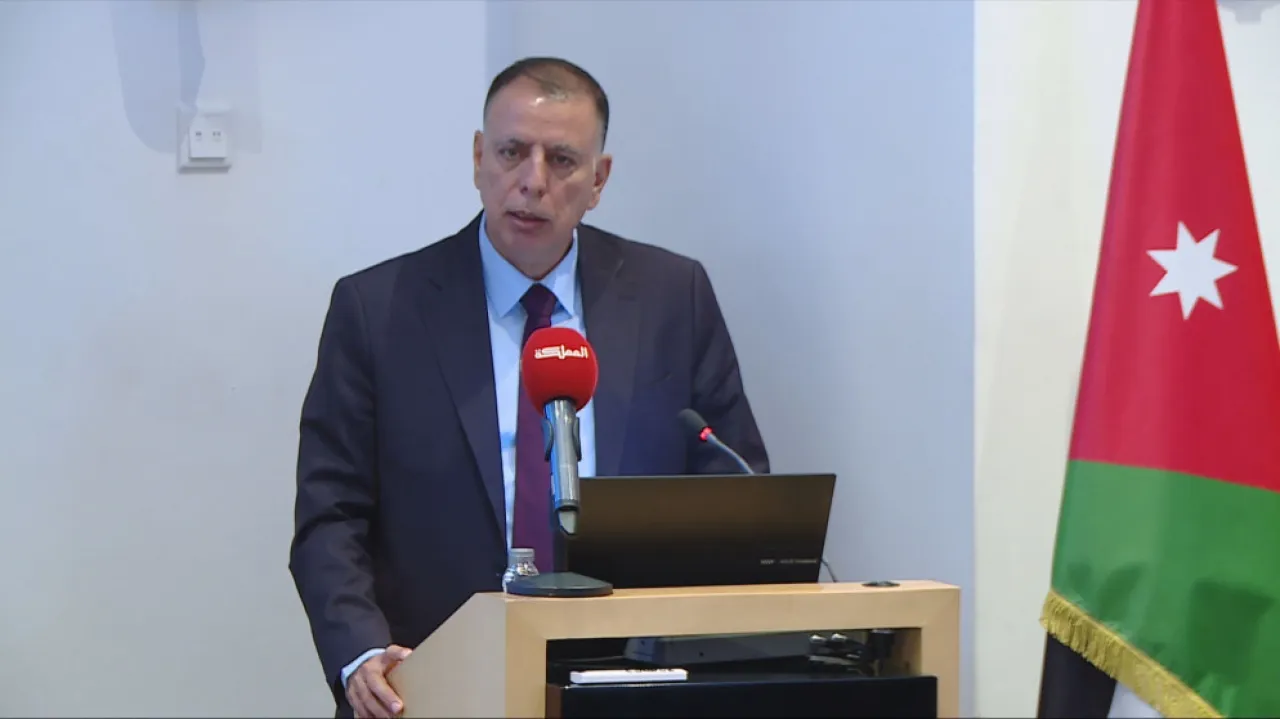
In his speech during the Mass, the Interior Minister conveyed the greetings and congratulations of His Majesty the King and His Royal Highness Prince Hussein bin Abdullah II, the Crown Prince, to the Christian denominations in Palestine on the occasion of the glorious Christmas of the denominations following the Eastern calendar, as well as His Majesty's wishes for them for a year filled with love, security, and peace.
Al-Faraya referred to the strong brotherly and historical relations between the Jordanian and Palestinian peoples, emphasizing the importance of the Hashemite custodianship over the Islamic and Christian holy sites in Jerusalem.
He reiterated the continuous role of His Majesty the King in supporting the authentic Christian component and fabric in the various Palestinian territories, which solidifies the approach of coexistence among the members of the one Palestinian people, renewing support for the resilience of the Palestinian people on their land, especially in occupied Jerusalem, against the occupation practices aimed at changing its Arab, Christian, and Islamic features.
He mentioned the Jordanian role in enhancing the resilience of Jerusalemites, intensifying supportive efforts for the establishment of an independent Palestinian state along the lines of June 4, 1967 with its capital at East Jerusalem, pursuant to the two-state solution, and ensuring the rights of the Palestinian people on their land by achieving a just and comprehensive peace in the region.
Before the Mass, Interior Minister Mazen Al-Faraya attended the Christmas Eve dinner at the Church of the Nativity in Bethlehem.
The dinner was also attended by the Jordanian Ambassador to Palestine Issam Al-Badour, a member of the Executive Committee of the Palestine Liberation Organization and Chairman of the Presidential Committee for Church Affairs in Palestine Ramzi Khoury, and Patriarch of the Greek Orthodox Theophilos III.
In the context of his participation in the Midnight Mass, Minister Al-Faraya met Palestinian Deputy President Hussein Al-Sheikh, conveying His Majesty the King's greetings to Palestinian President Mahmoud Abbas, and reaffirming the Jordanian positions supporting the Palestinian cause.
In turn, Sheikh expressed his gratitude to Jordan, both the king and the government and people, for their solid positions in supporting the rights of the Palestinian people, affirming that this continuous support reflects the depth of the brotherly and historical relations between the Jordanian and Palestinian people and strengthens the resilience of the Palestinians in facing challenges.
Khoury said that the claims made by the Israeli government to protect Christians in Palestine do not hold up in reality, given the daily systematic tightening, attacks on churches and sanctuaries, restrictions on the freedom of worship, targeting of religious leaders, and a silent migration that threatens the genuine Christian presence in the land of birth.
He announced that restoration works of the Nativity Grotto will begin immediately after the Christmas holidays, as part of the ongoing efforts to preserve the sanctity of the historic and religious site and save it for future generations.
In a related context, Al-Faraya and the Palestinian Interior Minister Ziad Hab Al-Reeh met, discussing ways to enhance cooperation and continuous coordination between Jordan and Palestine on issues of mutual interest, focusing on developing mechanisms of cooperation and supporting regional stability and security.