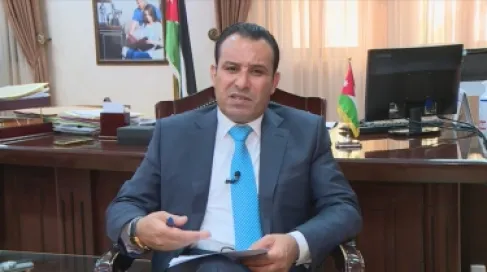
Khaberni - Ola Mahasneh, Director of Agriculture in Jerash, revealed that the recent rainfall in the kingdom has greatly contributed to increasing the chances of natural germination and natural regeneration of forest trees, especially in areas that have been subjected to fires.
Mahasneh said in statements to "Al-Mamlaka" channel that the water harvesting projects implemented by the Directorate of Agriculture in the province last year helped face the scarcity of rainfall, explaining that they were also utilized during the current season to collect rainwater and use it in home gardening.
She added that the directorate implemented about 276 collection wells last year and is aiming to expand the implementation of water harvesting projects this year, in addition to lining irrigation channels, where about 200 linear meters of channels were lined, and about 900 meters of water hoses were extended, benefiting a number of farmers.
Mahasneh pointed out that the projects of lining the channels and extending water hoses contributed to reducing water loss and making it easier to deliver water to the farms, which helped streamline water distribution and improve its efficiency.
She noted that the current rainy season has boosted groundwater storage and increased soil moisture levels, which positively reflects on the productivity of the current agricultural season, drawing attention to the fact that the previous rainy season experienced low amounts of rainfall that affected the crops and production rates.
Mahasneh invited farmers to plow the lands, prune the trees, and plant them, confirming that the current rainy season is promising, and that Jerash province has witnessed good amounts of rain.
She indicated that the rainfall rates recorded in Jerash city reached about 70% of the annual average, while in the areas belonging to the province, they were about 50% of the annual average, describing these rates as promising.
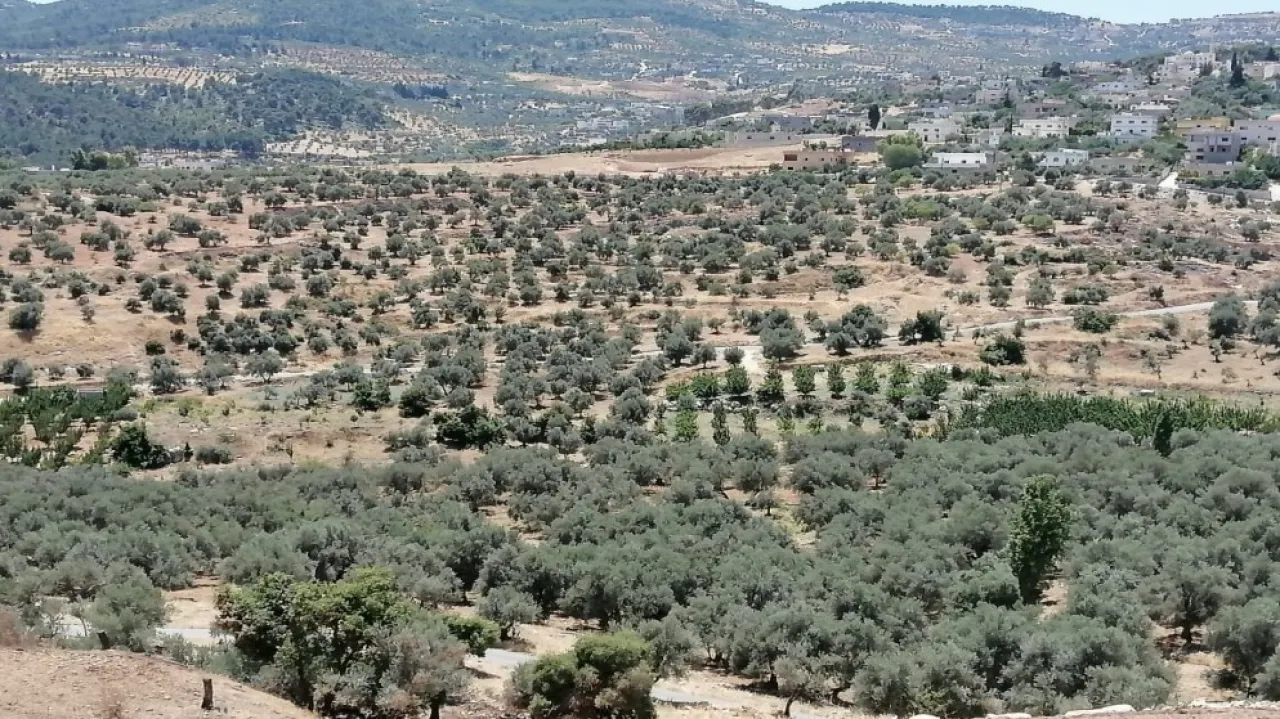
She noted that the upcoming season for harvesting olive fruits is promising due to the amounts of rain witnessed by the province, inviting farmers to prepare for the olive season by plowing the lands, pruning excess branches, and preparing the fields.
She added that the Agricultural Guidance Department implemented five field schools last year and is currently working on expanding this program, along with providing advice and guidance, holding awareness lectures, and carrying out field visits to farmers.
Mahasneh revealed that the achievement rate in the electronic tagging project for sheep and lambs has reached 26%, predicting the project's completion by mid-year, noting that the Jerash Directorate of Agriculture was the first directorate at the kingdom level to complete the electronic registry for animal livestock.
The directorate is aiming this year, as part of the national afforestation plan, to afforest a number of areas within the province, in addition to afforesting some of the sites that have been exposed to fire, and cooperating with official bodies and local community institutions to increase the forest area inside the province, according to Mahasneh.
Mahasneh pointed out that there were no fires inside the forests last year, except for one fire that occurred in Wadi Al-Sham, explaining that the site of the fire is currently witnessing a natural regeneration of forest trees, confirming that the forestry personnel carry out around-the-clock patrols to monitor and ensure no encroachments on the forest trees within the province.
The area of Jerash province is about 409,000 dunams, of which about 100,000 dunams are planted with forest trees, and 123,000 dunams are planted with olive trees.