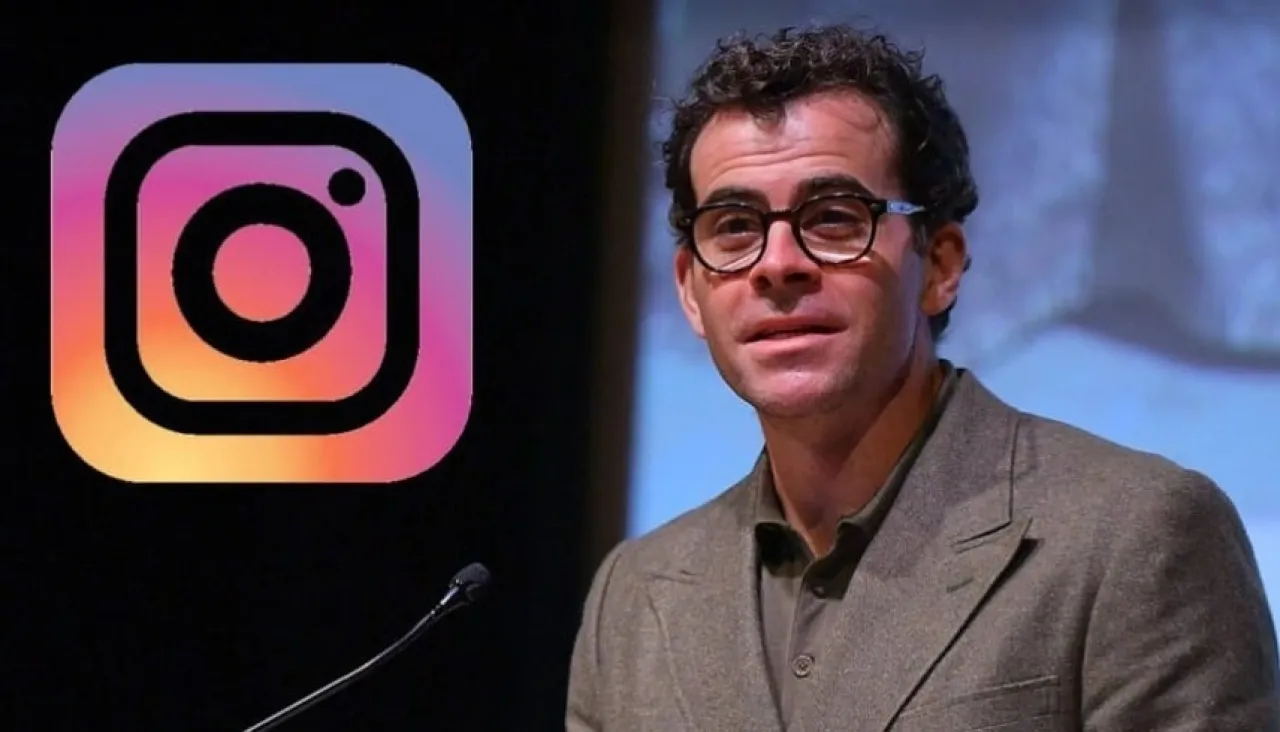
Khaberni - Adam Mosseri, the head of "Instagram," warned of the world entering a new phase he described as "the era of infinite synthetic content," where it is increasingly difficult to distinguish between real photos and videos and those created or altered by artificial intelligence, emphasizing that the concept of authenticity online is undergoing a radical transformation that will take years to adapt to.
In a detailed post supported with photo presentations on his account, Mosseri said that the prevailing assumption throughout his life that photos and videos represent accurate documentation of real moments "no longer exists," adding, "We will transition from believing what we see virtually to starting to question it, focusing on who is publishing the content and why, which is uncomfortable because we are biologically programmed to believe our eyes."
Mosseri explained that the development of artificial intelligence technologies, including deepfakes, has made it easy to produce realistic photos and videos that are difficult to distinguish from real content, noting that authenticity has become "infinitely replicable," and that what distinguished content creators for their ability to express genuinely and build trust is now available to anyone with the right tools.
He noted that trust in traditional institutions has reached its lowest levels, while the audience has shifted to following individual content creators whom they trust, pointing out that the power of the internet has moved influence from institutions to individuals, with the cost of publishing information reaching zero.
Mosseri touched on what is known as "poor artificial intelligence content," stating, "We like to complain about AI slop, but there is also a lot of amazing content that artificial intelligence produces," considering that the "overly polished" look will gradually vanish as artificial intelligence becomes capable of imitating flaws and imperfections.
In this context, he confirmed that raw and imperfect images have temporarily become evidence of realism, clarifying that "imperfection has become a signal of the truth," but he cautioned that artificial intelligence will soon be able to imitate this style as well, forcing users and platforms to shift their focus from "what is being said?" to "who is saying it?"
Mosseri criticized the direction of camera companies aiming, according to his description, to make everyone appear "like professional photographers from 2015," considering this bet mistaken in a world where artificial intelligence can produce perfect images effortlessly, and that "professional appearance has become boring and easy to produce."
He also revealed that Instagram users' personal sharing has not been done through the main "Feed" for years, but has largely shifted to private messages "DMs," where blurry pictures and shaky videos from daily life are exchanged, which has subsequently reflected on public content and artistic styles.
Regarding solutions, Mosseri emphasized that marking artificial intelligence-generated content will not be sufficient, acknowledging that platforms will become less capable of detecting such content over time.
He affirmed that a more practical solution would be "authenticating real content rather than trying to trace the fake," through digital fingerprints and cryptographic signatures added to photos from the cameras themselves at capture, to form a reliable chain of content source.
He also called for providing more context about the accounts publishing content, such as the identities of those behind it, to help users make informed decisions, emphasizing that content creators who can maintain trust, transparency, and consistency "will stand out in a world filled with abundance and doubt."
Mosseri concluded by affirming that "Instagram" will need to evolve quickly to keep up with these changes, by building better creative tools, placing clear labels on AI-generated content, verifying real content, and highlighting credibility indicators, in addition to continuing to improve the ranking of original content.