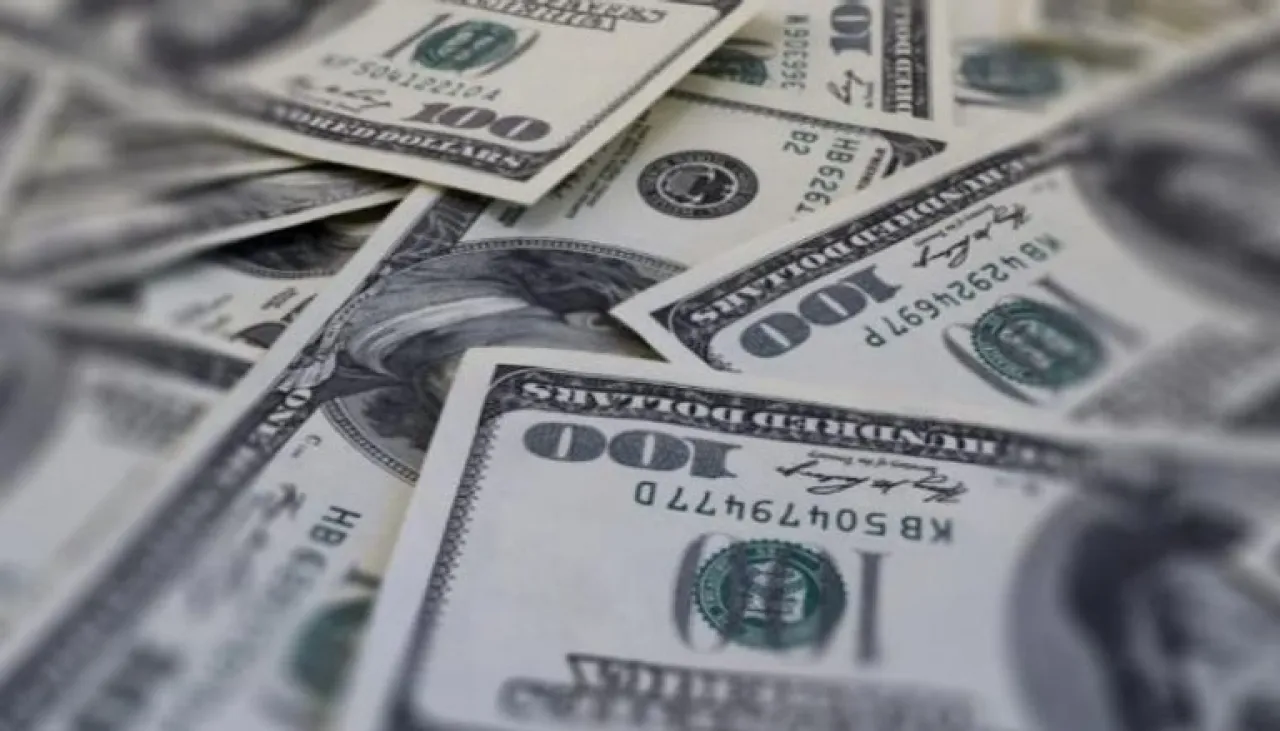
Khaberni - The US dollar is on track to record its worst annual performance in nearly a decade, reflecting deep shifts in global financial markets.
With rising expectations of interest rate cuts in the United States, and escalating concerns about fiscal and trade policies, along with political uncertainty, fears are growing about the future of the US currency and its role as a safe haven in the international financial system.
According to a report published by the Financial Times, the dollar lost about 10% of its value against a basket of major currencies this year, marking its biggest annual decline since 2017. Analysts attribute this weak performance to changing investor expectations regarding the monetary policy path of the Federal Reserve, as markets are betting on further interest rate cuts in the coming period, following repeated signs of a slowdown in the US economy and a decline in inflationary pressures compared to their peaks in previous years.
In contrast, other major currencies benefited from this shift, with the euro recording a strong rise, its best in years, supported by a relatively stable monetary policy in Europe, while the British pound achieved significant gains with improved economic forecasts in Britain. This divergence in monetary paths between the United States and other advanced economies has helped to narrow the gap that was in favor of the dollar during the previous monetary tightening period.
Several factors
The dollar's weakness is not limited to monetary policy alone, as financial factors play an increasingly pressing role in weighing down the American currency. The high fiscal deficit and the continued accumulation of public debt raise investor concerns about the sustainability of financial conditions in the medium term. Additionally, repeated discussions about government spending and taxes enhance uncertainty, pushing some investors to reduce their exposure to dollar-denominated assets.
The political factor also casts its shadow on the currency's performance. Volatility associated with trade policies, and the changing rhetoric on tariffs and international economic relationships, heightens caution in markets. Some investors fear that unexpected policies could lead to new trade tensions that may negatively reflect on US economic growth and the dollar's attractiveness as a reserve currency.
A turning point?
Despite this decline, the dollar still retains its pivotal position in the global financial system, supported by the size of the US economy and the depth of its financial markets. However, analysts believe that the current phase might represent a turning point, as investors begin to reassess hedging strategies and diversify their reserves, which could lead to a gradual decline in demand for the dollar in the coming years.
As 2026 approaches, markets are closely watching the course of US monetary policy. Any additional interest rate cuts, concurrent with the continuous relative tightening in policies of other central banks, may open the door for further weakness in the US currency. Conversely, any sudden improvement in growth or a return of inflationary pressures could slow down the decline.
In the end, the dollar's weak performance this year reflects a complex mix of economic, financial, and political factors. While this does not necessarily mean the US currency will lose its global stature, it clearly indicates the onset of a new phase characterized by more fragile balances, where the rise of the dollar is no longer taken for granted as it had been in previous years.