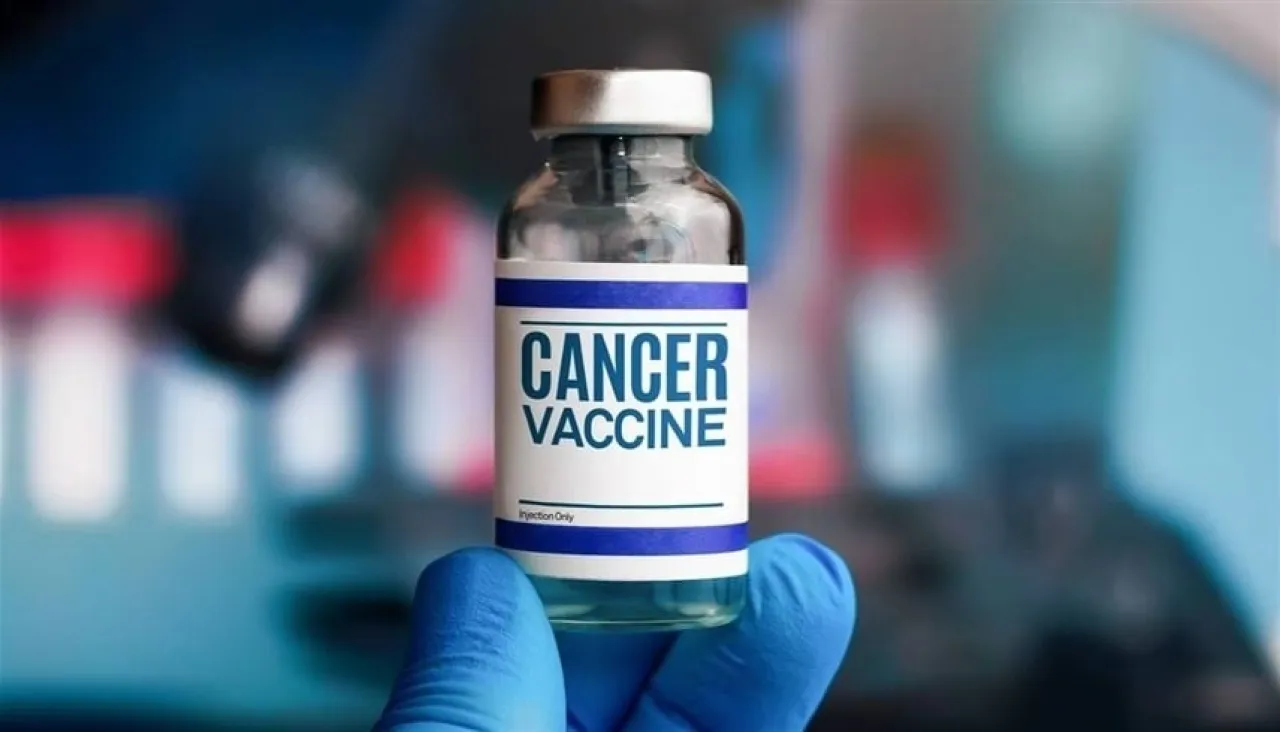
Khaberni - A revolutionary lung cancer vaccine trial on humans will start from the summer of 2026, and it will be followed by British scientists working on developing vaccines for breast, ovarian, and intestinal cancers.
Scientists at Oxford University, who are leading these efforts, expect that a single vaccine capable of preventing most types of cancer will be available within the next decade.
Human trials soon
The clinical trials for a vaccine aimed at preventing lung cancer are scheduled to begin in 2026.
Meanwhile, efforts are currently underway to develop additional vaccines capable of preventing the development of breast, ovarian, and intestinal cancers in the body.
According to the "Mirror" newspaper, the British plan involves integrating these vaccines into a single anti-cancer vaccine, which can be obtained for free by young people through the UK's National Health Service, during a visit to their general practitioner.
The impact of the vaccine
Researchers expect that this vaccine could save the lives of up to 3.6 million people annually worldwide from the deadliest types of cancer, in addition to possibly extending the average human lifespan.
The cancer vaccine would also contribute to saving resources for fighting other deadly diseases such as dementia and heart disease.
Sarah Blagden, a doctor, researcher, and Professor of Experimental Oncology at Oxford University, revealed significant progress in the search for a vaccine in a documentary series on "Channel 4" titled "Cancer Sleuths: The Quest for Cures".
Will cancer become like measles?
Blagden envisioned that within a decade, one vaccine could stop most major types of cancer, similar to vaccines we receive to prevent measles, mumps, rubella, whooping cough, and tetanus.
She explained: "It took me three attempts to secure the necessary funding because it is an unconventional project".
She continued: "But we have produced the first batch of vaccine in Oxford, and we will begin clinical trials next summer. We are currently working on several different vaccines to prevent various types of cancer".
Blagden said: "What we aspire to is to integrate them all into a single vaccine that would be given to the entire population, especially the young".