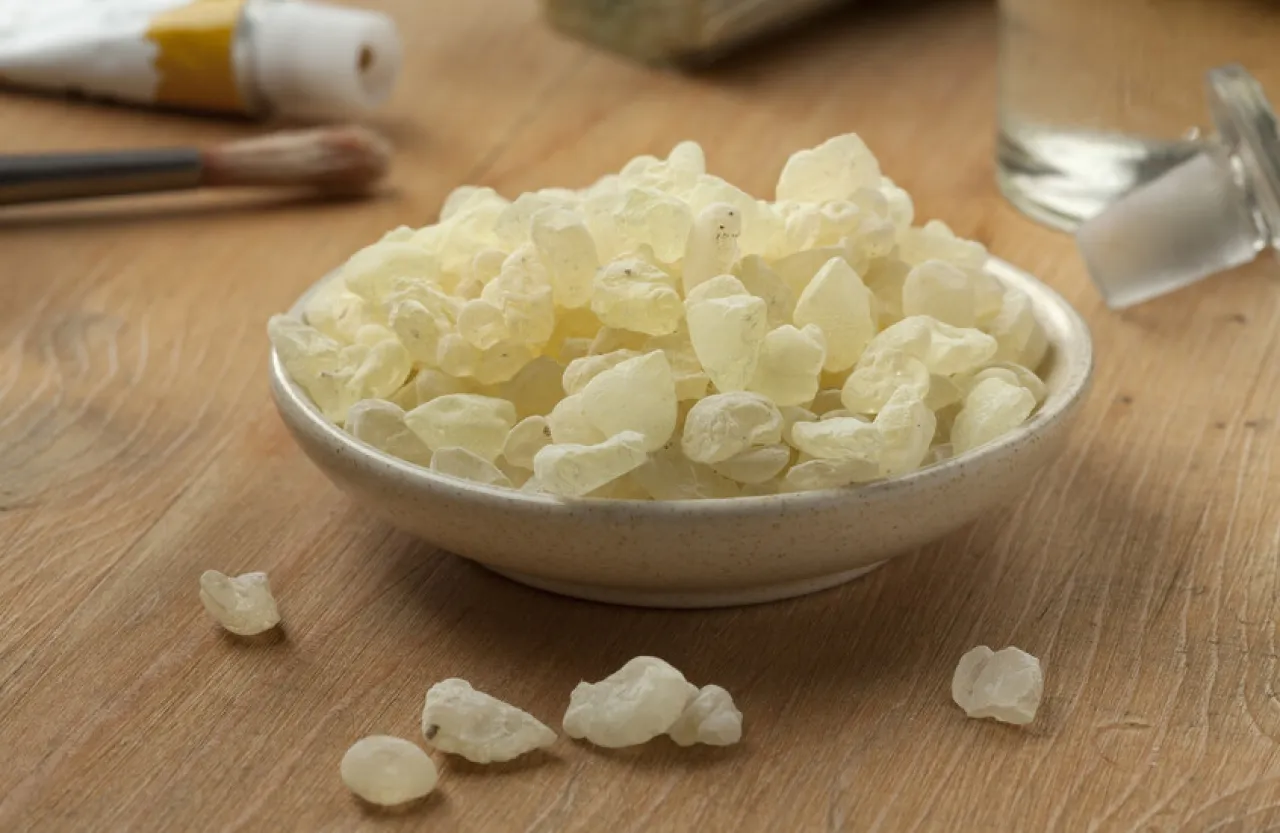
Khaberni - Common belief suggests that swallowing gum should be avoided, but mastic gum is an exception, as swallowing it can enhance health benefits, especially for the digestive and oral health.
These findings are based on scientific studies conducted by specialized research institutions. The main difference between synthetic gum and mastic gum lies in the composition; while most types of modern commercial gum consist of a complex mixture including resins, plasticizers, flavors, sugars, rubber, and synthetic plastics, mastic gum is simply the natural resin extracted from the Mediterranean mastic tree. This simplicity in composition is what allows the body to handle it differently.
Observations have shown that traditional gum remains almost intact throughout its journey which lasts days in the digestive system, while mastic gum undergoes a partial breakdown process in the body, a process associated with its purported health benefits.
Mastic gum is characterized by its natural woody taste which resembles pine needles and cedarwood, making it unique compared to traditional mint and fruit flavors. Its texture is also different; it is crunchy at first bite with a chewy center, but remains firmer and more cohesive than regular gum, requiring more effort to chew.
Scientific endorsement: Historical and modern studies
Mastic gum has emerged in modern scientific research as a substance with positive effects on gut health. In a 2010 study, participants who chewed 350 mg of mastic gum three times daily showed remarkable results in eradicating Helicobacter pylori (H. pylori), which causes gastritis, ulcers, and chronic digestive problems. A previous study in1998 confirmed that smaller doses could achieve the same effect.
Experts comment that improved gut health reflects positively on bloating symptoms, digestion processes, and gastrointestinal disorders, with broader effects on overall health given the known link between the gut microbiome and comprehensive health.
According to experts, the importance of mastic gum begins from the mouth itself. Braxton Manly, co-founder of "Mystic Gum," explained: "Many do not realize that gut health begins in the mouth. Oral bacterial imbalance gradually moves downward, and mastic gum supports this system from top to bottom.".
Manly emphasizes that ease of use is a main advantage, saying: "It is not a complicated protocol or a cleansing program, but just a simple daily habit. Chewing improves digestive signals, and the resin itself does its work as it has done for thousands of years.".
Regarding the most important question about the safety of swallowing, experts clarify that stomach acids interact with mastic gum more effectively compared to synthetic gums. Manly says: "It has been swallowed as a powdered supplement for generations. The body processes it like any resin or other natural fibers.".
Benefits extend beyond digestion
Some brands market their mastic gum products as "cosmetic gum," offering benefits that go beyond improving digestion. Studies suggest its benefits for oral health, where it helps fight cavity-causing bacteria and reduce plaque (dental plaques) and improve enamel health.
This natural gum contains terpenes and terpene acids which have antimicrobial and anti-inflammatory properties. Producers claim that regular chewing may strengthen the muscles of the face and jaw, although evidence of direct visible effects remains limited.
Being free from synthetic materials represents an additional strength point. As Manly explains: "Since mastic gum is free from plastic and sugar, it avoids common additives in traditional gum: synthetic polymers, artificial sweeteners, dyes, and plasticizers. This means avoiding exposure to microplastic particles.".
The focus on avoiding microplastic particles comes at a time when global concerns are escalating about their potential health impacts on the brain, heart, diabetes, and fertility.