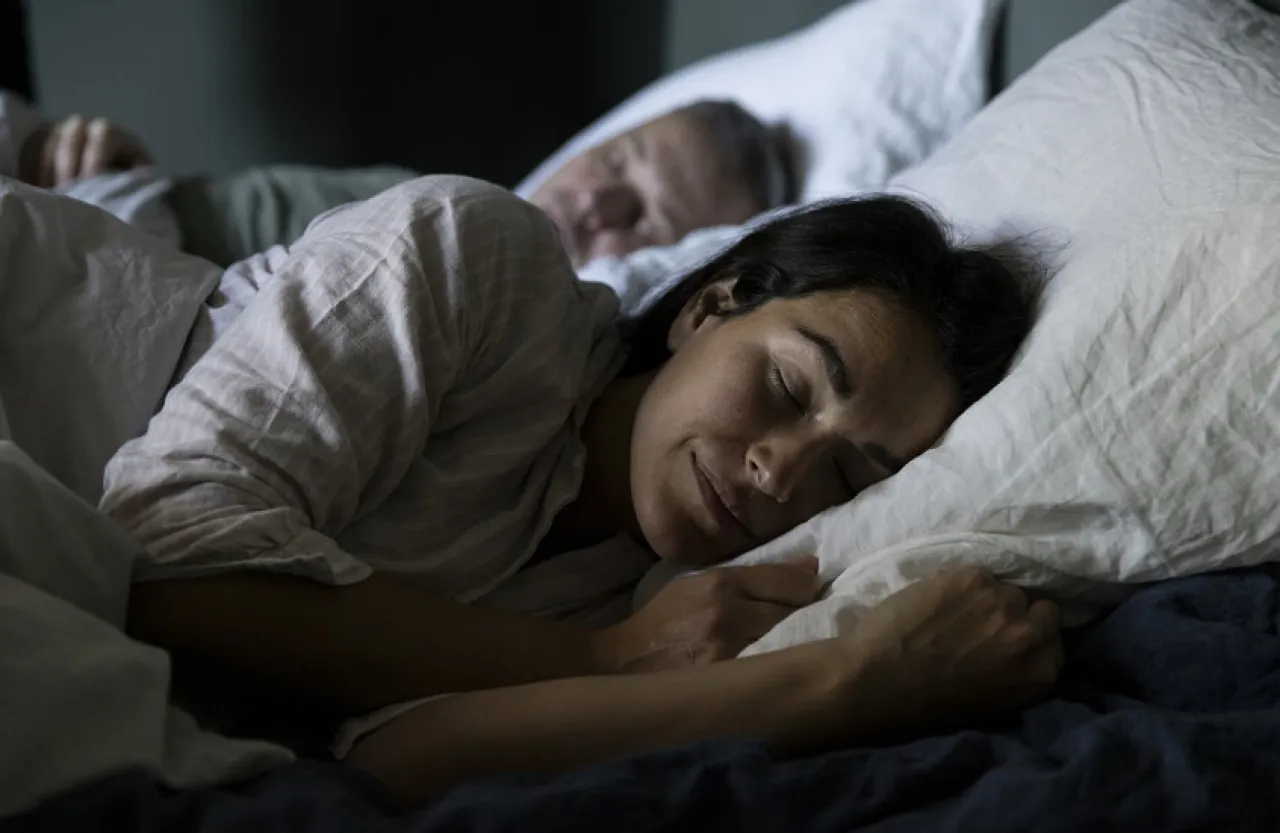
Khaberni - "Scandinavian sleeping style" is spreading across social platforms, promising couples a final solution to their nightly conflicts over blankets and temperature, which has led many to question how effective it really is.
The Scandinavian sleeping style is based on a simple concept: a couple sleeps in one bed, but each person uses their own blanket or duvet. The goal is to balance the intimacy of sharing a bed with the personal comfort that comes from having one's own blanket.
This concept, as its name suggests, originated in Scandinavian countries, where it is common and is now gaining increasing attention from couples around the world who say it has "changed the game" in improving their sleep.
Why might it make sense?.. Indirect scientific evidence
Despite the lack of direct scientific studies comparing the effects of sharing one duvet versus using two separate ones, the principles of this style align with solid scientific data about sleep:
1. Temperature regulation differences: The body's core temperature drops during sleep, but the rate and degree of this decrease varies by age, gender, hormonal composition, body composition, and the individual's circadian rhythm (night owl - those who sleep late, or early bird - those who sleep and wake up early). Women often reach their lowest night-time temperature earlier than men and may suffer from cold extremities as the body focuses on heating the internal organs. With advancing age and menopause, women may experience hot flashes and night sweats. These natural differences explain why one partner may prefer a lighter blanket while the other seeks greater warmth.
2. The effect of the precise sleeping environment: The materials from which blankets are made (such as cotton, wool, and synthetic fibers) affect skin temperature and can impact how quickly you fall asleep and the quality of sleep. The Scandinavian sleeping style allows each person to choose the cover that suits their thermal needs and touch sensitivity, including the possibility of using weighted blankets that help some people feel calm.
3. Reducing sources of disturbance: Movement by one partner or pulling the duvet or differing sleep and wake times can wake the other, especially for those who already suffer from insomnia or light sleep. Having separate blankets can reduce these direct mechanical disturbances.
According to experts, the Scandinavian sleeping style can offer a practical and straightforward solution for couples who suffer from interrupted sleep due to different thermal needs or movement during sleep or duvet monopolization. It allows for managing a "personal sleep climate" within the shared bed.
However, in the absence of conclusive research evidence proving its scientific superiority, it is currently viewed more as a "sleep improvement trick" than as a proven sleep methodology. If the nightly duvet battle negatively affects your comfort or relationship, trying this method at a minimal cost might be worthwhile. But for deeper sleep challenges, sticking to the basics of good sleep—such as a dark, quiet environment and a regular routine—is still the most important foundation.