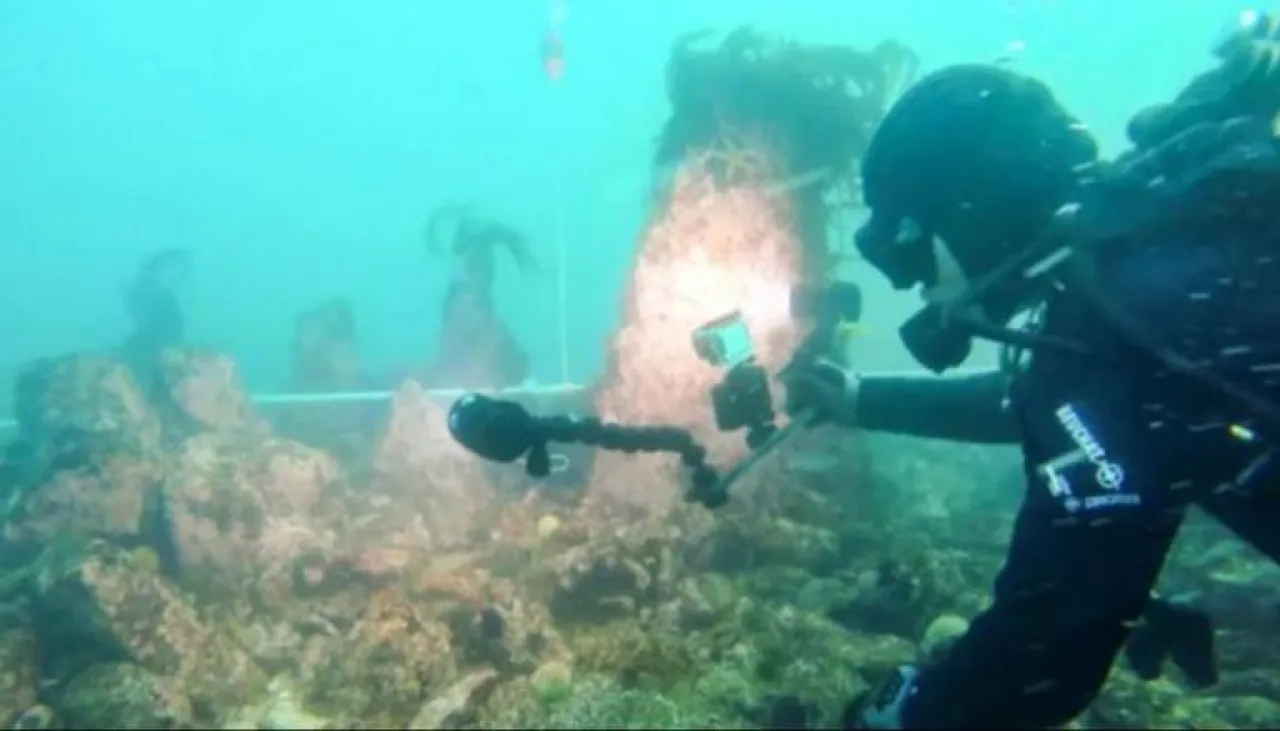
Researchers found a complete stone wall submerged underwater off the coast of Brittany in France, believed to have been built over 7,000 years ago.
The ancient archaeological wall stretches 120 meters (about 390 feet) and is two meters high with a width nearing 20 meters.
Originally, this structure was built on land at the western tip of the Brittany coast, specifically in the area of the Île de Sein, and today, with the sea level rise over thousands of years, it lies at a depth of nine meters below the water surface.
A scientific debate is now occurring over the original purpose of this massive structure; some believe it may have been a sea dam or a protective barrier built to try to stop rising sea levels, while others think it might have been a massive fish trap, making it one of the oldest known evidence of organized fishing practices in prehistoric times.
The size and weight of the wall, estimated at about 3300 tons, reflect a huge community collaboration, and the construction technique shows precision and advanced planning, where megalithic stones were first placed on the bedrock, and then stones and small slabs were stacked around them, an organization level indicating a highly structured society, whether it was of sedentary hunter-gatherers or early Neolithic population groups.
The wall was first detected using laser mapping surveys of the seabed, and then confirmed by marine archaeologists during diving operations that began in 2022.
This discovery is the largest underwater structure found in French waters and is exceptionally preserved despite the passage of thousands of years.
The significance of this discovery transcends the stone walls themselves, as it has sparked hypotheses and connections to age-old local myths; some have linked it to the legend of the lost city of "Ys," a mythical city believed to have sunk off the coast of Brittany, indicating that the memory of these lands being submerged and organized societies abandoning them may have been entrenched in collective memory through generations.
This discovery sheds light on the unexpected engineering capabilities and social organization of Stone Age communities, and provides tangible material evidence of how these early societies responded to the challenge of rising sea levels and major environmental changes.