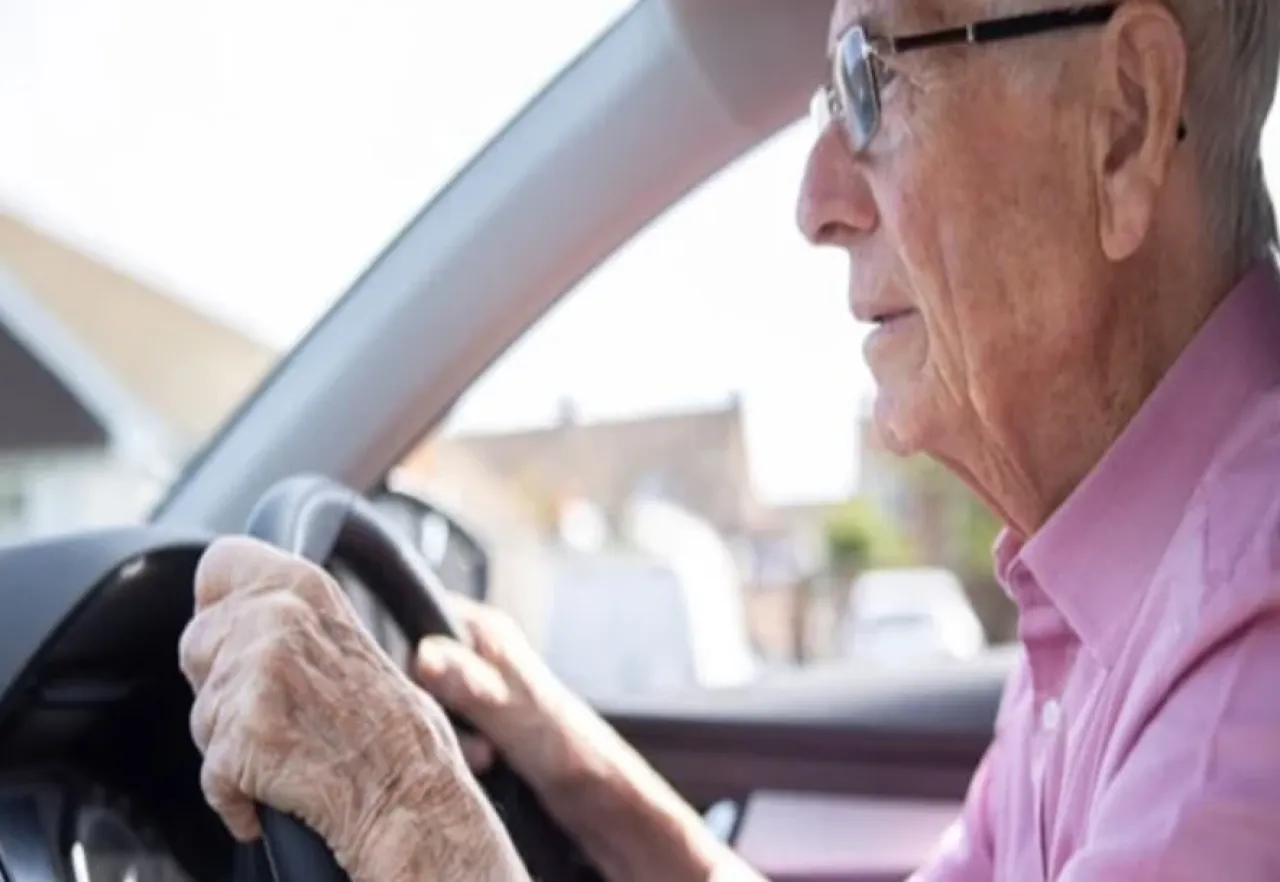
A recent study conducted by researchers at the Washington University School of Medicine in St. Louis showed that changes in driving patterns among the elderly could be among the earliest signs of cognitive decline and dementia, including Alzheimer's disease. The team confirmed that monitoring behavior behind the wheel could help detect brain changes years before clear symptoms appear.
The study revealed that people in the early stages of cognitive decline exhibit three major changes in driving: a decrease in the number of trips or kilometers per month, driving less frequently at night, and sticking to familiar routes with reduced variety in paths.
These changes gradually appear even before the person or their family notices any memory problems, according to "The Sun" newspaper.
The researchers relied on GPS devices inside cars to monitor driving patterns over about three years, involving 56 people with mild cognitive impairment, and242 people with normal cognitive abilities, with an average age of 75 years.
The results demonstrated that driving data alone accurately detected cognitive deterioration with an accuracy of 82%, which increased to 87% when combined with age, cognitive tests, and genes associated with Alzheimer's, compared to only76% accuracy using traditional tests without driving data.
Professor Ganesh Babulal, the author of the study, said: "Tracking daily driving is a low-cost and non-invasive method to monitor cognitive capabilities, and could help with early intervention before accidents occur."
The researchers emphasized that identifying drivers most at risk is a priority for public health, asserting that analysis of real driving could be a more effective tool provided privacy is respected and ethical use of data is ensured.
Previous studies have shown that spatial cognition problems, difficulty using navigation systems, or maintaining an inappropriate distance from others could be early signs of dementia. British researchers have also suggested that heart checks in middle age might help detect the likelihood of developing dementia decades before it appears.