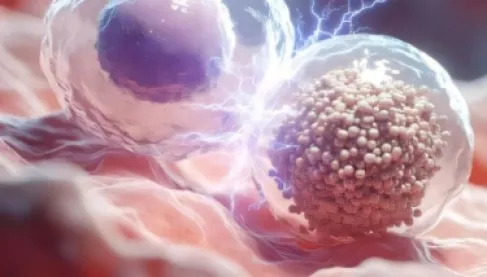
Khaberni - The health authorities in Japan have approved innovative stem cell-based treatments for Parkinson's disease and acute heart failure, a step that may represent a major shift in regenerative medicine and opens the door to new treatments for diseases that were considered difficult to cure.
Scientific reports have indicated that these treatments may become available to patients in the coming months, being the first commercial medical products in the world that rely on reprogrammed stem cell technology.
New Treatment for Parkinson's Disease
Sumitomo Pharma, a Japanese pharmaceutical company, has received approval to manufacture and sell a new treatment for Parkinson's disease that relies on implanting stem cells into the brain. The treatment aims to replace damaged nerve cells that produce dopamine, the substance responsible for controlling movement, which decreases in patients with the disease.
Clinical trials supervised by researchers from Kyoto University have shown promising results, as stem cell-derived cells were implanted in a number of patients, which helped improve symptoms for some of them without recording any serious side effects during the follow-up period.
Treatment for Heart Failure
In addition to the Parkinson's treatment, the Japanese Ministry of Health has greenlit another treatment targeting patients with acute heart failure. This treatment is based on sheets of heart muscle cells implanted in the heart to help the muscle repair itself and stimulate the formation of new blood vessels.
It is believed that this technique may help patients who do not respond to traditional treatments such as medications or surgical procedures.
What are reprogrammed stem cells?
The new treatments rely on what is known as Induced Pluripotent Stem Cells (iPS), which are cells produced by reprogramming adult cells, such as skin or blood cells, to revert to a state similar to stem cells capable of transforming into any type of body cell.
This technology was developed by Japanese scientist Shinya Yamanaka, who received the Nobel Prize in Medicine in 2012 after discovering the possibility of reprogramming adult cells to become pluripotent.
Conditional Approval
The Japanese approval comes in the form of a conditional and time-limited license, meaning that the treatments can be offered to patients while continuing to collect scientific data to confirm their safety and effectiveness on a larger scale.
Researchers believe that this step represents the beginning of a new era in regenerative medicine, where stem cells could potentially repair damaged tissues or replace them with healthy cells, offering new hope to millions of patients around the world.