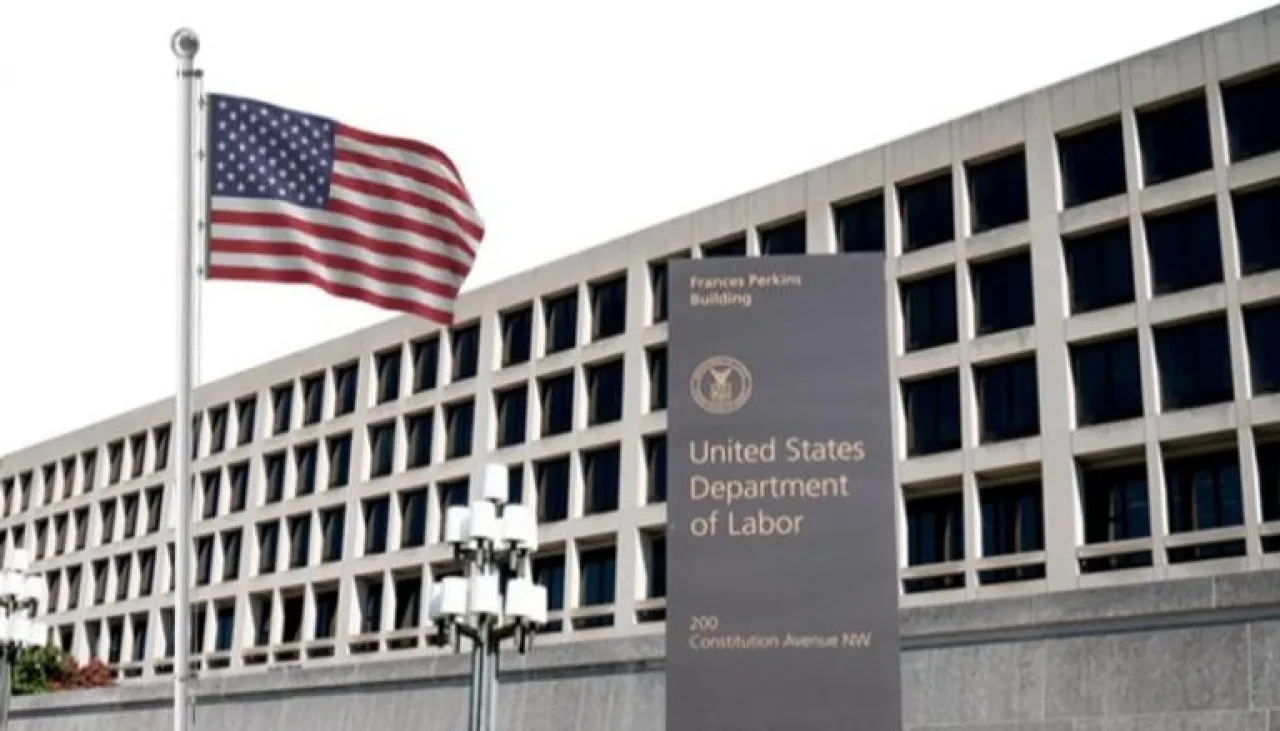
Khaberni - The vacant jobs in the United States saw no significant change in October, with their number stabilizing around 7.7 million amidst ongoing uncertainty about the future path of the American economy.
The U.S. Department of Labor reported on Tuesday that employers announced about 7.67 million vacant jobs in October, a level closely matching the 7.66 million jobs recorded in September.
The Job Openings and Labor Turnover Survey (JOLTS), delayed due to the prolonged government shutdown, showed an increase in layoffs, alongside a decrease in the number of people who voluntarily quit their jobs—a measure typically used to gauge confidence in the labor market—during October.
The number of vacant jobs has gradually decreased since reaching a peak of 12.1 million in March 2022, when the American economy was experiencing a strong recovery from the effects of the COVID-19 pandemic-related shutdowns. This slowdown is partly attributed to the ongoing impact of raised interest rates imposed by the Federal Reserve in 2022 and 2023 to curb inflation.
More broadly, the American economy is going through a delicate phase, amidst the repercussions of President Donald Trump’s decision to reverse decades of U.S. policy supporting free trade, imposing double-digit tariffs on imports from most countries worldwide.
In this context, policymakers at the Federal Reserve are meeting this week to decide on lowering the benchmark interest rate, amid expectations that the meeting will be unusually contentious. Inflation remains stuck above the Federal Reserve's target of 2%, partly due to importers attempting to pass the cost of tariffs imposed by the Trump administration onto consumers by raising prices.
Continued inflation usually discourages policymakers at the Federal Reserve from cutting interest rates, yet the labor market has shown some volatility in recent months. The Federal Reserve is expected to lower the benchmark interest rate for the third time this year, despite the likelihood of some council members opposing this move.
Meanwhile, the repercussions of the federal shutdown, which lasted 43 days, has cast a shadow over the accuracy and regularity of government economic statistics.
The October job vacancies report was issued a week late, while the September report was not published separately, as federal data collectors were on forced leave. Instead, JOLTS survey data for September was merged with October figures in the report issued on Tuesday.
The Labor Department is scheduled to release employment and unemployment data for November next Tuesday, 11 days later than originally scheduled.
The department did not issue the unemployment rate for October, as it was unable to calculate it during the shutdown. However, it will publish some employment data for October—including the number of jobs employers added during that month—in the full labor market report for November.
The forecasters surveyed by the data firm FactSet expect that employers added fewer than 38,000 jobs during November and that the unemployment rate will rise to 4.5% compared to 4.4% in September—an historically good level but the highest in nearly four years.