Are you looking for a new way to break the monotony of daily exercises and energize your fitness routine? Walking backwards might be the surprising choice you need.
Although brisk walking forward remains one of the most beneficial activities for health, because of its support for heart and cardiovascular health, strengthening of bones, and muscle building, alongside its role in reducing stress, becoming accustomed to it could diminish its exciting element over time. Here, reverse walking emerges as an innovative alternative, not only adding variety to the exercises but also offering different benefits and dual stimulation for muscles and balance.
According to "Independent", this unconventional technique places different pressures on the body.
Janet Doveik, from the University of Nevada, has conducted research on motion mechanisms, from walking to jumping, to prevent injuries and improve performance.
Underused muscles
In humans, the reverse motion can increase the flexibility of the hamstring tendons, strengthen underused muscles well, and stimulate the mind while the body adapts to a new movement and posture.
She said: "I see many people in my neighborhood walking, which is good". But they still emphasize the same physical structure elements repeatedly.
Meanwhile, walking backwards introduces an element of cross-training, which is a totally different activity.
On the treadmill
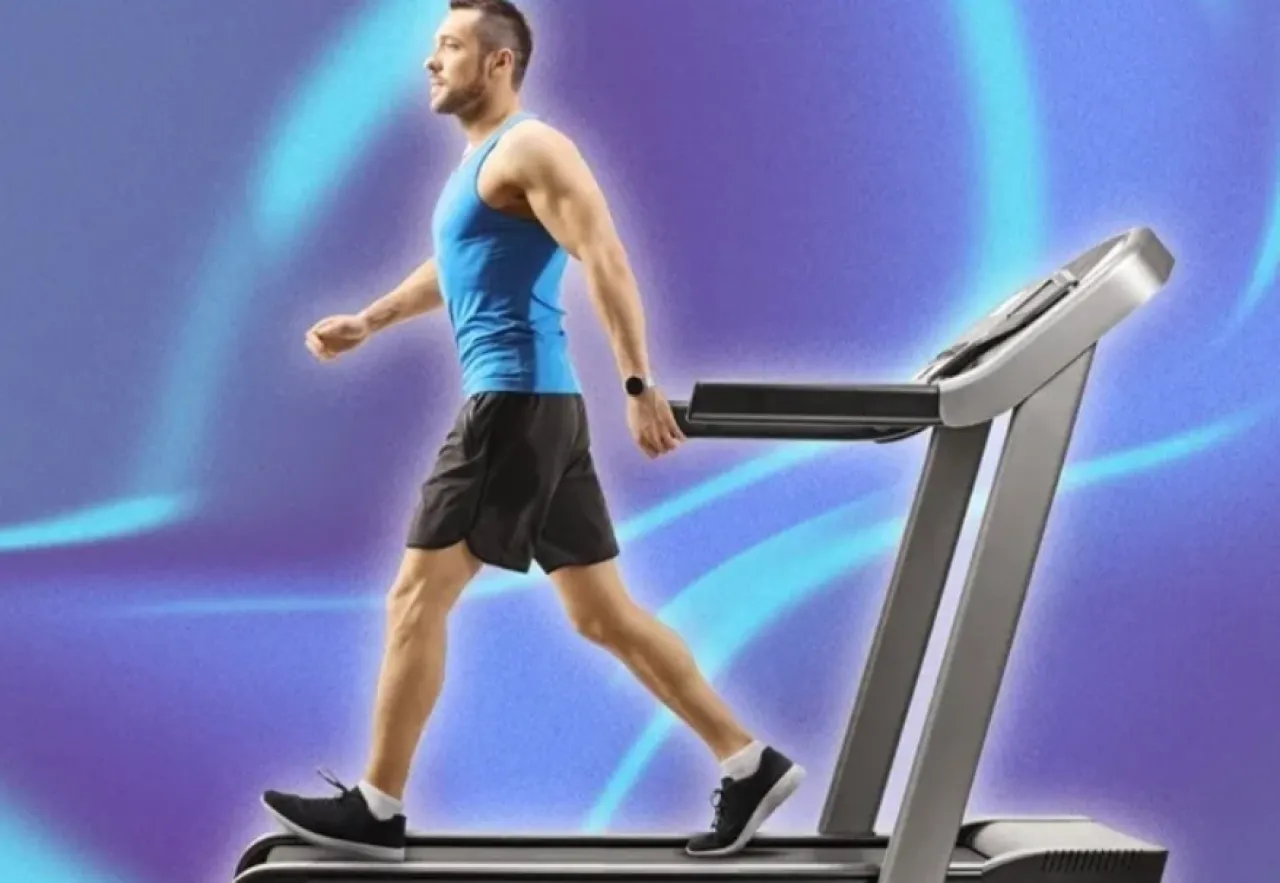
Kevin Patterson, a personal trainer in Tennessee, recommends using the treadmill as the safest place for reverse walking.
You can set it to a slow speed. However, Patterson prefers to turn off the treadmill operation so that the person pushes the belt themselves.
Patterson says he uses reverse walking with all his clients as an "auxiliary exercise" - a term in weight training referring to additional movements designed to exercise a specific muscle group - or during warm-up exercises.
Khaberni added that this activity usually forms a small part of the exercises. He said: "The treadmill is great for the elderly because the handles on the side reduce the risk of falling".
Backward walking plan
Doveik suggests adding one minute of reverse walking to 10 minutes of walking, with additional time and distance as you feel comfortable.
Doveik advises: "Initially, start very slowly because there is a balance in adapting and retraining the brain. You are learning a new skill and using your muscles in different ways." It is preferable to practice the backward walking exercise with a partner.
Multidisciplinary training
Doveik classifies reverse walking as a form of multidisciplinary training, or the integration of a mix of movements into a fitness program.
Engaging in a variety of exercises can help prevent overuse injuries, which may occur after repeatedly using the same muscle groups.
Reverse walking as rehabilitation
Physical therapy specialists guide some of their patients to reverse walking, which can be beneficial after knee injuries or for those undergoing rehabilitation or recovering from surgery.
Forefoot instead of the heel
Doveik explains: "Reverse walking differs significantly from forward walking in terms of strength and movement pattern." Instead of landing on the heel first, "the forefoot strikes first, often gently and the heel seldom touches the ground."
She adds: "This reduces the range of motion in the knee joint, allowing activity without straining the knee joint."
Reverse walking also stretches the hamstring muscles, which are the group of muscles in the back of the thigh.
Doveik believes that reverse walking improves balance and reduces the risk of falls for the elderly by activating more body senses.