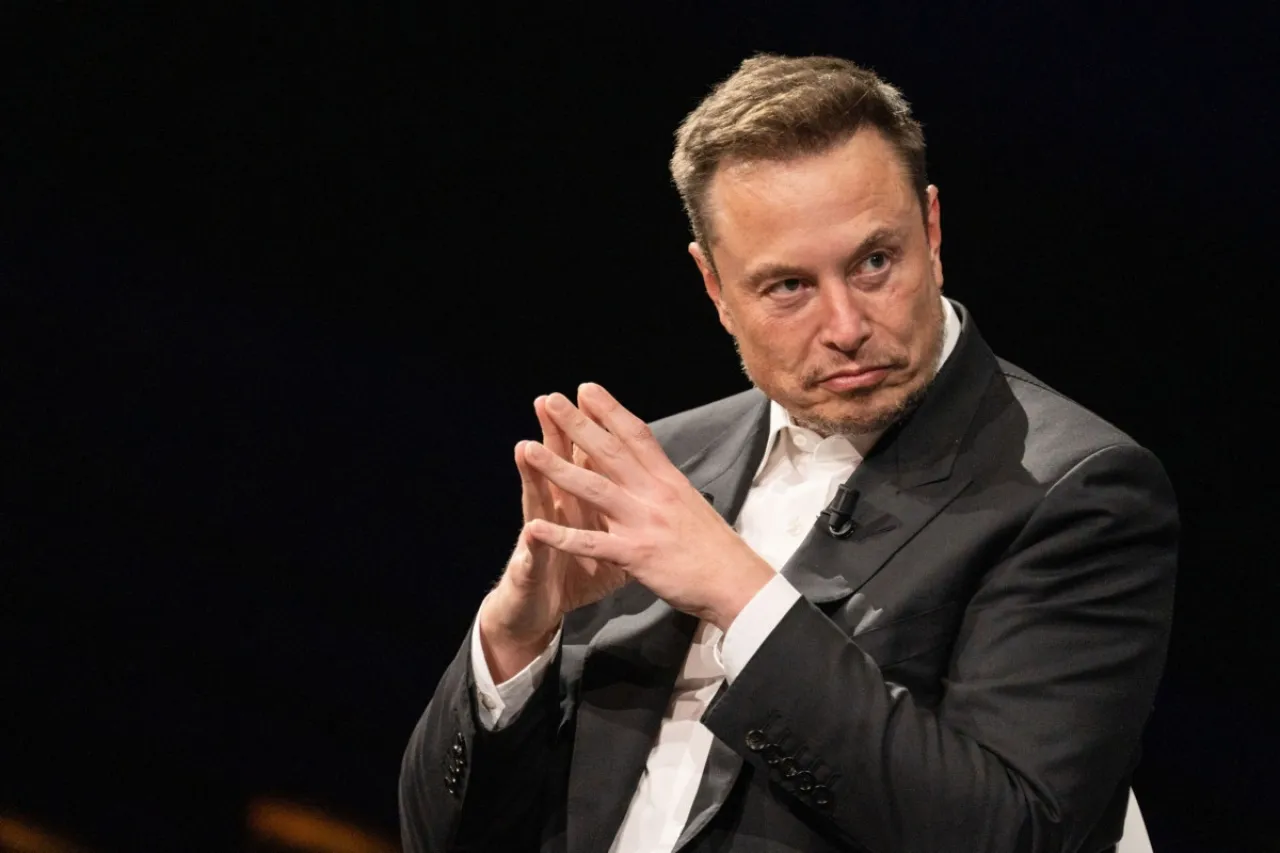
Khaberni - In a step that reveals an unusual side of the world's richest man's personality, Elon Musk explained that the secret of his success does not lie in buying stocks or building investment portfolios, but on a completely different philosophy, where Musk says: "I'm not looking for investments.. I'm building companies."
This provocative statement opened the door to questions about how Musk thinks about money and future value, and why he prefers to create markets rather than invest in them like other billionaires.
During an interview on the People by WTF podcast, Musk talked about his reasons for avoiding buying traditional stocks, and his vision for the future of the global economy, warning of the risks of American debt, and confirming that artificial intelligence, robotics, and space will be major drivers of economic value in the coming years.
Elon Musk, the CEO of Tesla and SpaceX, revealed his somewhat unusual investment philosophy, which differs from most traditional investors, during an interview with Nikhil Kamath, the co-founder of Zerodha, on the People by WTF podcast, explaining that he does not buy traditional stocks and does not own an investment portfolio.
The world's richest man said, "I'm not looking for things to invest in. I'm trying to build companies, and coincidentally there is a stock for the company I created."
Musk focuses on inventing companies and producing new products instead of relying on traditional stocks, asserting that his strategy is based on creating value himself, not on following stocks or financial markets.
Musk explains that the secret of his investments is not based on buying traditional stocks as most wealthy people do, but on building companies from scratch and creating value by himself; he does not see himself as an investor looking for promising stocks, but as an innovator who creates growth opportunities himself.
He asserts that owning a stock portfolio means nothing to him compared to having the ability to develop new technologies in fields such as artificial intelligence, robotics, and space. For Musk, the real investment is the time and effort spent in creating companies that change the world, not tracking financial markets. Therefore, he considers the products developed by his companies to be his real assets, and his role is not to buy successful stocks but to build the companies that own these stocks from the start.
When asked about promising sectors outside of his projects, he pointed out that artificial intelligence, robotics, and space travel will become main drivers of global economic value, as massive production in these areas could dwarf any other investment.
Musk revealed that the U.S. national debt is "insanely high." He added that interest payments on this debt have already exceeded major budget items.
In the interview, Elon Musk explained that artificial intelligence and robotics are the only ways that can help America get out of the debt crisis.
Musk also questioned traditional financial or political solutions, believing they are insufficient to address the structural debt problem. He predicted that within about three years, goods and services enabled by artificial intelligence and robotics could outpace inflation, leading to strong economic growth sufficient to reduce or neutralize the debt burden.
The CEO of Tesla also claimed that this shift could lead to societal changes such as less reliance on human labor and a move towards abundance and increased automation.
Musk pointed out that "Google" and "Alphabet" and "Nvidia" are laying the groundwork for massive value production in the fields of artificial intelligence and robotics.
He added, "Google has laid the foundation for a huge amount of value creation from an AI perspective, and Nvidia is clear at this stage."
Musk also referred to the convergence of his three major companies, Tesla, SpaceX, and xAI, especially if the future is linked to solar-powered satellites in deep space, saying: "You must move to solar-powered AI satellites in deep space, which is a kind of convergence of Tesla’s and SpaceX’s expertise and xAI on the AI front."
Musk expects that within three years, the production of goods and services powered by artificial intelligence and robotics may outpace inflation, leading to strong economic growth that reduces the burden of debt. This transformation can change society by reducing dependence on human labor and increasing automation, providing greater abundance and productivity, and redefining ways of working and producing in the global economy.