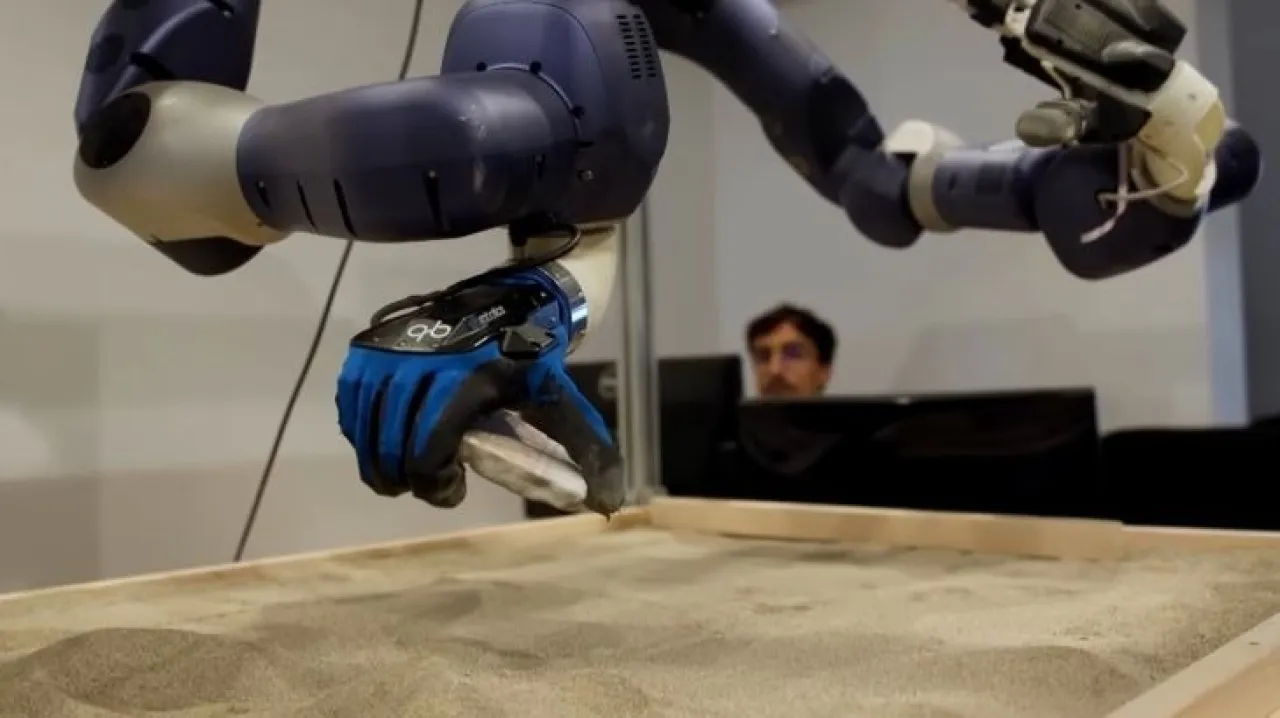
Khaberni - The robotic arms from the "RePAIR" (RePAIR) project managed to restore a collection of shattered artifacts dating back to an archaeological site in Pompeii, according to a report published by "Reuters".
The robotic arms combine a range of different technologies, including advanced image recognition and puzzle solving with sophisticated artificial intelligence, as well as ultra-precise robotic hands to speed up restoration work that usually takes a long time.
The project initially started in 2021 in collaboration with Ca' Foscari University in Venice, and its fruits first appeared in recent days in front of a group of global research teams.
The director of the archaeological site who witnessed the robot's trial for the first time, Gabriel Zuchtriegel, says that the pilot project "actually began from a very tangible necessity to reassemble parts of the mural panels that were destroyed during World War II".
Researchers in this project focus on the murals preserved in fragmented condition in the storage facilities of Pompeii, including two large ceiling panels that were damaged during the initial eruption of Mount Vesuvius and later shattered due to bombing in World War II.
In order to preserve the original artifacts, the university research team tested the robotic arms with replica copies of the shattered mural pieces.
Experts compare the task of reassembling the murals to trying to solve a giant cut-up picture puzzle with no reference images to tell you the final shape, in addition to missing pieces from the puzzle.
This robot offers a solution to one of the most challenging issues in the world of artifact restoration, as the process of restoring shattered murals and artifacts represents one of the most difficult challenges in the field of artifact restoration.