Khaberni - The Parliamentary Energy and Mineral Resources Committee recommended the necessity of exempting subscribers from the fees for reconnecting the electricity for the first time (free of charge), with the fees for subsequent times set at a fixed amount of (3) dinars, as part of the committee's commitment to alleviating the financial burdens on citizens.
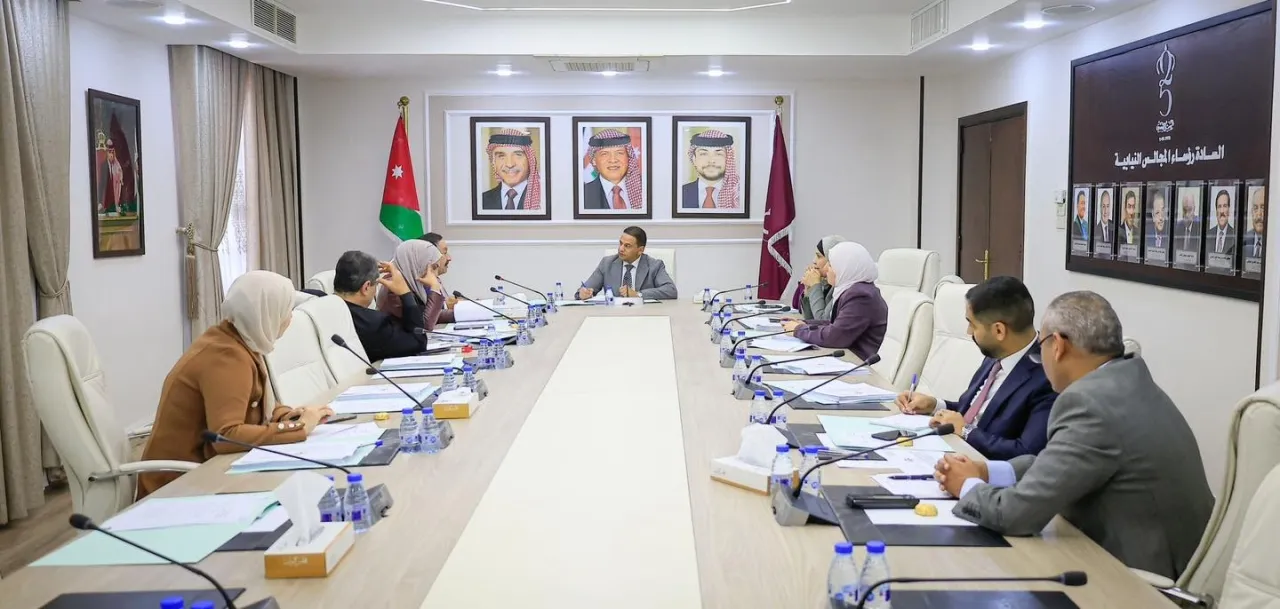
This was stated during its first meeting chaired by MP Dr. Ayman Abu Haniah, which was dedicated to discussing the committee's working mechanism and plan for the coming stage.
Abu Haniah affirmed that the energy sector is one of the main pillars of national economic security, which requires adopting an approach based on effective planning and transparent supervision, and involving all relevant entities to ensure enhanced energy security and improved quality of services provided to citizens in line with the comprehensive modernization requirements and the directives of His Majesty the King concerning the sector’s development and performance efficiency improvement.
He pointed out that the committee will work according to a clear methodology that includes legislative and supervisory aspects, which ensures monitoring of energy and mineral resources files in the Kingdom and enhances parliamentary role in supervising government performance and stimulating investment in this vital sector.
Regarding the legislative side, Abu Haniah and committee members: Engineer Jamal Qamouh, Engineer Talal Al-Nsour, Engineer Rakeen Abu Haniah, Engineer Naseem Al-Abbadi, and Dr. Islam Al-Azazmeh, reviewed the most important draft laws referred to it, notably: the Gas Law Project for 2025 and the law project authorizing the implementation agreement between the Ministry of Energy and Wadi Araba Minerals Company for the evaluation, development, and exploitation of copper and associated minerals in the Abu Khushaiba area.
The committee confirmed that it will hold a series of consultative meetings, hosting experts and stakeholders before starting to discuss any draft law, to ensure the formulation of modern legislation that enhances energy security and supports investment in mining.
As for the supervisory aspect, the committee approved a supervisory program that includes holding regular meetings with relevant government and private entities, in addition to organizing field visits to provinces and institutions concerned with the energy and mining sector, with the aim of closely understanding the work and discussing challenges and obstacles at field sites.
The key entities that the committee will hold official meetings with include: Ministry of Energy and Mineral Resources, Energy and Mineral Regulatory Authority, mining companies, Jordanian Electric Power Company, and renewable energy companies.
The committee pointed out that its plan for the upcoming stage will focus on achieving several goals, most notably: enhancing energy security through ensuring diversification of sources and sustainability of supply, developing electric infrastructure to improve the efficiency of networks and their distribution, encouraging investment in renewable energy to increase its contribution to the national energy mix, exploiting mineral wealth, activating conversion industries to increase added value, enhancing Jordan's position on the regional and international green hydrogen map, reviewing and updating legislation related to renewable energy, wind and solar energy, and supporting small and medium projects in the renewable energy sector.
The committee also discussed the importance of improving energy efficiency in various sectors, addressing electrical energy loss, enhancing regional cooperation in electrical interconnection projects, especially in light of new regional changes.
Furthermore, during its upcoming meetings, the committee will discuss a number of files and axes, including: the comprehensive energy sector strategy 2020–2030 and its implementation plan, renewable energy projects, natural resources, petroleum derivatives, and the liquefied gas port project in Aqaba, developments in oil and oil shale explorations and Al-Risha gas, exploration of copper in Wadi Araba, regulations governing mining and the organization of the energy and minerals sector, uses of nuclear energy, the impact of discovered gas quantities on regional agreements, opportunities for electrical interconnection with Syria and neighboring countries, enhancing the participation of the private sector, unions, and research institutions in the energy transition, updating mining legislations to prevent the export of raw strategic minerals, and discussing Jordan's strategy in green hydrogen and signed agreements in this field.
Abu Haniah confirmed at the end of the meeting that the committee will work in a spirit of partnership and integration with the government, private sector, and experts, aiming to develop the energy and mineral resources sector, improve its efficiency, and ensure the achievement of the national supreme interest.