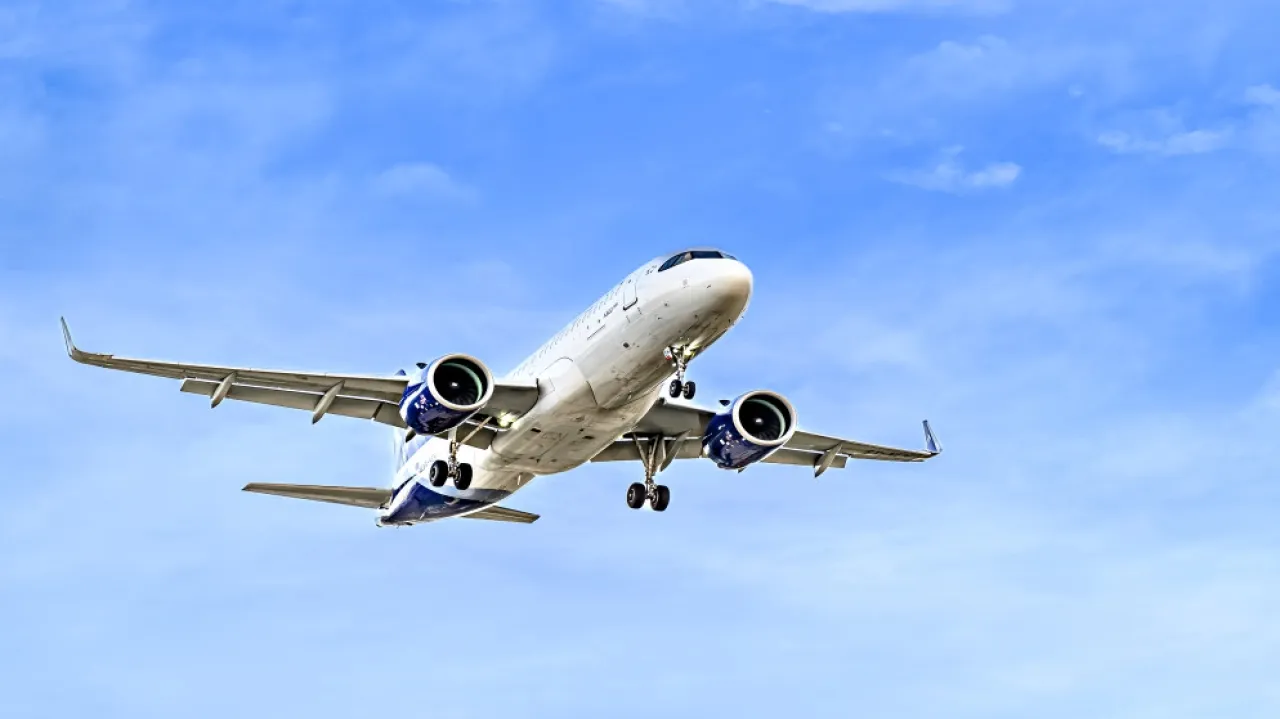
Khaberni - Global airlines rushed to repair a glitch in their Airbus A320 aircraft software after a decision by the European manufacturer to recall a batch of planes, causing hundreds of flights to be halted in Asia and Europe, and threatening travel in the United States over the busiest weekend of the year.
Airlines worked throughout Saturday and Sunday night to make repairs after global regulatory bodies directed them to address the software issue before resuming flights. Delta Airlines and Wizz Air Hungary stated that they had completed their fleet repairs with no impact on operations, while the UAE’s Civil Aviation Authority announced that all Airbus operators in the country had fully complied with the update.
Airlines around the world cancelled hundreds of flights and hurried to adjust their operating schedules after a widespread software glitch at Airbus threatened the vital travel season during the holidays.
The European aircraft manufacturer announced on Friday that more than 6,500 aircraft could be affected by the mandatory repair, while guidance from the European Union Aviation Safety Agency emphasized the need to implement the software updates before the upcoming scheduled flights of the affected aircraft.
Airlines rushed to implement the software updates for the affected Airbus A320 models, leading to flight cancellations and disruption to the plans of thousands of travelers, in a rare global recall of the company's best-selling aircraft.
Avianca Colombia reported that more than 70% of its fleet was affected, prompting it to stop ticket sales until December 8, while ANA Holdings Japan cancelled about 95 flights on Saturday, affecting nearly 13,200 passengers.
The Glitch
The urgent software update was issued by the European Union Aviation Safety Agency on Friday evening, following a recent incident with a JetBlue Airways aircraft that revealed that "severe solar radiation" could corrupt data, ensuring the operation of the aircraft control systems.
This discovery poses a significant challenge for Airbus, as the A320 aircraft are the most used in the company's fleet, with more than 11,000 planes in service. The sudden need for an update added an extra burden on airlines, especially those that exclusively rely on Airbus aircraft in their fleets.
Airbus said that the announced repair includes the A320neo models, as well as the older classic models from the A320 family.
Airbus CEO Guillaume Faury said in a post on LinkedIn that the company's teams are "working around the clock to support our operators and ensure these updates are deployed as quickly as possible to return the aircraft to the skies and resume normal operations."
Impacts on American Travel
In the United States, which is experiencing a record travel season for Thanksgiving, operators of about 1,600 Airbus A320 aircraft sought to implement the required repairs while trying to minimize disruptions as much as possible. This came amidst airlines and travelers already facing disruptions due to bad weather and the recent government shutdown, which partially reduced air traffic.
American Airlines Group reported that fewer than 150 of the 209 affected aircraft still needed updating as of 6 p.m. Central Time on Friday.
The warning followed a concerning incident on October 30th, involving a JetBlue flight from Cancun to Newark, New Jersey, where a computer glitch caused the aircraft to suddenly descend without any pilot intervention. No one was injured, and the flight was diverted to Tampa, Florida. The investigation identified a fault in one of the control computers for the elevator and ailerons, known as (ELAC 2).
The European regulating body clarified that "Airbus's initial technical assessment showed a fault in the affected ELAC system as a potential contributing factor to the incident." It added that "this glitch, if not addressed, could lead in the worst-case scenario to uncontrolled movement in the aircraft's rear elevator, potentially exceeding its structural capacity."
Rapid Updates for Aircraft
According to informed sources, most aircraft can receive a simple programming update from the cockpit with very limited downtime, although about 1,000 older aircraft will require an actual hardware update that necessitates grounding them during the maintenance period, according to the people who requested anonymity due to discussing undisclosed outcomes.
The Hungarian low-cost airline Wizz Air Holdings, with a fleet consisting almost entirely of Airbus aircraft, about 250 in total, warned that some of its flights would be affected during the weekend, as it rushed to 'immediately schedule' aircraft maintenance.
In Australia and New Zealand, air services were cancelled on Saturday, causing travel disruptions, following decisions by Jetstar, affiliated with Qantas Airways, and Air New Zealand to ground several of their A320 aircraft to implement the programming update.
The UK Civil Aviation Authority stated that airlines operating the affected aircraft would have to update their software within the coming days, or keep the aircraft grounded from Sunday, although only a limited number of British airlines would be affected.
The authority clarified that British Airways, the UK's largest airline, with a fleet of about 150 A320 aircraft, would not face any impact on passengers.
The site FlightAware, which tracks delays and cancellations, reported that 452 flights were delayed, accounting for 20% of the day's flights for China Southern Airlines, and EasyJet recorded 323 affected flights, about 21%, by noon Hong Kong time on Saturday.
The Middle East
Gulf, Arab, and regional airlines rushed to cope with the sudden Airbus crisis, by implementing urgent technical measures and adjustments to their domestic and international flights.
The A320 aircraft, which experienced the software glitch, are the backbone of the airline industry worldwide, especially in the Middle East, where they are relied upon for short and medium-range flights. Although the regional airlines did not experience operational incidents related to the glitch, they moved quickly to absorb the crisis and reassure travelers to minimize the impact on air traffic during the travel season coinciding with the holidays.
Gulf countries operate several Airbus A320 family aircraft for their domestic and international flights, and the companies stated in separate statements that they had begun the urgent software repairs for the aircraft and announced their readiness to absorb the repercussions of the crisis.
Emirates Aircraft Safe
The UAE's General Civil Aviation Authority confirmed that all Airbus operators of A319, A320, and A321 models in the country had fully complied with the emergency airworthiness directive issued by the country of design, affecting more than 100 registered aircraft in the state.
Upon receiving the technical circular from Airbus and the associated emergency directive, the authority conducted a comprehensive review and regulatory supervision over all affected operators within the country. Based on the reports and records provided, the authority confirmed that all the required procedures had been fully implemented according to the directive's requirements.
Consequently, the authority verified full compliance with the directive's requirements, and all affected operators were able to continue operating their flights safely.
Arabian Airlines, the largest operator of A320 aircraft in the Middle East and North Africa, implemented updates for a large number of aircraft within 48 hours and rescheduled some short-distance flights to alleviate the pressure on the fleet, confirming that operations were continuing without extensive cancellations.
Both Emirates and Flydubai considered the impact to be very limited due to not using A320 aircraft in their fleets, but both companies are monitoring the crisis to ensure it does not affect their network connections with other airlines and to ensure smooth movement through Dubai International Airport.
Saudi Arabia
Saudi Arabian Airlines stated that maintenance teams commenced the modifications immediately upon issuance of the technical directive, maintaining full flight operation and benefiting from fleet diversity to mitigate any potential pressure.
Late on Saturday, Saudi Arabian Airlines, in a supplementary post, confirmed that "all necessary inspections on the A320 fleet were completed without affecting the operating schedules or passengers."
Meanwhile, Nas Air of Saudi Arabia confirmed that all aircraft had undergone or would undergo the update within a brief period, alerting passengers of possible slight adjustments in timings. In a subsequent notice on Saturday, the company said that it had "completed all the updates required for the A320 aircraft as required by Airbus, adding that all flights were operating according to schedule without any delays or cancellations due to the technical updates."
Arab countries
The Qatar Airways announced on "X" that it had completed software updates for its affected fleet of A320 aircraft, and the flight schedule was only slightly affected, as the airline operates a large number of A320 and A321 aircraft. The company had previously announced the formation of a joint committee to apply the repair procedures immediately and had begun implementing the "overnight software update" to avoid affecting the daily schedule, confirming that most of the fleet's aircraft had already been updated, while the rest would be completed within a short period. The company noted that flights had not yet been affected.
Gulf Air has a large fleet of Airbus aircraft and took rapid steps to implement the modifications, announcing that most of the software updates were completed during regular maintenance hours, and it had not resorted to cancelling flights but had redistributed some aircraft within the fleet.
Kuwait Airways considered the crisis impact to be not significant, noting that software updates were being conducted during regular maintenance periods. In a subsequent notice on Saturday, Kuwait's Directorate General of Civil Aviation said that "the airline companies affiliated with the state of Kuwait had completed all the updates of the technical systems on A320 models related to aviation safety on this model."
Late on Saturday, the Omani Civil Aviation Authority, in a notice, stated that the approved updates had been completed for all registered Airbus A320 aircraft, complying with the European Aviation Safety Agency directive regarding the mandatory software update.
EgyptAir, which is one of the main operators of A320neo and A321neo models, stated that it had begun the software update process for all aircraft and had not yet encountered any malfunctions related to the glitch.
The Royal Jordanian Airlines confirmed that the impact was limited and that the updates were being conducted gradually without adjustments in the schedules. Iraq Airways stated that it had begun reviewing the status of each A320 aircraft in its fleet, coordinating directly with Airbus.
Fly Baghdad and Jazeera Airways quickly implemented the repair, confirming that the updates were part of ongoing maintenance operations, and the impact on passengers was very limited.
Royal Air Maroc started early in implementing Airbus recommendations, as its fleet includes A320 family aircraft used on flights within Africa and Europe.