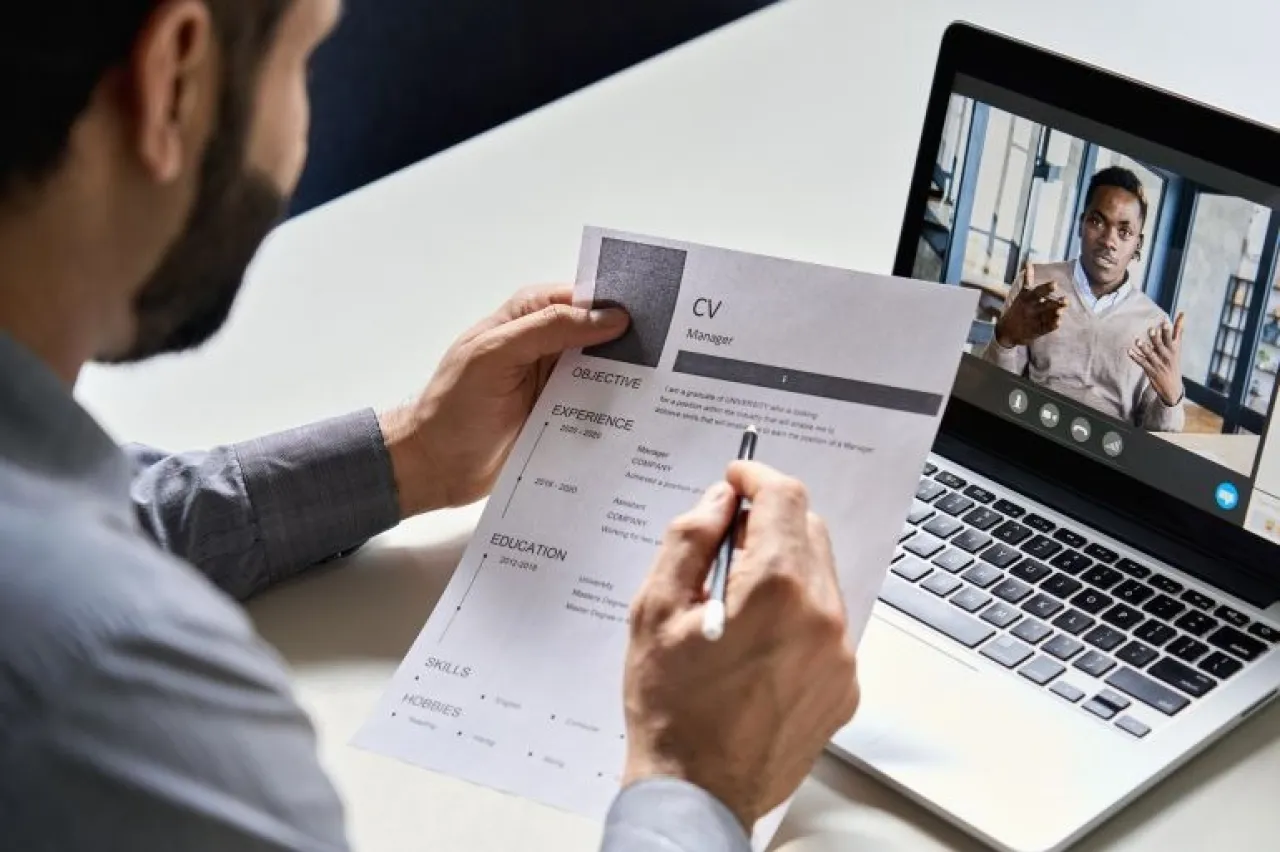
Khaberni - In a world where unemployment is widespread in many countries, and amidst increasing levels of competition, getting a job has become a difficult task that requires a lot of mobilizing resources and means, including the preparation for the personal interview, which may be decisive in this matter.
Previously, obtaining an appropriate educational qualification was sufficient to get a job. In fact, some countries used to distribute jobs to graduates automatically. However, the situation has changed significantly, and education alone is no longer sufficient to achieve the goal.
After initial stages in the journey of seeking employment, comes perhaps the most difficult stage: undergoing a personal interview with the employer, their manager, or a specialized team. Many experiences suggest that you will need to sharpen your intelligence and prepare adequately for it.
From the beginning, you must be aware that getting jobs has no longer been easy for many reasons, the most prominent ones include:
Severe competition due to the increase in the number of graduates and job seekers in contrast to the limited availability of jobs
The lack of skills required as academic study may not be sufficient
Economic and technological impacts leading to job cuts
Discrimination in jobs where there is always the potential for negative discrimination originating from various motives
Thus, we advise you, dear reader, if you have reached the personal interview stage, to prepare along several tracks including reviewing personal reasons that might harm you in this stage such as:
Lack of personal skills or shortage of experience
Weak resume
Poor preparation for the interview
Fear and tension
On this matter, the American site "CNN" mentions one recruitment expert's assertion that the digital age has made many people less experienced in personal interactions, and consequently less comfortable with them, especially those that pose a challenge.
Dr. Nathan Mondragon, Chief Innovation Officer at the recruitment platform (HireVue), points out errors that might be caused by parents who overly intervene to help their children professionally without teaching them how to handle the world of employment.
Stacy Haller, Chief Recruitment Consultant at ResumeBuilder, says that some believe they can easily pass a job interview, and therefore they might make a big mistake by not preparing well for the interview.
But, Haller says, as is the case in anything else you strive to succeed in, getting a job also requires preparation.
What should you do to prepare for a job interview?
Prepare your resume
Haller says that the resume is one of the first factors that capture the attention of the hiring officer, so it must be concise, preferably one attractive, clear, and uncluttered page, specifically designed for the job, highlighting why you are the ideal candidate.
Be careful in choosing whom to consult
Perhaps it would be best here to consult other people who work at the same company or business entity, followed by consulting people working in similar sectors.
It may also help to consult someone working in recruitment sectors who has participated in personal interviews before and can provide you with tips to help you pass them.
Do your research about the employer
During the interview, it is important to show a wealth of information about the employer you want to join. You must conduct a thorough investigation, and be prepared to receive questions that test your knowledge of the company. Certainly, among these will be a question about why you are applying for this particular job at this place, where you should clarify how you can contribute to the company's advancement, support its strategy, and achieve its goals.
It would also be beneficial to also do research about people who will conduct the interview with you if you have their names, as this can help you in conversing with them, asking questions, and perhaps also finding a common link that helps in breaking the expected ice.
Write your answers in advance
Don’t just prepare orally, but write down the expected questions and your answers, keeping in mind that you should try to demonstrate your suitability for the required job and your ability to perform it.
It would also be helpful if you write down some success stories you have achieved in your life or in previous jobs that might be suitable for the requirements of this job.
Prepare your questions
It is important to realize that your questions might be as important as your answers. You should demonstrate your interest and enthusiasm by asking questions such as:
What will a typical day at work look like?
Is this a new role or am I replacing someone who left this job?
How do you measure the success of a new employee?
What are the benefits and challenges of working here?
What types of training opportunities are available?
What are the prospects for promotion after a year?
Avoid stress
It is very important to avoid stress during the job interview, and if you suffer from pre-interview anxiety, relaxation or breathing techniques might help. If you suffer from severe anxiety, it may require treatment. Don’t forget to bring all the notes you have prepared for the interview.
Look sharp
Experts say that wearing formal clothes for personal and virtual interviews is important.
If the company’s culture is more casual, this does not necessarily mean that you should wear similar clothes in your interview, as they do not know you yet and it is better to leave them with a good impression that shows your respect and seriousness.
But this does not mean overdoing the formality, for instance, there’s no need to wear a three-piece suit unless that is a part of the dress code at that institution.
Difficult question
If you receive a difficult question for which you do not have an answer, it is better to ask the interviewer to rephrase the question or say to them: “I do not have extensive experience on this specific topic, but I can tell you about a related case.” You can also express your willingness to think more about the question, as that might suggest your adaptability.
When it's time to ask questions, ask what you have prepared. However, it might be best to postpone questions related to salary, vacations, and other benefits until towards the end of the interview.
The way you ask is important, instead of asking how many vacation days you will get, it may be better to ask like this: “Can you tell me about the benefits the company provides to employees at this level?”
Finally, we recommend ending with the following question: "Is there anything else I can provide or answer to prove my suitability for this position?”
After the interview
Within 24 hours of the interview, it would be nice if you send a thank-you email expressing your gratitude for the interview time and the opportunity provided to you, and understand that it’s not just a thank-you note, but also an indirect reminder of your suitability for the job.