Khaberni - Despite the widespread destruction at the Islamic University in Gaza, the attempts of its professors and students to find alternative routes that ensure the continuation of the educational process have not ceased.
Amid internet outages and student dispersal, many tried to cope with harsh conditions to preserve what remained of their academic lives, as documented by Al Jazeera in its report accompanying a university professor and several students.
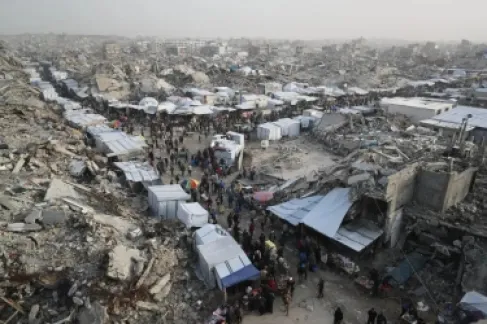
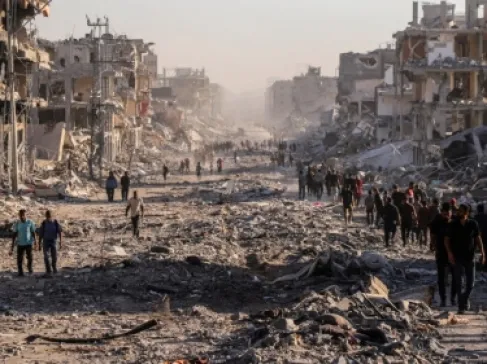
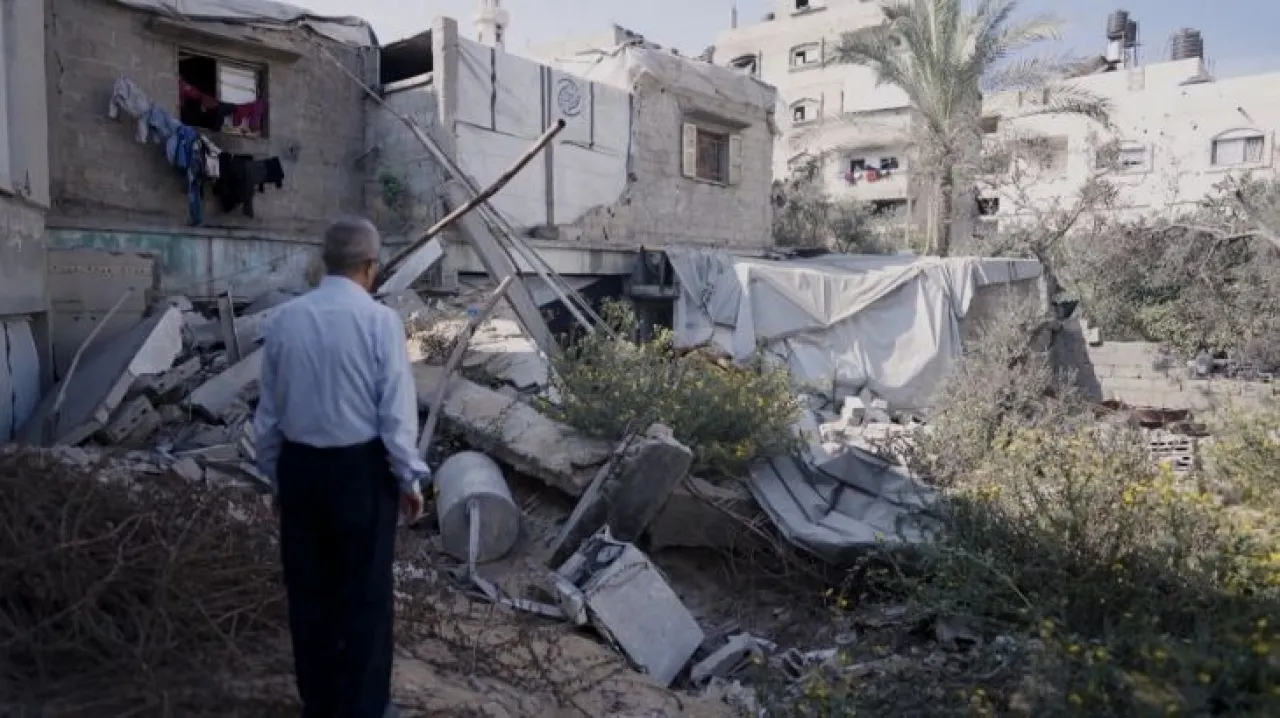
Amidst the rubble of neighborhoods and demolished buildings, Professor of Civil Engineering Ahmad Abu Foul stood contemplating the extent of the devastation that struck the sector, saying that the disaster "exceeded the bounds of personal loss," as it affected an entire people and threatened one of its main pillars of resilience: education.
Abu Foul explains that universities tried in the first weeks to connect with professors capable of teaching remotely. He and his colleagues responded and resumed teaching online, but frequent network outages and difficulties in accessing Internet-connected facilities made studying more challenging.
He points out that many academics were forced to seek out "cafes" that offer limited internet connections, despite most of them being targeted, creating an additional burden on teachers and students trying to follow their online lectures.
Students' Suffering
As for the students, their suffering was compounded by displacement and loss of homes. One of them says that moving to the southern sectors of the Gaza Strip made it nearly impossible to access sources of internet and electricity, which disrupted their ability to follow lectures.
In displacement sites, Abu Foul gathers with his students around a small computer to give simplified engineering lessons. He insists, as he says, on maintaining some level of academic communication "so as not to break the educational chain," despite the inhumane conditions.
Engineering students face particular challenges due to the nature of their specializations, which rely on laboratories and field visits. One of them emphasizes that the absence of practical aspects has impacted their competence, despite resorting to following recorded videos and alternative videos.
The student adds that courses like material resistance and building construction cannot be sufficiently understood without direct application, stressing that laboratory experiments are a basic part of any engineer's training, something they were deprived of after the university's destruction.
In everyday life details, Abu Foul recounts how the humanitarian conditions affected his ability to teach, as obtaining water became a difficult task, as did finding firewood for cooking, which has become part of his exhausting daily routine.
Difficult Conditions
He says that adapting to the life conditions "was not easy," but sees in them a part of the occupation's attempts "to push the people to despair," confirming that the educational will is stronger than these pressures, and that continuing to teach is a form of resilience.
The professor of engineering recalls the previous war when the university's facilities were nearly completely destroyed, explaining that targeting the educational infrastructure aims to "eliminate any hope for the return of the academic march," but the academics - as he says - remained determined to continue teaching.
Abu Foul emphasizes their readiness to resume education under any circumstances, even "if the students sit on the ground or inside a tent," considering protecting the educational path a national responsibility that transcends the boundaries of classrooms and laboratories.
He believes that education has always been a strength point of the Palestinian people, and preserving it is part of resisting attempts of annihilation and displacement. He confirms that he and his colleagues will not leave the sector despite the hardships and pressures they face.
In conclusion, Abu Foul expresses his deep connection to Gaza, saying he considers it "better than any place in the world," a message he insists on conveying to his students while he continues to teach them amidst the rubble.