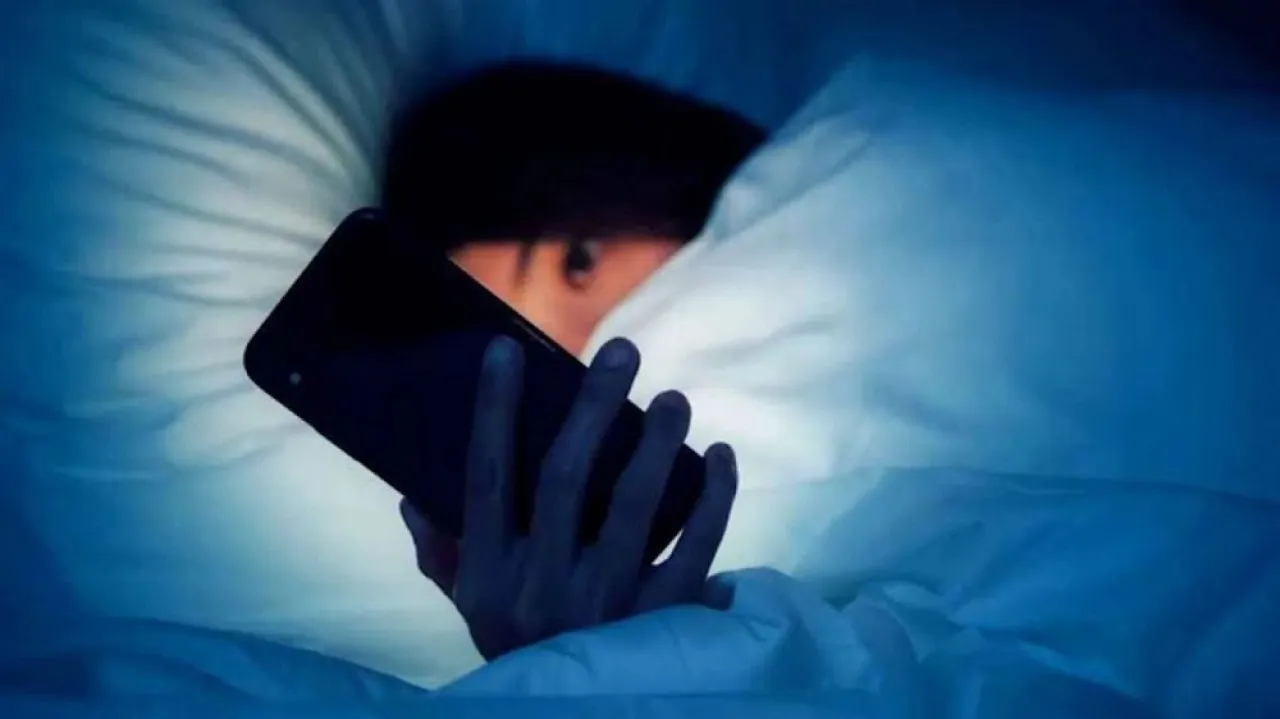
Khaberni - A recent medical study has warned that using smartphones during the late night hours may be associated with a clear increase in suicidal thoughts among adults already at psychological risk, while the study said that some other usage patterns might show the opposite effect.
The results were reported in a report published on the scientific site "Midicalxpress", according to the study results published in the journal "JAMA Network Open", as part of research that seeks to understand the relationship between digital behavior and mental health during critical periods of the day.
Night phones.. a silent danger
According to the report, suicidal thoughts often intensify during the quiet nighttime hours, making any factors that keep a person awake or increase their stress, such as using smartphones, potentially affect mental health.
US statistics indicate that more than 10 million adults suffer annually from suicidal thoughts, making understanding its causes crucial.
Poor or disturbed sleep has been associated for years with an increased risk of suicidal thoughts the following day. However, the new study says that the type of nighttime activity—especially phone use—may be an additional factor that either raises or lowers this risk.
Limited but thorough study
The researchers relied on a relatively small group comprising 79 adults considered in a "high-risk category," as they reported suicidal thoughts during the previous month. Over 28 days, a special program was installed on their phones to take a screenshot every five seconds during device activity, allowing the team to collect more than 7.5 million screenshots.
The researchers also used the Ecological Momentary Assessment (EMA) technique, a method that gathers real-time information about the participants' mental state in their daily lives.
The team developed a smart model to distinguish between "passive" use, such as scrolling through apps, and "active" use, which involves the appearance of the keyboard, indicating the writing of messages or direct interaction.
Striking results
The analyses showed that people who had longer gaps between phone usage periods, ranging from 7 to 9 hours, had lower levels of suicidal thoughts compared to those whose usage gaps were only between 4 to 7 hours, pointing to the importance of continuous sleep.
According to the study, phone use between 11 PM and 1 AM was associated with a clear rise in suicidal planning the next day, compared to use between 1 and 5 AM or in the early morning.
Surprisingly, active phone use, specifically typing on the keyboard after midnight, was associated with a relative decrease in the risk of suicidal thoughts, which the researchers explained by the possibility that at that time, the person was in communication with others rather than experiencing isolation and passive stress that increases anxiety.
Warnings and limitations of the study
Despite the importance of the findings, the researchers and other experts emphasized the need to be cautious in interpreting them, as the study was conducted in a single center and included a limited number of participants. Furthermore, people with depression tend to overestimate the duration of their phone use, which could affect the statistical reading.
However, the research team confirmed that these results provide important indicators that could help in the future development of digital monitoring tools to predict the risk of suicidal behavior, and possibly early intervention through artificial intelligence techniques.
A complex relationship
The study comes in the context of an escalating global discussion about the impact of technology on mental health, especially among vulnerable groups. While medical institutions warn of sleep disorders caused by blue light and continuous notifications, new research suggests that usage times and methods may be more important than its duration.