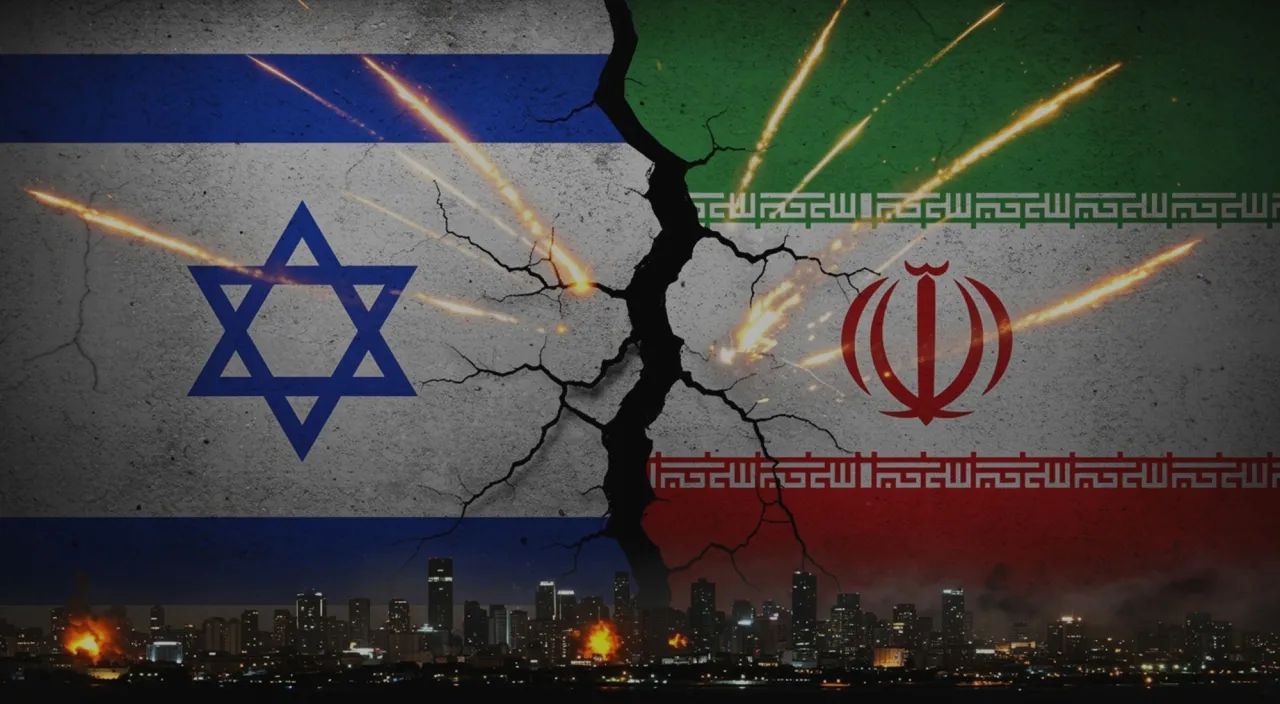
Khaberni - Iranian Foreign Minister Abbas Araghchi confirmed that his country is more prepared than it was in the previous war with Israel, if the latter were to launch a new attack against the Islamic Republic.
In an interview with "The Economist," Araghchi elaborated on Iran's war preparations by saying: "Our missiles are in a better position, in terms of quantity and quality. We have learned many lessons during the twelve-day war. We understood our weaknesses and our strengths, and the weaknesses of the Israelis. We have worked on all these points, and we are completely ready, even better than before."
The Iranian Foreign Minister added: "This does not mean that we want war. As you know, the best way to prevent war is to be prepared for it. We are fully prepared and I do not think they will dare to repeat the same mistake and the same failed experience."
When asked, "Is your people ready? It was noteworthy in the last war that the Iranians, unlike the Israelis, had no shelters to go to. There were very few warnings. Your skies were exposed. What guarantees can you offer your people that they are protected this time?" Abbas Araghchi replied: "As I said, we have learned the lesson."
It should be noted that numerous reports at the beginning of this November indicated the possibility of a new confrontation between Iran and Israel. Despite President Donald Trump's insistence that the American attacks "destroyed" Iran's uranium enrichment program this summer, regional entities and analysts are less convinced of that in the months since then, warning that another war between Israel and Iran is only a matter of time, according to "The New York Times."
Stephen Erlanger, the diplomatic commentator for the newspaper, explained the current situation saying: "The effect of the 2015 agreement, which was meant to limit Iran's uranium enrichment, expired last month, and harsh sanctions were renewed, and negotiations regarding the nuclear program are dead, at least for now. As a result, a serious deadlock has arisen without negotiations, without oversight, and without certainty about Iran's stock of enriched uranium."
The newspaper reported from Israeli sources that Iran's uranium stockpile, sufficient to produce about 11 nuclear bombs, was moved to a secret site, while "missile factories operate around the clock."
Meanwhile, Ali Vaez, director of the Iran Project at the International Crisis Group, said: "The Iranian factories are working non-stop, and the next response will be different. Tehran plans to launch about 2000 missiles in a single attack, instead of 500 missiles over 12 days as happened in June."
A recent report published by CNN indicated that "Iran has resumed the production of ballistic missiles, having received between 10 and 12 shipments from China since late September containing Sodium Perchlorate, a crucial material in the manufacture of solid rocket fuel." And "the quantity received is about 2000 tons of raw materials, sufficient to produce hundreds of missiles." Intelligence estimates suggest that Iran has already restored half of its previous arsenal which included 2700 missiles, and is working on expanding it in preparation for a new round of fighting.
Iranian Defense Minister Aziz Nasirzadeh has previously confirmed that the country's defense production has seen a significant increase "in quantity and quality" compared to what it was before the "12-day war" that was imposed on his country in June of the past year.
Last month, news reports quoted "Kayhan" an Iranian newspaper supervised by Hossein Shariatmadari, representative of Iran's Supreme Leader Ali Khamenei, which published an article by journalist Jafar Balouri discussing the likelihood of new conflict between Iran and the United States and Israel; the journalist considered this likelihood "very probable."
The reports clarified that according to "Kayhan," dealing with the current economic turmoil and confusion in Iran could be seen as a continuation of the effects of the "12-day war" between Iran and Israel, and explained that this reality is one of the reasons why the possibility of a new conflict with "the enemy," as mentioned in the article, is not unlikely.