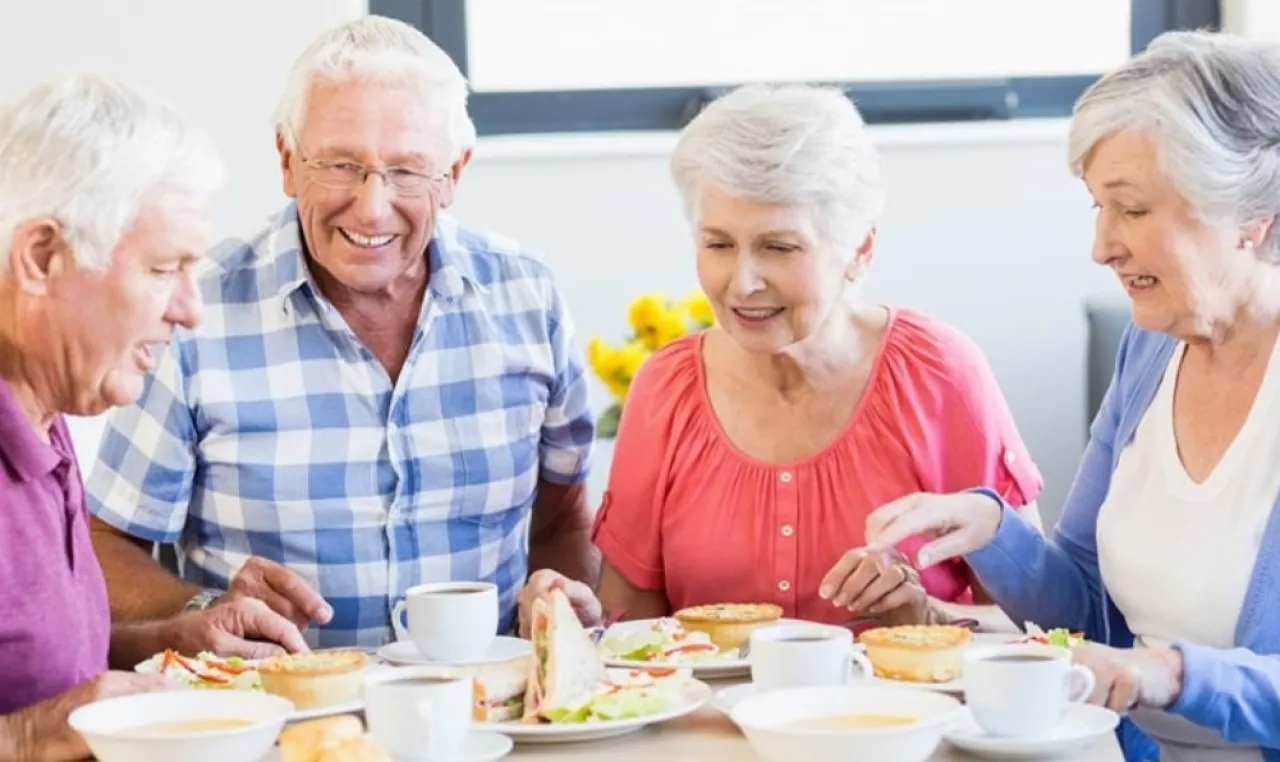
Khaberni - A new study conducted by Flinders University has shown that elderly people who regularly eat their meals alone are more susceptible to nutritional decline and worse health outcomes than those who share their meals with others.
The researchers reviewed the results of 20 international studies examining the relationship between elderly people eating alone and measurable health outcomes, particularly those living in age-safe communities (senior care homes).
Based on data from more than 80,000 seniors (aged 65 and older) in 12 countries, the review revealed that the social environment of eating can have wide-ranging effects.
Nutritional quality
According to "Medical Express," the research found a consistent association between eating alone and poor diet quality, specifically a reduced intake of major food groups such as: fruits, vegetables, meats, and an increased risk of weight loss and frailty.
The Importance of Social Bonds
Lead researcher Caitlin Weyman stated, "The results highlight the importance of social bonds for the elderly, especially during meal times."
She continued, "Food is more than just nutritional benefit; sharing a meal is an important social activity that affects appetite, meal diversity, and overall health."