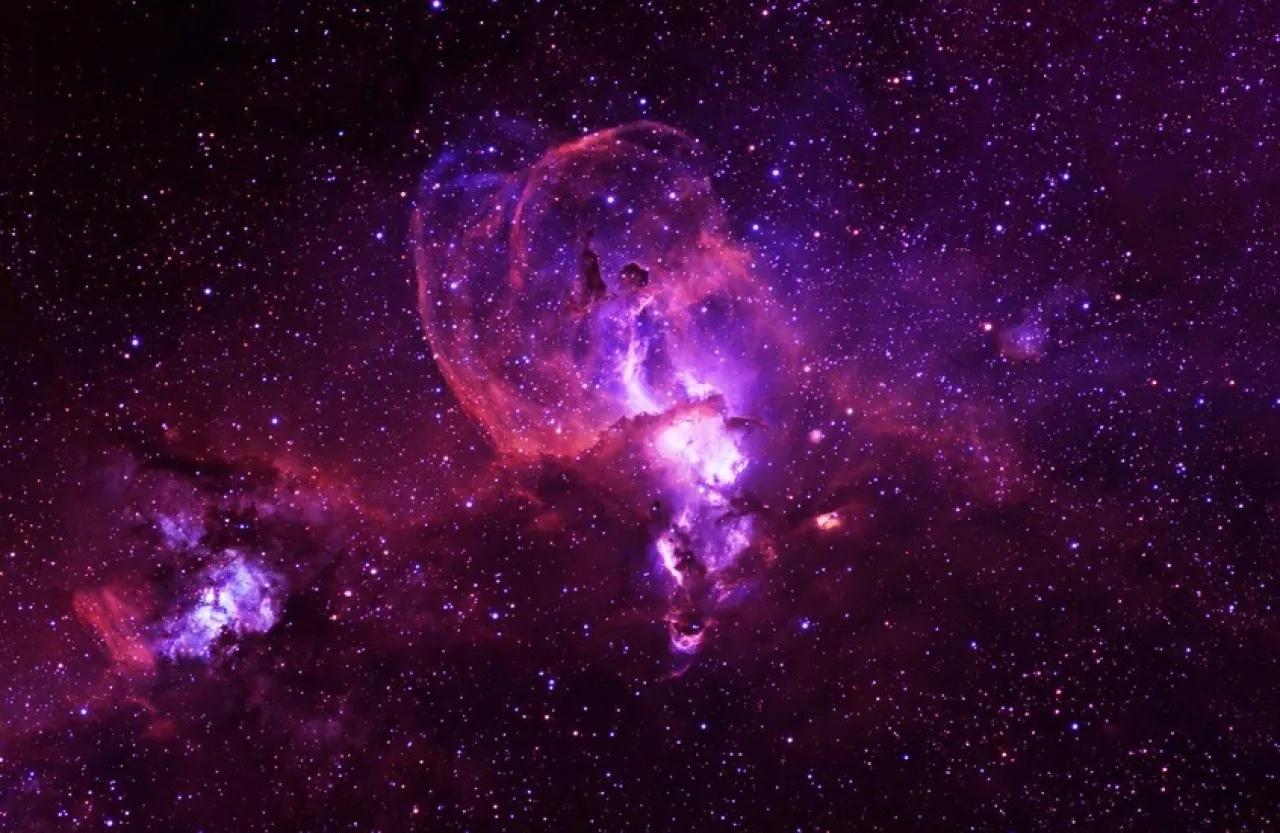
Khaberni - Russian astronomer Vladimir Sordin shared his opinion regarding the chances of humanity's survival if the supernova "Betelgeuse" explodes at a relatively close distance from the solar system.
In an interview with the Russian site "Gazeta.ru", the scientist said:
"The nearest star likely to turn into a supernova is about 550 light-years away from Earth, and it is the red giant 'Betelgeuse' in the Orion constellation. This star is unstable and flickers continuously, so scientists believe it could collapse and explode in the near future. However, the term 'near' in astronomy can mean a period ranging from 10 thousand to 100 thousand years."
He added:
"Supernovae explode in different ways, and many of the internal processes leading to their explosions are not fully understood yet. However, estimates suggest that if Betelgeuse were to explode at a closer distance to the solar system, it would be akin to a super-intense solar explosion."
Sordin pointed out that when the star explodes and turns into a supernova, it emits strong gamma rays, but these cannot leave the boundaries of its stellar system. Moreover, the Earth's atmosphere provides natural protection for living organisms from such cosmic phenomena.
The scientist concluded by saying:
"For a supernova to pose a direct threat to life on Earth, it would need to occur within the solar system itself. If the sun had a companion star, our system would be completely different. Also, the sun cannot explode as a supernova, because its mass is much smaller than the minimum required for that to happen."