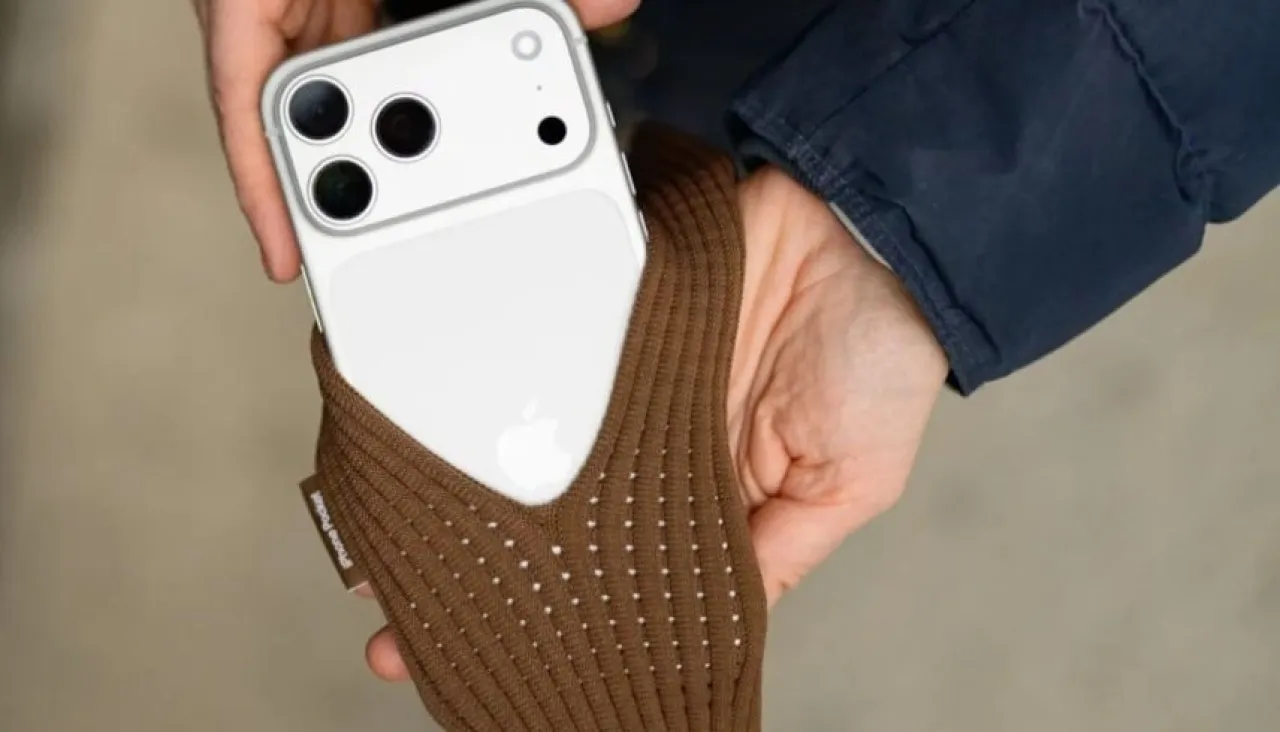
Khaberni - The "iPhone Pocket" bag, launched by Apple in collaboration with the luxury Japanese fashion house Issey Miyake, sold out within hours of its release last Friday, after witnessing long lines in stores, while the available quantities were quickly exhausted online.
The new bag is a wearable piece, made with three-dimensional knitting technology that allows it to stretch to accommodate any model of iPhone, from the first edition up to the iPhone 17 Pro Max, in addition to small items such as AirPods.
It is characterized by a ribbed texture inspired by the famous folding techniques of Issey Miyake, and its prices range from 150 to 230 dollars depending on the length of the strap. It can be carried in various ways: by hand, on the body, or by attaching it to other bags.
According to reports from Bloomberg and Forbes, the bag's rapid sell-out was due to limited distribution, as Apple made it available in only ten stores globally, including New York, London, Paris, Tokyo, and Milan.
Store visitors confirmed that the stock disappeared within minutes of opening, while the websites showed all colors and sizes sold out after just a few hours.
Despite the mockery and controversy generated by the bag, described by some users on the X platform as a "cut-off sock," the buzz contributed to its popularity. Others criticized it as potentially "the weakest product Apple has ever made."
Meanwhile, fashion lovers see the bag as a complete artistic piece thanks to the rare collaboration with Issey Miyake, especially since Apple does not typically partner with fashion houses, with the last similar collaboration being with Hermès in 2015.
As for global availability, all editions sold out in Japan, while some colors remained available in the United Kingdom for only one day before they also disappeared. Apple has not disclosed whether it will provide new batches.
This product is part of a rising trend of merging fashion with technology, as reported by the "New York Times," considering the collaboration part of a wave of partnerships between tech brands and fashion houses, similar to Meta's collaboration with EssilorLuxottica to launch smart glasses.