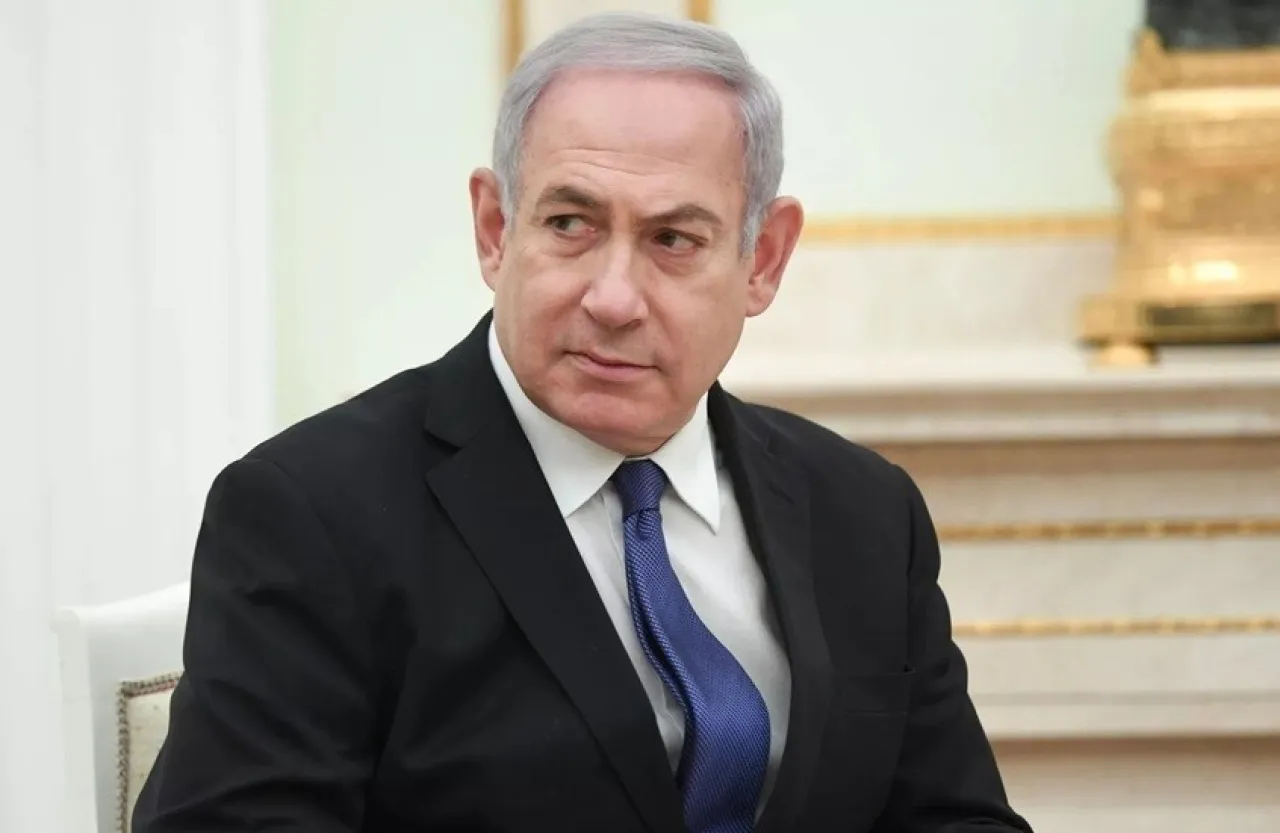
Khaberni - Monday's Knesset session saw an escalation in tone by the Prime Minister of the occupation, Benjamin Netanyahu, who made decisive statements.
Netanyahu confirmed that "whoever attacks us, we attack them and indeed inflict heavy costs on our enemies." His statements, which emphasized the continuation of the "battle to defend the occupation," coincided with disturbances inside the chamber leading to the expulsion of members who objected to his speech.
Deterrence capabilities and plans for Gaza: Netanyahu’s speech comes as the Knesset nears voting on serious laws such as the execution of prisoners, which has heightened controversy within the parliament.
Netanyahu emphasized that the occupation’s capability to confront those who attack it has "changed," trying to send a message of strength and deterrence domestically and internationally.
In the context of the war on Gaza and next day plans, Netanyahu explicitly stated that the Gaza Strip will be a demilitarized zone, emphasizing that "Hamas will be disarmed, either the easy way or the hard way."
Claims of denying torture and justifying deals: Netanyahu defended the occupation’s conduct in treating detainees, claiming that "the documentation of the abuse of a Palestinian militant at Sdei Teiman camp is fabricated," in an attempt to divert attention from international investigations and criticisms directed at detention conditions.
In the context of justifying the outcomes of the prisoners and detainees file, Netanyahu claimed that military and political pressure on Hamas was the sole factor that brought back "all our live captives and most of the deceased."
He also confirmed that he refused to comply with some demands for **"halfway deals,"** emphasizing that he achieved what he wanted after resisting these dictates.
Regarding the investigation of the failures of October 7, Netanyahu demanded that "any investigative committee into the events of October 7 must include all components of the people."
The peace circle and the internal crisis: Netanyahu addressed foreign relations, affirming: "We strive to expand the circle of peace and there are countries that are seeking closer ties with us more than ever before."
He also claimed that the occupation managed to "remove the nuclear and ballistic threat posed by Iran."
However, his strong speech was met with clear internal disturbance, as the session witnessed chaos due to opposition from some members, which necessitated the expulsion of members from the chamber.
This incident shows the deep internal crisis and sharp division, despite the prime minister's attempt to portray complete security victory.